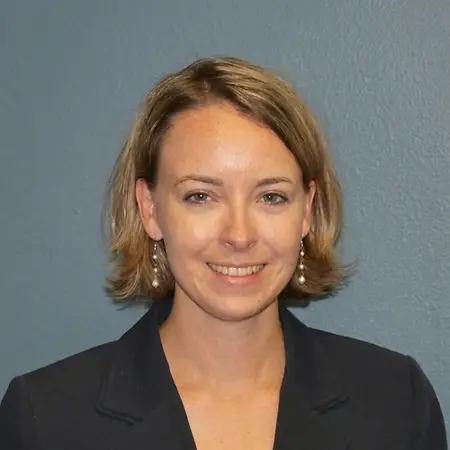
Her Story
About Brea
Brea Burgie recently concluded seven years of service as an Immigration Judge in Denver, Colorado, a role she stepped into after more than a decade of varied work within the immigration law system. Her professional journey began not in law but in social work, supporting survivors in domestic violence shelters — an experience that convinced her attorneys held greater capacity to drive meaningful change than social workers alone. That conviction carried her through law school, from which she graduated in 2007, and into a career defined by a steady progression of increasing responsibility: a clerkship, leadership of a nonprofit organization, a position as an attorney advisor at the Phoenix Immigration Court, and eight years spent in the general counsel's office at immigration court headquarters, where she also served as fraud counsel identifying and referring cases of immigration fraud for prosecution. Before ascending to the bench, she briefly departed government service to build a legal program from the ground up for the International Rescue Committee in Denver, extending immigration services to survivors of torture.
Throughout her career, Burgie has been driven by a deep-seated commitment to confronting injustice and lifting up vulnerable populations, a philosophy that shaped both her rise to the judiciary and her eventual departure from it. She has described her time on the bench as demanding in ways that extended beyond the courtroom, citing the emotional toll of deportation rulings and the professional isolation that judicial ethics impose on those who serve. Her tenure came to an abrupt end when she was among roughly 150 immigration judges dismissed by the Trump administration, a termination she regards as politically driven and unlawful, and which she intends to formally contest. Rather than stepping back, she has chosen to redirect her energy toward representing asylum seekers, supporting fellow immigration attorneys, and pursuing federal appeals on behalf of clients seeking a fairer hearing.
Looking ahead, Burgie is preparing to launch a consulting practice that will draw on her judicial perspective to help immigration attorneys build stronger, more persuasive cases. She plans to deepen her involvement with a Colorado-based asylum organization while continuing her long-standing philanthropic support of Doctors Without Borders and the International Rescue Committee. Beyond her professional pursuits, she is a devoted mother who cherishes time with her children, an enthusiastic skier, and an avid reader of history — interests she recently combined on a three-week road trip retracing Revolutionary War sites from Washington, D.C. to Boston in honor of the 250th anniversary of the Declaration of Independence. To the next generation of women entering her field, she offers a simple but enduring philosophy: seek out diverse experience at every turn, and never underestimate the power of the relationships built along the way.
Her Interview
Ten minutes with Brea
01What do you attribute your success to?
I began my career as a social worker in domestic violence shelters, and it was there that I realized attorneys had far more power to help people than social workers alone. That realization led me to law school, where I saw the law as a tool to make the world better. Whenever I encounter injustice, I feel compelled to act on it, and that drive is ultimately what led me to leave nonprofit work for the judiciary, where I felt I could make a greater impact.
02What advice would you give to young women entering your industry?
I encourage young women to gain as much diverse experience as possible and to build strong professional networks. The relationships and connections you form along the way are often what open doors and advance your career goals.
03What are the biggest challenges or opportunities in your field right now?
One of the biggest challenges I've seen is the politicization and bias affecting the immigration agency, including large-scale firings of judges. There is also the emotional and professional isolation that comes with being a judge, along with the ongoing difficulty of ensuring fair outcomes for asylum seekers. That said, I see real opportunity in advocating for fair appellate review in the federal courts, in consulting with attorneys to strengthen how they present cases from a judge's perspective, and in helping less-experienced lawyers navigate the system more effectively.
04What values are most important to you in your work and personal life?
Justice, advocacy for vulnerable people, and using my professional skills to make a meaningful difference in the world are the values that matter most to me, both professionally and personally.
Join Influential Women and start making an impact. Register now.