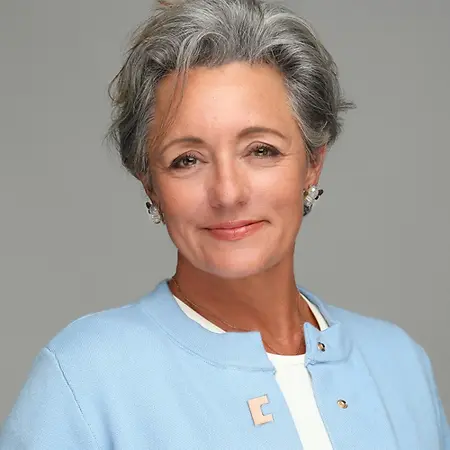
Her Story
About Celeste
Celeste Blair is a Prison Professors Charitable Corporation Ambassador, founder of the Peer Success Reentry Collective, and a dedicated advocate for criminal justice reform, reentry, and personal transformation. Drawing from her own experience as a justice-impacted individual, she has devoted her career to helping others reclaim their narratives, develop leadership skills, and create meaningful futures after incarceration. Blair believes that when lived experience is paired with education, mentorship, and intentional action, lasting transformation becomes possible. Through her work, she empowers individuals to embrace second chances while building stronger communities rooted in accountability, hope, and purpose.
Blair founded the Peer Success Reentry Collective while incarcerated, creating a grassroots mentorship initiative that continues to positively impact women in multiple federal correctional facilities. She authored the Peer-Led Mentorship Handbook, a resource distributed free to incarcerated individuals, and is completing her book, In the Absence of Paint, which chronicles her journey of resilience, healing, and creative self-expression. As an ambassador for Prison Professors Charitable Corporation, she assists thousands of incarcerated individuals nationwide in documenting their personal growth and preparing for successful reentry. She has also collaborated with West Virginia University and the Appalachian Prison Book Project, contributing to educational initiatives and discussions surrounding prison education and rehabilitation. Blair is currently pursuing her education through Western Governors University while continuing to expand her expertise in leadership, wellness, and reentry programming.
Beyond her professional work, Blair is an artist, writer, and lifelong advocate for personal wellness and servant leadership. She remains committed to promoting emotional intelligence, leadership development, and the eight dimensions of wellness through workshops, mentorship, and community engagement. An avid hiker and yoga practitioner, she also maintains an active artistic practice that reflects her belief in the healing power of creativity. Guided by compassion, resilience, and a deep commitment to service, Blair continues to inspire individuals and organizations by demonstrating that preparation, education, and purpose can transform lives and create opportunities for lasting success.
Her Interview
Ten minutes with Celeste
01What do you attribute your success to?
Success, to me, has never been about individual achievement—it has always been about the communities we build and the people we empower along the way.
I attribute much of my growth to the remarkable women who invested in me, challenged me, and believed in my potential long before I believed in it myself. Their examples taught me that leadership is rooted in service, courage, and the willingness to create opportunities where none seem to exist.
I have always been drawn to finding creative solutions to complex problems. Whether through art, peer-led mentorship, justice reform, or community development, I look for ways to bring people together around a shared purpose. I believe that when people are trusted, encouraged, and given meaningful opportunities to contribute, they become active participants in building stronger communities.
My greatest successes have never been accomplishments I achieved alone. They have come from helping others discover their own strengths, reclaim their own stories, and realize that transformation is possible. That is the work that continues to inspire me every day.
02What’s the best career advice you’ve ever received?
One of the first pieces of career advice I received after my release came from Michael Santos. He looked at me and said, "You were a rock star in prison. Now you have to become a rock star in the real world."
That simple statement changed my perspective. Leadership earned in one environment doesn't automatically transfer to another. Every new chapter requires humility, a willingness to learn, and the discipline to build credibility through consistent action. It reminded me that past accomplishments are a foundation—not a finish line.
The most valuable lesson I've ever learned, however, wasn't spoken to me at all. It was something life taught me through experience.
As a leader, you never correct someone publicly when you can coach them privately.
Taking someone aside for a one-on-one conversation preserves their dignity while creating space for honest growth. Public criticism may solve an immediate problem, but private guidance builds trust, strengthens relationships, and creates healthier organizations. I've found that people are far more willing to improve when they feel respected rather than embarrassed.
That principle has shaped every leadership role I've held. Whether mentoring incarcerated individuals, building peer-led communities, or working with teams, I've learned that leadership isn't about proving authority—it's about helping people become the best version of themselves.
03What advice would you give to young women entering your industry?
If I could offer one piece of advice to young women entering this field, it would be this: learn to establish healthy boundaries early, and honor them consistently.
When you work in criminal justice reform, reentry, or any profession centered on helping people rebuild their lives, you will meet individuals who are deeply grateful, vulnerable, and searching for connection. Whether someone is still incarcerated or recently released, it's important to remember that your role is to support their growth—not to become the center of their story.
Compassion and empathy are essential, but so are professionalism and clear boundaries. The healthiest relationships are built on mutual respect, appropriate expectations, and a shared commitment to the mission. Keeping those lines clear protects everyone involved and allows the work to remain focused where it belongs: helping people become the best version of themselves.
I've learned that the most meaningful impact doesn't come from rescuing people—it comes from empowering them. When we maintain healthy boundaries, we create space for trust, accountability, and lasting transformation. That's where real change happens.
04What are the biggest challenges or opportunities in your field right now?
One of the greatest challenges in my field is remembering that meaningful change happens over years, not months. Criminal justice reform, community building, and reentry work require patience, persistence, and an unwavering commitment to a long-term vision. It can be tempting to focus on immediate wins, but lasting transformation—whether in a person or an entire system—is built one relationship, one conversation, and one opportunity at a time.
At the same time, I believe this is also our greatest opportunity. We are beginning to recognize the incredible potential of peer leadership, storytelling, education, and technology to transform lives from the inside out. My challenge is to remain faithful to the larger vision I have for the future—to continue building communities, creating innovative solutions, and advancing projects like the Peer Success Reentry Collective and the Green Bridge Project, even when progress feels slow. I've learned that the most meaningful work often requires planting seeds today that someone else may not see bloom for years.
05What values are most important to you in your work and personal life?
The values that guide both my work and my personal life are creativity, community, integrity, and lifelong growth.
I believe that every challenge holds the possibility of a creative solution. Whether I'm painting, writing, mentoring, or designing a new program, I try to approach problems with curiosity rather than limitation. Some of the most meaningful opportunities in my life have come from asking, "What if we looked at this differently?"
I also believe that none of us succeeds alone. Community has shaped every part of my journey. The women who encouraged me during my incarceration, the mentors who challenged me after my release, and the people I now have the privilege of mentoring have all reinforced my belief that transformation happens through relationships. My goal has never been to build programs simply for the sake of building them, but to create communities where people feel seen, valued, and inspired to become the best version of themselves.
Finally, I value living with intention. Whether I'm pursuing a degree, creating art, developing the Peer Success Reentry Collective, or imagining the future of the Green Bridge Project, I try to remain faithful to a long-term vision while finding purpose in the work of each day. I've learned that extraordinary outcomes are often the result of ordinary acts of consistency, repeated over time.
Join Influential Women and start making an impact. Register now.