A thoughtful examination of how modern work culture has erased boundaries between professional and personal life, arguing that protecting your time and mental health is essential leadership, not laziness.
Her Story
About Cindy
Data governance and enterprise data professional with nearly three decades of experience at CVS Health, where she served as an enterprise data steward and subject matter expert in big data warehousing, data standards, and project support. Her work included acting as a data librarian and helping shape standards across enterprise initiatives. She also brings a long-standing commitment to service through earlier volunteer work supporting infants at Mt. Washington Pediatric Hospital.
Advocate with a deep love for animals. Enjoys drawing, writing, and doing home projects.
Her Interview
Ten minutes with Cindy
01What do you attribute your success to?
In a word: education. I am a huge advocate of getting a college degree - not to make money necessarily - but for its pure value. I finished my degree when I was in my early thirties and working full time as a pharmacy technician in a hospital. I have to laugh because when I was finishing my last class my professor said: "Well, this is it." I exclaimed: "What do you mean! I'm not ready to stop." That's how much I loved University of Baltimore and the professors I had. I attribute that to being an adult. It adds a different perspective. At any rate as it turned out, that degree ended up increasing my salary five-fold.
I also attribute my success to my personality. I enjoyed bringing humor to the job and most everyone appreciated it. As part of my effort to education people on our complex data warehouse, I created something called "Do You Know?" that I send out in email to all end-users. I'd ask a question about a data element or business concept and then present three answer options - two were funny and one was the actual answer. Then in a brief paragraph I would elaborate on the topic. It became wildly popular. Scores of people would reach out and say that it made their day. It made me happy. You never know the influence you can have on people unless you meet them where they are.
02What’s the best career advice you’ve ever received?
The best advice I received was more of a challenge. I was working at a home healthcare company mixing I.V. therapies and chemotherapy. My pharmacist manager handled the paperwork while I did the mixing. When I had finished and returned to the office he would often be staring into space and I'd have to help with the paperwork. One day I got angry and we had words. He said: "You can always go to school and get a degree like I did and make the big bucks. I'm paid to think." And I tell you the truth - that evening when I got home, I called several universities for them to mail me catalogs (this was before everything was online). I needed that push, that challenge.
03What advice would you give to young women entering your industry?
Honestly? This may sound cliche, but it's true, nonetheless. Be true to yourself. It doesn't matter what line of work you are in. Organizations have a way of changing you. It's okay to be hungry and want advancement but never sacrifice your principles and values to do it. It may not win you any prizes, but you'll be able to love yourself. And, incidentally, many others will respect you for it.
04What are the biggest challenges or opportunities in your field right now?
In any field, the biggest challenge has to be A.I. (artificial intelligence). Organizations have all jumped on the A.I. bandwagon because it's new and exciting. They hope it can also save them money, which is always the end game. So, it's probably going to be important for people to have some knowledge of it in order to stay relevant.
05What values are most important to you in your work and personal life?
I'm retired now but when I was working it was important for me to help people. In a large corporation I often wondered if what I was doing mattered. When I worked in a hospital, I knew that I was helping people - it was fairly obvious. But a corporation whose primary goal is making money? That's a different animal. I realized that even though my colleagues weren't sick, they had jobs to complete and they often needed my knowledge to do it. Whenever I got frustrated with the politics I would think of that. In my mind I transformed the notion of working for the company to one of working for my colleagues.
In my personal life my faith is important to me. I like to tell people: "I believe in a relationship with G-d, not religion." I think that relationship is a forever journey. I'm always contemplating, trying to get closer, trying to sort truth from accepted teachings. I try not to be preachy. I only discuss it when the conversation comes up. I hope my behavior speaks louder than my words. I think that's what we're supposed to do - reflect G-d's love in the world. Do I always succeed? No. But I have to try again every day.
Her Content Hub
Articles by Cindy
I Hear a Horn Blowing!
Reclaiming the boundary between work and life in an age of constant connectivity.

There was a time—captured so clearly in old black-and-white films—when the workday had a definitive ending.
A horn would sound.
Machines would stop.
People would gather their things, punch the time clock, and go home.
Work ended.
Life resumed.
For many professionals today, that boundary has become increasingly blurred.
In modern corporate culture, especially within global organizations, the expectation to remain constantly accessible has transformed the workday into something far less defined. Emails arrive late into the evening. Meetings stretch across time zones. Productivity is often mistaken for perpetual availability.
And somewhere along the way, many people have internalized the dangerous idea that success requires constant output.
I understand the realities of professional flexibility.
Throughout my career, I worked with colleagues across multiple time zones. Early morning calls and occasional late-night meetings were often necessary. That level of collaboration can absolutely be part of professional courtesy and effective leadership.
But there is a difference between flexibility and chronic overextension.
I often saw colleagues sending emails at one, two, or even four o’clock in the morning.
When I asked why, the answers were telling:
“It's the only time I can get everything done.”
“I want to get promoted.”
These responses reveal a broader issue—many professionals are not simply working hard; they are operating within systems that often reward overwork while quietly normalizing burnout.
But here is the truth:
There is still an end to the day.
And protecting that boundary is not laziness.
It is leadership.
Healthy work-life balance is not optional if we want to preserve our mental clarity, emotional well-being, relationships, and long-term effectiveness.
Rest is not a reward for finishing everything.
Rest is a requirement for sustaining excellence.
There is profound value in:
- Shutting down the laptop
- Leaving work at work
- Sharing meals with loved ones
- Reconnecting with yourself
- Allowing your mind and body to recover
Without these boundaries, ambition can quickly become depletion.
We each need to cultivate our own internal horn—the signal that says:
“You have done enough for today.”
This requires intentionality.
It requires rejecting guilt-based productivity.
It requires understanding that your worth is not measured solely by how many hours you remain available.
And perhaps most importantly, it requires remembering that your career should support your life—not consume it.
At the end of the day, true success is not about how long you stayed online.
It is about whether you can sustain your excellence without sacrificing yourself in the process.
So when that internal horn sounds:
Listen.
Shut the laptop.
Step away.
Go home.
Because protecting your peace may be one of the most powerful professional decisions you ever make.
A reflective piece exploring how childhood clique dynamics persist into adulthood, examining workplace exclusion and offering empowering advice for women to support rather than compete with one another.
Ladies, Let’s Play Nice in the Sandbox
Breaking Free from the Clique Mentality: A Reflection on Female Relationships from Childhood to the Workplace

Remember when you were a kid? It seems like yesterday, right? In many ways, it is. Those childhood feelings can often stay with us longer than we expect. I recall two friends I had in my neighborhood. It seemed like when all three of us were together, somebody went home crying. When there were just two of us, we laughed and got along just fine.
What is it about that dynamic of three that causes us to side with one person and gang up on another? I suppose it’s a combination of jealousy, fear, insecurity, competitiveness, and dominance—normal emotions and characteristics of growing children. But do we grow out of it? Some do, and some don’t.
I’m retired now, but I worked for about 50 years. I babysat at 13, worked at my high school and junior college to help pay tuition, worked as a pharmacy technician in a couple of hospitals and in a home healthcare company, and finally ended up as a data specialist in a large corporation. In several of these jobs, whenever there were multiple women in a group, cliques formed. Yes, there were friendships, but I mean true cliques where exclusion was involved.
What happened in this adult version of three? The same thing that happened in the childhood version—talking behind someone’s back, gossiping, being rude, an unwillingness to help or cooperate, and running to their “mommy” to tell on you (whoops, I mean the manager). The only difference was that I didn’t go home crying. But I did do a lot of self-examination. What was wrong with me? Why was I not liked? How should I handle this? In the end, it occurred to me that it wasn’t me—it was them.
If none of this feels familiar to you, I apologize for taking up your time. If you understand and are experiencing this now, I want to say this: don’t immediately question yourself. Look at the situation in its entirety. Don’t participate in the behavior—it’s not productive or kind. Be yourself. Love yourself, even if you stand alone. It’s worth it.
There is plenty of room for all of us women to succeed. Too often, women are pitted against each other, and historically, systems have contributed to that dynamic. Let’s not continue it ourselves. Here’s your bucket and shovel—let’s have fun together in the sandbox.
Discover how embracing your natural talents and authentic self can transform your career into something meaningful and inspiring, rather than searching for fulfillment externally.
Take Your Talent to Work
Discover how embracing your natural talents and authentic self can transform your career into something truly fulfilling.
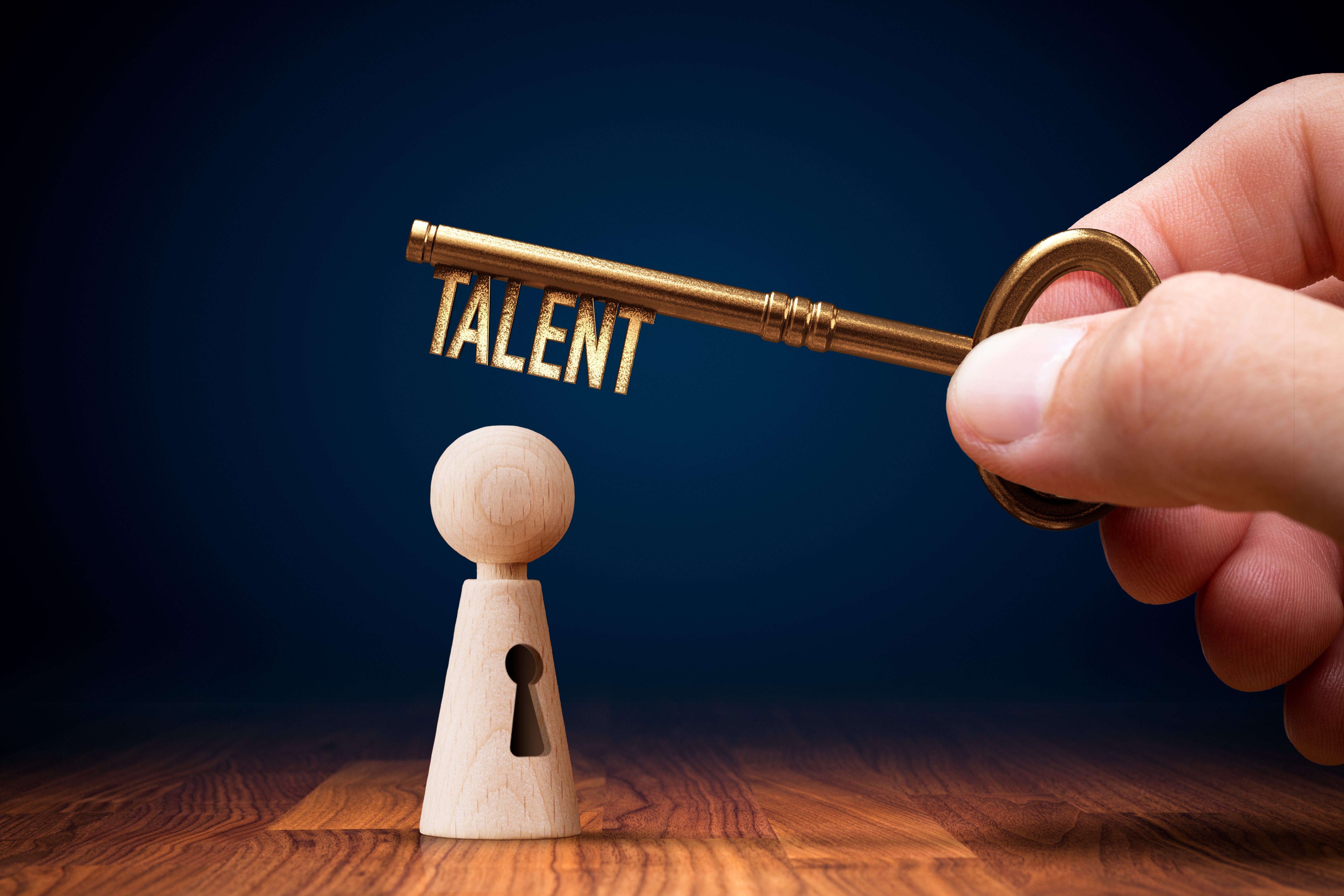
People often ask how they can have a job or career that they like, inspires them, isn’t boring, and allows them to grow. This suggests that the answer is outside of you rather than within you. I believe the latter is true.
Consider this: we are each born with personality and natural gifts. It’s a wonderful thing, and you can’t take it on and off like an article of clothing. I take that back… you can, but I don’t recommend it. You’ll end up unhappy and dissatisfied if you do.
How does an artist and a history major end up being a data subject matter expert in a corporation? That’s where my path led me. In my mind, I separated making money and supporting myself from utilizing my natural talents of drawing, writing, and acting. Sure, it worked for a while, but eventually my gifts found a way to wriggle out of me and present themselves in my job.
One of the sections in our self-performance evaluation (I guess you could call it a KPI) was to “think outside the box.” I don’t think my manager and VP understood that I would take them up on that! I educated end users on our complex data warehouse and found a way to make it easy, continuous, and funny. How did I do it? Simple. I was me. I didn’t suppress my natural talent. I decided to take it with me to work every day. And you know what? It resonated with people.
Join Influential Women and start making an impact. Register now.