An experienced dyslexia therapist and reading interventionist shares insights from 20+ years in education, exploring how effective instruction, personalized approaches, and educator growth transform struggling students into confident learners.
Her Story
About Constance
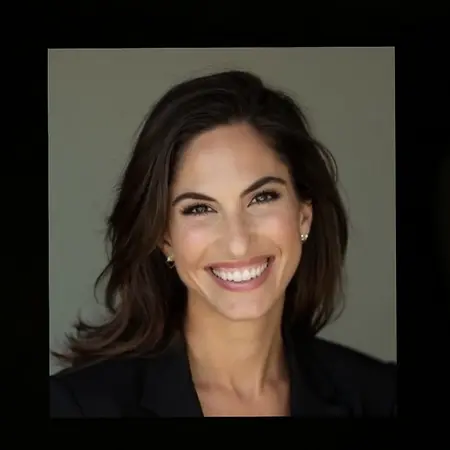
Constance Coffee is an experienced educator and dyslexia therapist with over 20 years in teaching and 4 years focused on dyslexia therapy and learning disabilities for reading and writing. She currently serves as a dyslexia therapist at K-12 Stride, providing virtual group instruction to high school students for a few hours each day, while also running her own LLC for private virtual tutoring, where the majority of her students are dyslexic. Earlier in her career, she taught first and fifth grade, choir, served as a reading specialist, and worked as a college professor teaching special education teachers, ESL adults, and communications classes. She holds an undergraduate degree in elementary education with a minor in music, a master's in school administration, and is pursuing a doctorate in special education at A&M Commerce after initially starting in school leadership. Her certifications include classroom teacher, principal, and ESL, and she is completing her certified dyslexia therapist credential with a test scheduled for October 5th. Coffee draws inspiration from her own experiences and a high school music teacher mentor, finding deep reward in seeing students gain confidence through reading skills.
Her Content Hub
Articles by Constance
Beyond the Struggle: What 20+ Years in Education Have Taught Me About Helping Students Learn to Read
How Understanding Individual Learning Needs Transforms Struggling Readers Into Capable Learners

For more than two decades, I have had the privilege of working with students in many different educational settings—as an elementary classroom teacher, special education teacher, dyslexia therapist, college professor, and reading and writing interventionist.
Through all of those roles, one truth has remained constant: A struggling student is not necessarily a student who cannot learn. Sometimes, that student simply has not yet been taught in the way he or she needs to be taught.
That distinction matters.
For a child with dyslexia, learning to read can require an extraordinary amount of effort. Skills that appear to develop naturally for other students may require explicit, systematic, and carefully sequenced instruction. When those needs are misunderstood, children can begin to believe that their difficulty with reading says something about their intelligence or their potential.
It does not.
Looking for the Unexpected
One of the most important things I have learned through my work in dyslexia education is to look for the unexpected.
A student may be articulate, curious, creative, and capable of understanding sophisticated ideas while simultaneously struggling to decode a seemingly simple word. Another child may have an impressive vocabulary but difficulty spelling words consistently. A student who contributes thoughtful ideas during a classroom discussion may struggle when asked to put those same ideas onto paper.
Those discrepancies tell us something important.
Instead of asking, "Why can't this student do this?" educators can begin asking, "What is preventing this student from demonstrating what he or she knows?"
That change in perspective can alter the trajectory of a child's education.
Effective Intervention Is More Than a Program
Throughout my career, I have worked with approaches and programs including Take Flight, Orton-Gillingham-based instruction, Read Naturally, the Institute for Excellence in Writing, and other structured reading and writing interventions.
Programs and curricula are valuable tools, but I have learned that effective intervention requires more than simply completing lessons.
A skilled therapist or interventionist is constantly observing.
Is the student truly mastering the concept or memorizing a pattern? Can the student apply a skill outside the lesson in which it was taught? Is fluency improving? Is spelling reinforcing reading development? Where is the breakdown occurring, and what needs to be retaught?
Good intervention is both systematic and responsive.
The sequence matters, but so does the child sitting in front of you.
Confidence Is Part of the Work
Some of the most meaningful changes I have witnessed cannot be measured by a test score.
They happen when a student who once avoided reading volunteers to read aloud.
They happen when a child realizes, "I can do this."
They happen when frustration begins to give way to perseverance.
Academic intervention should never lower expectations for students with dyslexia. Instead, it should give them the tools necessary to reach those expectations.
Over the years, I have watched students make remarkable progress when they receive appropriate instruction combined with consistency, encouragement, accountability, and time. Those experiences have reinforced my belief that educators must see beyond a child's present difficulty to his or her future capability.
Teaching Has Required Me to Keep Learning, Too
Twenty-plus years in education have also taught me that experience should never make an educator complacent.
The longer I teach, the more aware I become of how much there is still to learn.
My career has taken me through general education, special education, dyslexia intervention, higher education, private instruction, and virtual learning. Each setting has challenged me to become a better teacher.
Continuing my professional development in dyslexia therapy and pursuing advanced credentials have been part of that commitment. Education changes. Research develops. Students change. Technology changes how instruction can be delivered.
The responsibility to keep growing belongs to us as educators.
Virtual Instruction Expanded What I Thought Was Possible
One of the most interesting developments in my career has been seeing how effectively individualized literacy intervention can be delivered virtually.
At first glance, dyslexia therapy may seem like something that must happen across a physical table. Yet thoughtful virtual instruction can still be highly interactive, structured, personal, and data-driven.
Technology can also remove geographical barriers between qualified instructors and students who need specialized intervention.
The delivery method may change, but the fundamentals do not: strong instruction still requires knowledge, preparation, relationships, careful observation, and consistency.
The Work Is Ultimately About People
After more than 20 years, I still love education because no two students are exactly alike.
Teaching reading and writing is technical work. It requires understanding language, phonology, decoding, spelling, fluency, comprehension, written expression, and instructional methodology.
But education is also profoundly human work.
Behind every assessment score is a child.
Behind every child is a family hoping someone will understand what is happening and know how to help.
And behind effective intervention should be an educator who believes that difficulty is not destiny.
That may be the greatest lesson my students have taught me.
Our job as educators is not simply to identify what children cannot yet do. Our job is to discover what they need in order to succeed—and then teach them until they realize what they are capable of becoming.
About Constance Coffee
Constance Coffee is a Dyslexia Academic Language Therapist and reading and writing interventionist with more than 20 years of experience in education. Her professional background includes elementary general education, special education, dyslexia therapy, higher education, private intervention, and virtual instruction. She specializes in structured literacy and individualized reading and writing intervention and continues to pursue advanced professional development in dyslexia education.
Join Influential Women and start making an impact. Register now.