Her Story
About Deb
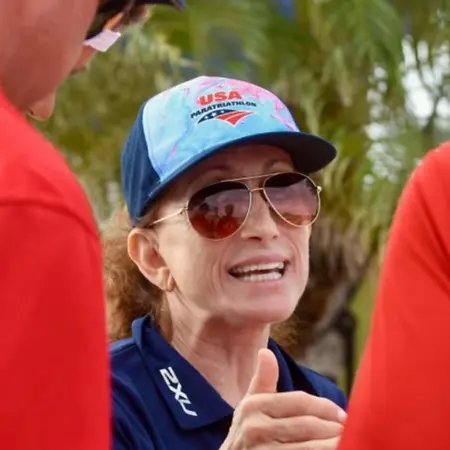
Deborah Carabet (Coach Deb) is a full-time Para Multisport Coach based in the Los Angeles, California area, where she is recognized as the only dedicated full-time professional in this role in Southern California. Through her company, Elevate Multisport & Paratriathlon Coaching, she specializes in coaching paratriathletes, paracycling, pararunning, and paraswimming athletes, while also introducing women and beginners of all abilities to multisport and endurance sports. She is a coach educator to other coaches in the paratriathlon world. Her coaching work extends across training programs, talent identification camps, and development pathways supporting athletes aiming for national and Paralympic competition. With nearly a decade of coaching experience and approximately eight years focused specifically on para-athletes, Carabet has become a leading advocate for accessibility and inclusion in endurance sports. She serves as a coach and consultant for organizations such as USATri, the United States Olympic & Paralympic Training Centers, the Challenged Athletes Foundation, Dare2Tri, Children's Hospital Los Angeles and other nonprofit initiatives supporting adaptive sport. In addition, she plays key leadership roles as Parathlete Coordinator for major events including the Los Angeles Marathon, and other regional races, ensuring athletes with disabilities have structured, supported competition opportunities. Before transitioning into full-time coaching, Carabet spent over 20 years in corporate media and sports marketing, working in advertising, broadcast, and partnerships with organizations including Golf Digest. She holds an undergraduate degree in Deaf Education and Speech Pathology, along with multiple certifications in triathlon, paratriathlon, cycling, safety, and safeguarding. She was a local volunteer Ground Zero immediately following the 9-11/WTC Disaster and spent two years working at Ground Zero with FEMA and the Red Cross immediately following the 9/11-WTC Disaster. She was the media liaison for the Red Cross on top of her other duties. Her contributions to sport and inclusion have earned her recognition such as Coach of the Year honors, and she remains actively engaged in advisory and board roles supporting adaptive sports development, is an advocate for people with disabilities, athlete welfare, and the broader Paralympic movement.
Her Interview
Ten minutes with Deb
01What do you attribute your success to?
I attribute my success to a combination of hard work, persistence, and a deep commitment to continuous learning. I’ve also been fortunate to have strong mentorship throughout my career, as well as a dedicated community of athletes, coaches, and volunteers who consistently inspire and challenge me. Their trust and collaboration have been central to everything I’ve been able to build and achieve. In addition, a big contributing factor to my success was my father who always believed in never giving up, education and not take no for an answer. Having family support of both my brother, sister and their families was and is still a strong attribute to my continued success in my career and life.
02What’s the best career advice you’ve ever received?
There have been a few bits and pieces of advice-
- Believe in yourself
- If you fail at something, learn from it, pick yourself up and move forward
- Never Give Up or Take NO for an Answer
- Ask questions always
- Keep learning
03What advice would you give to young women entering your industry?
I would tell young women to believe in themselves and not allow age, background, or a single career path to define their future. This industry rewards adaptability, resilience, and curiosity. I encourage them to build strong networks, seek out mentors, and stay open to reinvention as their interests and opportunities evolve over time. The word "impossible" means I-M-POSSIBLE!
04What are the biggest challenges or opportunities in your field right now?
One of the biggest challenges we face is securing adequate funding and ensuring consistent access to truly accessible training and competition spaces, such as pools and tracks. The high cost of adaptive equipment—like prosthetic running blades, handcycles, and race chairs as examples—also remains a significant barrier for many athletes. Travel can be hard financially, with equipment and airlines not handling it properly resulting in broken equipment and everyday wheelchairs. At the same time, there is an incredible opportunity ahead with the Los Angeles 2028 Olympic and Paralympic Games, which can serve as a powerful platform to expand visibility, investment, and long-term support for para-athletes and inclusive sport programs.
05What values are most important to you in your work and personal life?
The values that guide my work and personal life are inclusion, service, advocacy and family and a good support network. I am deeply committed to giving back, advancing education, and building strong, supportive communities. Everything I do is centered on creating access and opportunity so that athletes of all abilities can participate, thrive, and reach their fullest potential.
Join Influential Women and start making an impact. Register now.