

Join us for Mahj, Moms and Milestones Night on November 12, 2026, featuring expert professionals discussing childcare, first aid, sleep, child development, and parental support in a fun mahjong setting.
In Conversation
Deborah Ellick for Bold. Brilliant. Unstoppable.
Read the transcript
Deborah Ellick: Take the chance. Take the opportunity. Ask the question. Walk through that door when it opens, even if you're nervous about what may be on the other side.
What does being an Influential Woman mean to you?
Deborah Ellick: After more than 3 decades in the early childhood education field, I have learned that the most important qualities that we bring to our work is about curiosity, compassion, and the willingness to keep learning. The world of education is continuously changing, and we must pursue that and continue to advance our education to understand today's needs. I believe that the experience gives us wisdom, but continued education keeps us very relevant. I'm so proud to have built a career where education and generations of children and families has become part of my life. Some of the children that I cared for 30 years ago are now young parents bringing me their children, and that is the greatest measure of impact that I could possibly ask for. As women leaders in education, we have an opportunity and a responsibility to use our voice, our experience, and our knowledge to advocate for children, support families, and inspire the next generation of educators. It's very important to reach out to families and to work with them. Many of them. Work full time and they need the support. That they are not feeling guilty to drop their children and the love that the teachers give to teach to the children and the comfort that my director and I give to the parents is a sense of relief for them to go to work and feel that they can do both, work hard and raise their children, and it's my pleasure to help the community find the best quality childcare, which is exactly what Sugar Plums does.
What's one piece of advice you would give to younger women chasing their dreams?
Deborah Ellick: Believe in yourself and do not be afraid to bet on yourself. Your path will not always look the way you imagined it. There will definitely be setbacks, unexpected turns, and moments when you question whether you're doing the right thing. I certainly had those moments in my career, but I have learned that those challenges often become the experiences that make us wiser. Don't wait until you feel completely ready. Take the chance. Take the opportunity. Ask the question. Walk through that door when it opens, even if you're nervous about what may be on the other side. And never stop learning. The world changes, industries change, and we change. Stay curious and be willing to grow, and definitely take criticism. That's how you learn. Define success for yourself. Do not measure your life by a title or a paycheck or someone else's definition of achievement. Most people around me, when I was going into the world of education, were lawyers or professionals that were putting on suits and ties and jackets and heels. I knew I was different, but my path made me smile, and I got hugs during the day, and I'm proud that I didn't fall into a world that would not have made me happy to go to work each day. Do what makes you happy and stick to your dreams. It's definitely worth it.
Full transcript available
Her Story
About Deborah
Deborah Ellick is the Owner and Founder/President of Sugar Plums Child Care Center, where she has dedicated more than 35 years to early childhood education and care. She founded Sugar Plums in 1990 and has developed the center with a strong commitment to supporting both typically developing children and those with special needs. The center is licensed by the State of Maryland and accredited through the Maryland State Department of Education. Under her leadership, Sugar Plums utilizes the Creative Curriculum, conducts ongoing developmental evaluations, collaborates with educators and specialists, and supports continued professional development for its teachers.
Ellick holds a B.A. in Early Childhood Education from Syracuse University and an M.Ed. in Early Childhood Special Education from The George Washington University. She has also completed 12 credit hours annually through an Excel program offered by the Maryland State Department of Education, earning a certificate each year. Her areas of expertise include early childhood education, child development, early childhood special education, classroom management, autism spectrum disorders, inclusive education, and teacher professional development. She has also served on the Executive Board of The Ivy Mount School and has supported organizations including the Jewish Federation.
Outside of her professional work, Ellick enjoys expressing her creativity through knitting, crafts, baking, cooking, and hands-on projects, including creating wedding décor for her child. She also enjoys exercising, spending time outdoors, hiking and walking with her husband, bicycling, and playing golf. Her professional and personal pursuits reflect her creativity, dedication, and passion for enriching the lives of children, families, and her community.
Her Interview
Ten minutes with Deborah
01What do you attribute your success to?
I attribute my success to my commitment, trustworthiness, and dependability. Families know that I am dedicated to this work for the long term, and after so many years in early childhood education, I have built a reputation that reflects that commitment. I also believe in continually learning and growing. Although I did not have to return to school in my early 50s to earn my master’s degree, I chose to because I saw significant changes and challenges emerging in early childhood education and felt it was important to expand my knowledge so I could better support children and families in meaningful ways.
02What’s the best career advice you’ve ever received?
The best career advice I’ve ever received is to do what you love and not become discouraged by what else is out there. My passion for working with children is what led me to this career, and I know that another path would not have given me the same sense of purpose and fulfillment. While early childhood education may not make someone wealthy financially, it has made my life incredibly rich through the children and families I have had the privilege of serving.
03What advice would you give to young women entering your industry?
The best advice I would give young women entering early childhood education is to always put the children’s needs first and remain passionate about the reason you chose this profession. Take the time to truly know each child because every child learns differently; watch, listen, build relationships, understand what motivates them, and be patient as you help them reach their individual goals. I would also encourage you to partner with families rather than work against them, making sure they know you are an advocate for their child. Never stop learning, whether through certifications, professional development, reading, podcasts, or conversations with others in the field. Education is constantly evolving, so remain open to new ideas and be willing to grow and change the way you think. Above all, do not allow paperwork, politics, or other distractions to take away from what matters most: the child.
04What are the biggest challenges or opportunities in your field right now?
The biggest challenges in early childhood education today are helping families understand the importance of structure, routine, and developmentally appropriate expectations while also navigating the growing influence of technology. Every child develops differently, so it is important not to compare children or place unnecessary pressure on them to reach milestones at the same pace. At the same time, I see tremendous opportunities to strengthen the field by encouraging more people to pursue early childhood education and gain meaningful classroom experience before taking on leadership roles. I believe aspiring educators should learn about special education, developmental milestones, curriculum, different learning styles, and how to build strong partnerships with families. Through our partnership with Don Bosco, we welcome student interns into our classrooms so they can experience early childhood education firsthand and develop a deeper understanding of the profession. Ultimately, I believe the future of our field depends on well-educated, patient, compassionate educators who are committed to continuously learning and putting children at the center of everything they do.
05What values are most important to you in your work and personal life?
The values most important to me in both my work and personal life are family, respect, compassion, patience, and perseverance. I believe in treating everyone with respect, whether I am working with a child, a parent, or someone from a different background or generation. Patience has always been especially important to me; it is even my middle name, and I believe it has helped me navigate everything from a child’s individual development to listening thoughtfully to a parent who may be facing a difficult situation. I also believe strongly in consistency and never giving up. Whether I am helping a frustrated child or patiently untangling a ball of yarn, I believe in staying committed to the task until it is done.
Her Content Hub
Articles by Deborah
Mom's come learn about child development resources and socialize!
Join us for an evening of Mahjong, community, and expert insights for moms and caregivers of young children.
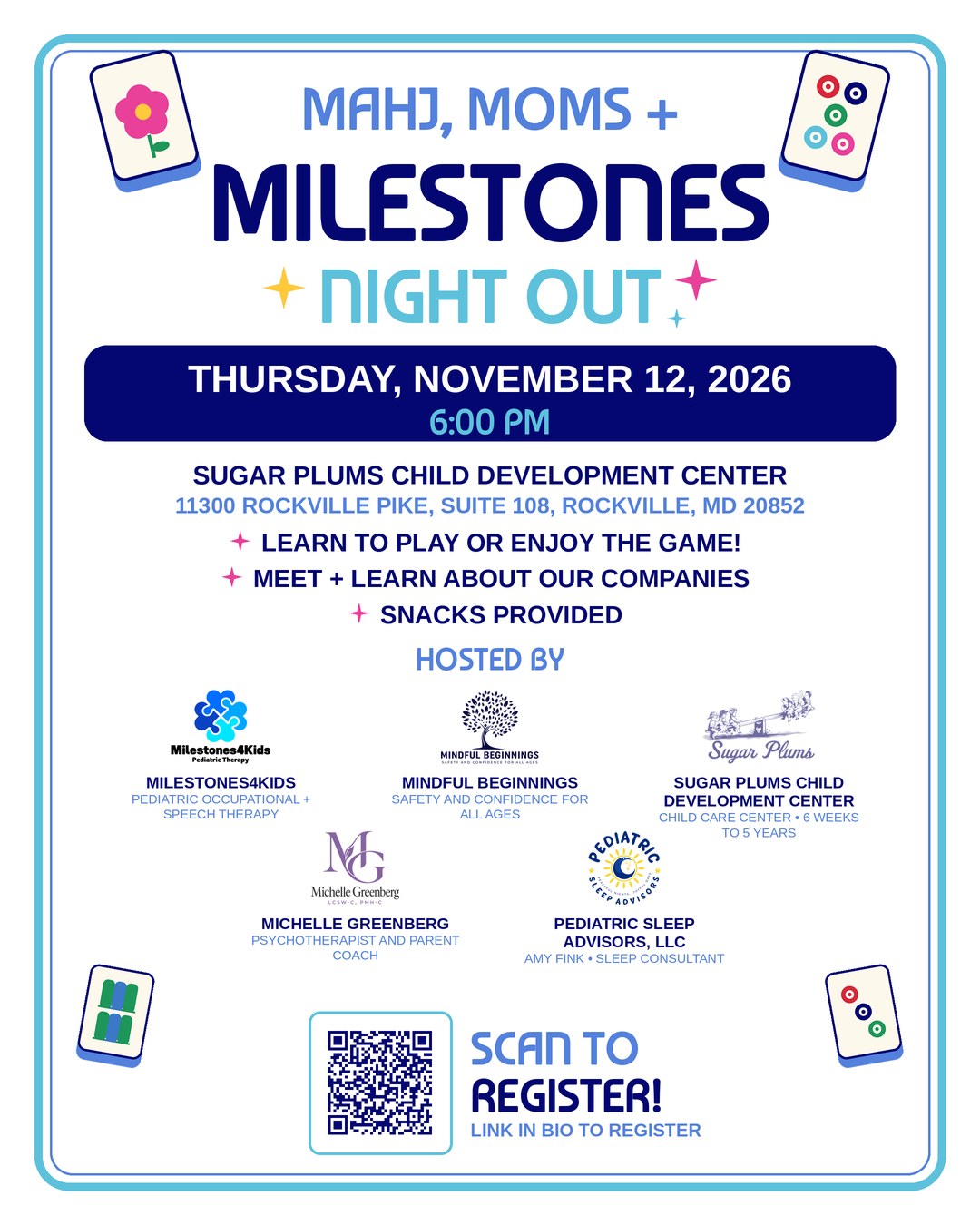
Attached is a flier for our Mahj, Moms and Milestones Night. Please share it with friends and family. Spaces are limited, so sign up soon!
If you have friends or know other moms with young children, including grandmas, they can join us for our event. Mahjong and learning are for everyone.
Here is a sneak peek at the professionals I am hosting at Sugar Plums on November 12, 2026, from 6:00 p.m. to 8:30 p.m.
- Deborah, Founder of Sugar Plums: Explore Sugar Plums Childcare Center.
- Lindsay Karr, First Aid Courses: Learn about available first-aid and CPR courses for parents and caregivers.
- Amy Fink, Pediatric Sleep Consultant: Learn about common sleep challenges, age-appropriate sleep expectations, and practical tips.
- Michelle Feld, OT: Learn about child development, sensory needs, motor skills, and signs that a child may benefit from occupational therapy.
- Michelle Greenberg, Social Worker: Learn about support for parents as they navigate their child's challenges at home and at school.
A reflective piece on three decades in early childhood education, emphasizing curiosity, compassion, and lifelong learning. The author celebrates building generational relationships with families and advocates for women leaders' voices in education.
Leading with Purpose
Three Decades of Dedication: Leading with Curiosity, Compassion, and Continuous Growth in Early Childhood Education

After more than three decades in this field, I have learned that the most important qualities we can bring to our work are curiosity, compassion, and the willingness to keep learning.
The world of early childhood education continues to change, and so must we. I have pursued advanced education and continued professional development because I believe that experience gives us wisdom, but continued learning keeps us relevant.
I am proud to have built a career where generations of children and families have become a part of my life. Some of the children I cared for years ago have returned to Sugar Plums with their children. That is the greatest measure of impact I could ask for.
As women leaders in education, we have an opportunity and a responsibility to use our voices, our experience, and our knowledge to advocate for children, support families, and inspire the next generation of educators.
Join Influential Women and start making an impact. Register now.