Dementia is brain failure that goes far beyond memory loss. Learn how understanding dementia as a neurological condition rather than behavioral problem transforms care and compassion for those affected.
In Conversation
Deborah Seelhoff for Bold. Brilliant. Unstoppable.
Read the transcript
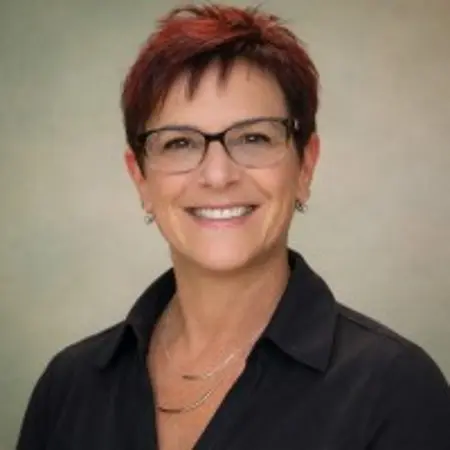
Deborah Seelhoff: Being an influential woman means that by using my voice, my compassion, and my experience, I can bring hope and dignity to people living with dementia and educate and support the people that care for them.
What's one piece of advice you would give to younger women chasing their dreams?
Deborah Seelhoff: Don't let anyone make you feel like your dreams are too big or your voice doesn't matter. Life will test you, but stay grounded in who you are, what you believe in. Lead with compassion and keep moving forward, no matter how hard it gets. There's a line in a song that says. If you have a dream, chase it, cuz your dreams don't chase you back.
Full transcript available
Her Story
About Deborah
Deborah Seelhoff is a passionate advocate and educator in dementia care, serving as the founder and owner of Dementia Forward LLC in Waterford, Michigan. With a background as a Certified Dementia Practitioner, she focuses on training care partners, educating families, and bridging the gap between clinical knowledge and practical, relationship-centered care. Through her work, she emphasizes the importance of understanding the person behind the diagnosis and creating moments of joy, purpose, and dignity for those living with dementia.
Her professional journey includes managing a small memory-care group home, where she observed firsthand the gaps in caregiver training and family support. Recognizing the critical need for education in dementia care, Deborah founded Dementia Forward to provide hands-on training for care partners, family education programs, and personalized consultations. Her approach shifts the focus from task-based care to relationship-first care, empowering carepartners and families to respond empathetically and effectively to the needs of people living with dementia. Deborah also extends her impact through partnerships with organizations such as Right at Home Oakland Macomb, where she serves as a dementia educator contractor, providing in-person and video training.
Through her dedication, advocacy, and educational initiatives, Deborah continues to transform dementia care, equipping carepartners and families with the knowledge, confidence, and skills to navigate this challenging journey.
Her Interview
Ten minutes with Deborah
01What do you attribute your success to?
I believe people learn in three ways: by seeing, by hearing, and by doing. Too often, dementia training is limited to watching videos every few months, and while some training is better than none, it doesn’t always create real understanding.
When I work with carepartners, I don’t just tell them what to do, I show them, and more importantly, I help them feel it. Whether in person or virtually, I guide them through what it truly looks like to live with dementia. When they experience approaches like The Positive Physical Approach™ (PPA) and Hand-under-Hand®, there’s a shift; they get it.
I empower caregivers by honoring the work they do. I tell them, I have the deepest respect for you. And I remind them: when you focus on building a relationship, everything changes. Your job becomes more meaningful, your stress decreases, and the person you’re caring for feels safer and more understood.
Right now, many carepartners feel like they’re constantly fighting, trying to get someone to do something they don’t want to do. I teach them how to move away from task-focused care and into person-centered connection, Positive Approach to Care (PAC)®. Because when we focus only on tasks, we risk taking away someone’s autonomy, and where is the empathy in that?
Care is not a task. It’s a relationship.
In my presentations, I create real moments of awareness. I might step into someone’s personal space so they can feel that discomfort, and then ask, “How does that make you feel?” and "So how do you think your person living with dementia feels?" That experience provides a firsthand understanding.
And when I speak to families, I meet them with compassion. I tell them, "You are doing everything right based on what you know, and now you have the opportunity to do even better." Most families leave with a sense of relief and understanding that this is an ever-changing condition, and as our loved one living with dementia changes, so do our relationships and support systems.
02What’s the best career advice you’ve ever received?
I don’t know that anyone ever gave me advice that stayed with me. Looking back, I think I’ve always just followed something inside of me. I’ve always marched to my own drum, finding my own voice and trusting my own strengths, even when it didn’t make sense to others.
When I was told not to pursue dance in university because it wouldn’t make any money, I chose it anyway. I followed what felt right in my heart, earning my Bachelor of Fine Arts and dancing with a company. At the time, I didn’t realize I was building something deeper, the ability to connect, to feel, and to communicate beyond words.
I never expected that my path would lead me to people living with dementia. But through my experience supporting older adults, something shifted in me. What started as work became something personal. Their stories, their vulnerability, their humanity, they stayed with me.
They are the ones I carry in my heart the most.
I didn’t follow someone else’s advice; I followed myself. And somehow, that led me exactly where I was meant to be.
03What advice would you give to young women entering your industry?
If you feel called to dementia care, seek as much education as you can, and always see through the lens of the person living with dementia. Go beyond tasks, beyond agendas, and come back to the person; the relationship.
People living with dementia have lived full, meaningful lives. They are no less of who they’ve always been; only the way they express themselves changes. They are giving us information every day; we just have to slow down, be present, and truly listen.
This work asks more of us, too. We must keep showing up, speaking up, and advocating for better training and higher standards. We cannot lead with fear; we must meet people face to face and honor their dignity.
It’s not about managing behaviors; it’s about building relationships, protecting dignity, and recognizing the life that is still here.
When we choose relationship over task, we don’t just change care… we change the experience of being human.
04What are the biggest challenges or opportunities in your field right now?
The biggest challenges in dementia care today include a fragmented system, low caregiver pay, high staff turnover, and a lack of essential dementia training for memory-care staff, first responders, and anyone working in senior care fields like wound care, in-home care, hospice, placement, and social work. Families often struggle to understand the condition, leaving them feeling uncertain and unsupported.
Where do they turn for information and support? the internet? Think of how much time and energy we spend finding the perfect preschool for our 3-year-old? When you are faced with a situation where you may have to place your mom in a memory care community in 12 hours, you would Google "memory care near me." You will then choose based on location and price. What quality of care do you think you would get? Educating families to ask the hard questions and plan ahead so no "quick" fixes are needed.
The greatest opportunities lie in expanding accessible, practical training, including hands-on and video-based programs, advocating for mandatory dementia education, and transforming care models to be relationship- and purpose-driven. When we do this, people living with dementia are treated with dignity, engaged meaningfully, and supported as the individuals they have always been.
05What values are most important to you in your work and personal life?
The values that guide me in life and in my work are empathy, dignity, and respect for the individual. I strive to honor relationships, support autonomy, and help people living with dementia find purpose and meaning in each day. My faith and gratitude remind me to be present, to approach others without judgment, and to notice the small, everyday blessings. I treasure the gifts of those I love and the moments that make life meaningful, knowing that connection, compassion, and understanding are at the heart of everything I do.
Her Content Hub
Articles by Deborah
What Does Dementia Look Like?
Understanding dementia as brain failure, not behavior—a guide for families and caregivers.
When Dementia Is More Than Memory Loss
When people hear the word dementia, they often think about memory loss—forgetting names, repeating questions, or getting lost. But dementia is much more than memory problems. Dementia is brain failure. Just as heart failure affects how the heart works, dementia affects how the brain works. The brain is the control center for every thought, feeling, movement, decision, and behavior.
When the brain begins to fail, the person is no longer able to do things the way they once did—not because they won’t, but because they can’t.
This can be one of the hardest truths for families to accept. The person living with dementia may look physically healthy. They may still smile, laugh, and recognize familiar faces. Yet inside the brain, important changes are taking place that affect how information is received, processed, stored, and acted upon.
The Brain Is Changing
The brain is made up of billions of nerve cells communicating through complex chemical and electrical signals. Dementia disrupts these connections. Messages that once traveled quickly and accurately become delayed, distorted, or lost altogether.
The brain may struggle to:
- Understand what it is seeing
- Process what it is hearing
- Find the right words
- Follow the steps in a task
- Make decisions
- Control emotions
- Recognize danger
- Understand time and place
As these changes occur, the person begins to experience a world that feels increasingly confusing and unpredictable.
It’s Not About Behavior
Families often ask, “Why is she acting this way?” The better question is, “What is her brain no longer able to do?”
Dementia does not create difficult behaviors out of nowhere. What we see on the outside is often the result of a brain struggling on the inside.
A person may accuse someone of stealing because the brain can no longer remember where an item was placed. A person may become angry because the brain can no longer make sense of what is happening around them. A person may resist care because the brain can no longer recognize the person offering help.
These are not choices. They are symptoms of brain failure.
So Different From Who They Were
One of the deepest losses families experience is watching someone become unlike the person they have always known. The organized person becomes disorganized. The patient person becomes frustrated. The independent person becomes dependent. The confident decision-maker becomes uncertain.
Families sometimes wonder if their loved one is “still in there.” The answer is yes. The person is still there. But the brain that once allowed them to express themselves, solve problems, control impulses, and communicate effectively is changing.
What appears to be a personality change is often the result of damaged brain pathways that can no longer support the abilities they once had.
Looking Beyond What We See
When we understand dementia as brain failure, our perspective shifts. We stop asking, “Why won’t they?” and begin asking, “Why can’t they?”
We stop expecting reasoning from a brain that can no longer reason in the same way. We stop taking symptoms personally. We begin responding with understanding rather than correction, compassion instead of frustration, and support instead of judgment.
A New Way of Seeing
Dementia changes the brain. It changes abilities. It changes how a person experiences the world. But it does not change their need for love, dignity, comfort, and connection.
When we recognize that dementia is not a choice, not stubbornness, not laziness, and not intentional behavior, we begin to see the person behind the disease. And that understanding changes everything.
At Dementia Forward, we believe that understanding the failing brain is the first step toward creating better days—for the person living with dementia and for those who love them.
What Does Dementia Really Look Like?
As senior care professionals, we often hear families describe their loved one’s dementia in terms of behaviors:
“Mom is becoming difficult.”
“Dad is angry all the time.”
“She’s not acting like herself.”
“He’s choosing not to listen.”
These observations are understandable, but they can unintentionally lead us away from what is really happening. Dementia is not a behavior problem. Dementia is brain failure. Just as heart failure affects the heart’s ability to function, dementia affects the brain’s ability to process information, make decisions, regulate emotions, communicate, and understand the world around it. When we view dementia through this lens, everything changes.
Looking Beyond the Symptoms
The brain relies on billions of nerve cells communicating through complex chemical and electrical pathways. Dementia disrupts these pathways, making it increasingly difficult for the brain to perform functions that most of us take for granted.
The person may struggle to:
- Process information
- Understand conversations
- Interpret their environment
- Recall recent events
- Make decisions
- Control emotional responses
- Recognize familiar people or places
- Complete routine tasks
As these abilities decline, families often focus on what they see rather than what is causing it. What appears to be stubbornness may actually be confusion. What appears to be resistance may be fear. What appears to be anger may be frustration from a brain that can no longer make sense of the situation.
Why Families Struggle to Understand
One of the most challenging aspects of dementia is that the changes are often invisible. A person may look physically healthy. They may still have moments of clarity. They may appear capable in one situation and completely overwhelmed in another.
This inconsistency can lead families to believe their loved one is choosing certain behaviors. In reality, dementia affects the brain unevenly. Abilities can fluctuate from hour to hour and day to day, creating confusion for everyone involved.
The family sees a loved one who looks the same. The brain, however, is not functioning the same.
“That’s Not Who They Used to Be”
Perhaps the greatest grief families experience is witnessing changes in personality and relationships. The meticulous accountant begins making mistakes. The confident leader becomes indecisive. The patient spouse becomes easily agitated. The independent parent becomes dependent on others.
Families often say, “This isn’t who they are.” What they are witnessing is not a change in character. It is a change in the brain’s ability to support the skills, judgment, emotional regulation, and communication that once defined that person.
The individual remains deserving of dignity, respect, and connection. The disease is altering how those qualities can be expressed.
A Shift in Perspective
For professionals serving older adults, one of the most important opportunities we have is helping families move from judgment to understanding.
Instead of asking, “Why is she doing this?”
We can help families ask, “What is her brain no longer able to do?”
Instead of seeing resistance, we look for unmet needs. Instead of correcting, we seek to reassure. Instead of expecting reasoning, we adapt our approach to the person’s current abilities.
This shift not only improves care outcomes—it reduces stress, frustration, and conflict for families and caregivers alike.
Understanding Changes Everything
Dementia is not a choice. It is not stubbornness. It is not manipulation. It is not a reflection of someone’s character. It is a progressive condition that affects the brain’s ability to function.
When senior care professionals understand dementia as brain failure rather than behavior, we are better equipped to educate families, support caregivers, and provide person-centered care.
And when families understand this reality, they often discover something powerful: compassion becomes easier when we stop expecting the brain to do what it can no longer do.
Understanding dementia changes how we see the disease. More importantly, it changes how we see the person living with it.
Discover how to maintain meaningful connections with loved ones living with dementia. Learn to focus on presence, compassion, and the abilities that remain rather than losses, fostering dignity and hope.
Like a Bulb Waiting to Bloom: The Lasting Importance of Relationship in Dementia
Finding Connection and Meaning Beyond the Changes of Dementia

When Someone You Love Is Living with Dementia
When someone you love is living with dementia, it’s natural to focus on what is changing. Conversations may become more difficult. Memories may come and go. Roles within the family may shift. The relationship you once knew may feel unfamiliar. Yet I believe one essential element remains: the human need for connection.
A person living with dementia is still a person with thoughts, feelings, preferences, and a desire to belong. While dementia changes how someone experiences the world, it does not diminish their need to be seen, valued, and loved.
A Bulb Waiting to Bloom
We often think of the person living with dementia as being like a bulb waiting to bloom. A flower bulb beneath the soil may appear dormant, but life is still present. Growth is still happening, even when it cannot be easily seen. Given the right conditions—care, patience, support, and understanding—the beauty within continues to emerge.
The same is true for people living with dementia. When we look beyond the diagnosis, we discover opportunities for connection that remain available: a smile, a familiar song, holding hands, looking through old photographs, sitting together in comfortable silence. These moments may seem simple, but they can be profoundly meaningful.
Look for What Remains
Too often, dementia is viewed through the lens of loss. I encourage families to also look for what remains:
- The ability to experience joy remains.
- The ability to feel comfort remains.
- The ability to connect remains.
- The ability to love and be loved remains.
A relationship is not built solely on memory. It is built on presence. A person living with dementia may not remember the details of a visit, but they often retain the emotional experience. They may not remember what was said, but they remember feeling safe, valued, and cared for. Every interaction has the potential to communicate: You matter. You belong. You are not alone.
The Relationship Remains at the Heart of Care
For care partners, maintaining a relationship is equally important. As dementia progresses, many caregivers find themselves focusing on tasks, appointments, medications, daily routines, and safety concerns. While these responsibilities are important, the relationship remains at the heart of care. When we pause to connect person-to-person rather than task-to-task, we strengthen the well-being of both individuals.
This may mean adjusting expectations and discovering new ways to engage. Instead of testing memory, we can share experiences. Instead of correcting, we can listen. Instead of focusing on what has changed, we can nurture what is still possible.
Meaningful Connections Do Not End with a Diagnosis
In my experience, meaningful connections do not end with a diagnosis. In many ways, they become even more important. Like a bulb waiting to bloom, the person living with dementia continues to respond to compassion, understanding, and genuine human connection.
When families, friends, and care partners create an environment where dignity and relationship come first, moments of beauty continue to emerge. The relationship may look different than it once did, but it is still growing. And often, it is through these moments of connection that the person living with dementia, family members, and care partners find purpose, meaning, and hope along the journey.
A reflective account of walking the Camino de Santiago, exploring how this transformative pilgrimage journey through Spain fostered emotional healing, meaningful connections, and valuable life lessons applicable to compassionate caregiving.
How can taking one step forward mean so much?
Finding healing, connection, and purpose on an ancient pilgrimage across Spain.

In 2018, I spent six weeks walking the Camino de Santiago (500 miles), and it was a life-changing experience. This journey fostered emotional connections with people from all over the world, a therapeutic experience of living in the moment, and so much more.
The Camino is a network of pilgrimage routes leading to the shrine of the Apostle Saint James in the Cathedral of Santiago de Compostela in Galicia, northwestern Spain. For centuries, it has drawn millions of pilgrims, each walking for their own reasons—spiritual, physical, or emotional healing. The purpose of my journey was not just the physical challenge, but also an opportunity to mend my broken heart, feel emotionally free, and share this experience with my love. It was a chance to step outside of my comfort zone, feel free in nature, and remain open to whatever gifts each day would bring.
The gentle crunch of gravel underfoot seemed louder than usual in the peaceful silence of the early morning. Each morning as I began my walk along a segment of the Camino, it felt as if I were seeing the world with new eyes. The natural beauty of the route, with its rolling hills and endless sky, was breathtaking. Passing other pilgrims and saying “Buen Camino”—a Spanish phrase meaning “good path” or “good journey”—became part of the rhythm of each day.
Seeing friends who became my Camino family, finding the perfect cup of espresso in a small café in the woods, stopping to admire the beauty of a 12th-century bridge or a 13th-century church, someone selling fresh fruit along the roadside, pausing to pet a wild horse in the mist of the Pyrenees, and sitting quietly beneath sprawling trees on a sunny afternoon while hearing church bells from the next village—these moments defined the journey. It was not just the physical act of walking each day, but the experience of weaving my steps along paths trodden by so many others before me.
But the Camino also presented unique challenges. There were moments of frustration, confusion, and fatigue—sore blistered feet, aches and pains, exhaustion, and days when I found myself at the end of the day with nowhere to stay. There were steep climbs and difficult ascents, gravel, mud, and rain. But somehow, it always worked itself out, either through sheer determination or the help of a fellow pilgrim. In the end, it felt like a great accomplishment, and I was proud to have had the opportunity. It empowered me.
Along the path, I marveled at the architectural splendor of ancient churches and the serene beauty of the Spanish countryside. I began appreciating the small things I might otherwise have overlooked: a large tree in the morning mist, a field of yellow canola shining in the Rioja afternoon sun, or a smoothly flowing river under the bridge in Puente la Reina.
Reaching the Cathedral of Santiago de Compostela was an emotional climax. Standing before the imposing façade among a crowd of other pilgrims, I felt a profound connection not only to my Camino self, but also to the thousands of souls who had traversed the same path, each carrying their own burdens and hopes. In this sacred space, it wasn’t about ending a journey, but about honoring the experience and continuing to move forward.
The lessons learned on the Camino went beyond what I had hoped. It reinforced the power of love and patience, the ability to face situations that took me out of my comfort zone, and the importance of making every moment count.
This translates into my passion for people living with dementia. Understanding that every situation creates both challenge and opportunity, it is up to us how we respond to those challenges and how we choose to use those opportunities moving forward.
Join Influential Women and start making an impact. Register now.