Her Story
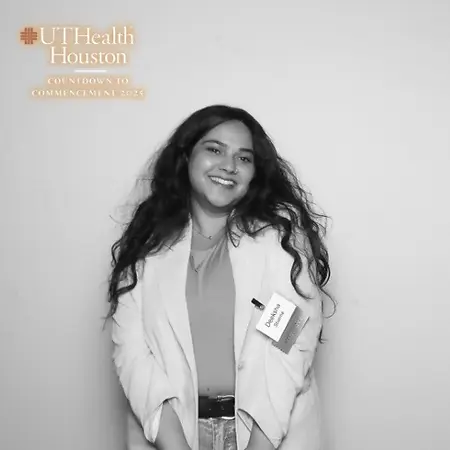
About Deeksha
I worked as a dentist in India after completing my undergraduate degree in dentistry in 2020. I've been working in the healthcare field since then, and when COVID came, I realized there was this area called public health where you don't interact with patients one-on-one, but you actually look at the community as a whole. You work on preventing disease rather than treating it, and that really interested me because with education, better practices, and better screenings, a lot of diseases are preventable. I came to the United States in 2023 and got my Master's in Public Health, graduating in 2025. I was top in my class and received the Dean's Scholarship. Throughout this period, I worked as a research assistant, and then as a research associate at University of Texas starting in May 2025. Now I have a full-time role at NYU as a program manager, where I manage NIH-funded research projects focused on cervical cancer screening and HPV vaccination in Kenya and Malawi. My work involves coordinating with international teams, conducting data analysis, and ensuring our research stays on track. I'm passionate about working on bigger communities rather than just treating patients one-on-one, and women's health is something I really want to work in.
Her Interview
Ten minutes with Deeksha
01What do you attribute your success to?
I would definitely say you need support from your family if you have to change fields or come to a different country - you need to be really strong about it. But I would attribute my success to just being driven and making sure I'm driven, and the drive to be financially secure. It's difficult for women to make a mark just because of how society is, and we have a lot of things to juggle at the same time. So just that drive to making sure that my career is set - that's something I would attribute it to. Just the drive to make sure that I'm successful and I'm working on the things that I want to.
02What’s the best career advice you’ve ever received?
I think the best career advice I've ever received is just being bold. The worst you can get is a no, but if you don't ask for it, you will probably not even get it. So just being bold and asking for it - go ahead and say that yes, I want to network with you, or if you can teach me this. The worst they can say is no, but I'm sure most people want to help you out. They might be busy, but they will give you another time. So just reaching out and being bold - that's really important.
03What advice would you give to young women entering your industry?
I would say when you enter the industry, learn everything. Learn the basics. Public health is so interrelated to everything - even if you get into biostatistics, you need to know about other fields to just understand your field of work better. I am an epidemiologist, but I had to learn all the softwares to do data analysis. The more skills you learn, I think you can really shine out. I would say don't confine yourself into one thing. It's very easy to say this is the only area that I want to work in, and sure, if you are passionate for it, go for it. But I would say at the starting of your career, meet more people and try to see where it takes you. Know the broader industry, but don't try to limit yourself. And never say no to any opportunity. I've learned that here - I say yes to everything, and it's taken me places.
04What are the biggest challenges or opportunities in your field right now?
I would say the biggest challenge right now is the funding. As you know, most of public health funds are cut, including PEPFAR, which is how we were supplying aid and money to countries like Kenya and Malawi. So those budget cuts in research are a big issue right now, as well as just negligence of public health - it's kind of taken a backseat administratively. In terms of opportunities, I would say public health is such a big field. We always have public health issues that are arising, be it pandemic or epidemic, and every area - even environmental care is a public health issue. Everything is a public health issue. As global warming is coming and increasing, this would be a big issue that's going to take a hit. So I would say there are opportunities if people get into this field. They can really find a niche, like climate awareness or environmental education, just looking at how a lot of these toxins would accumulate, or even microplastics over the years. That's, I think, in the future going to be a big issue. And we can see there are still a lot of viral outbreaks. So yeah, I think public health would always have, unfortunately, a lot of opportunities to get into.
05What values are most important to you in your work and personal life?
I would say curiosity is most important to me. I'm very curious. I love discovering new things, and I always question things, so curiosity is always a great attribute to have. And I would say just being very honest and disciplined. If you're honest - first being honest to yourself that this is what actually my aim is, this is what I really want, this is what I want to work in. Or being honest that yes, I have a lot on my plate, so I need to take rest and redirect my focus. So I would say curiosity, honesty, and just moving forward.
Join Influential Women and start making an impact. Register now.