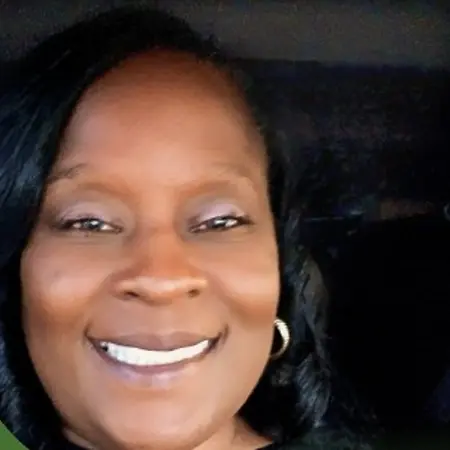
Her Story
About Dr.
My career in corrections spanned almost 30 years, where I rose to the position of associate warden in the Department of Corrections - a challenging journey in a male-dominated organization. After retiring, I pursued my PhD because I had always wanted to understand how women like me reached executive leadership positions in this field. My dissertation studied women leaders in the Department of Corrections at the executive level, exploring what drove us to succeed despite the barriers we faced. Through my research, I discovered that successful women leaders had an internal drive before they even became leaders - they were already set on promoting and doing what they wanted to do. They didn't let discrimination or bias defeat them; instead, they learned from challenges and became stronger. I developed a leadership model based on these findings that emphasizes how leadership starts within you first - you have to believe you can succeed. I had two important mentors during my career: one female associate warden who put me through what I call 'boot camp' to prepare me for the next level, teaching me the reality of executive leadership even though I didn't appreciate it at the time, and one male chief deputy warden who told me 'you're more than you realize' and encouraged me to believe in myself. Now I've partnered with the former chief of police here in Bakersfield to provide leadership training for law enforcement agencies. We've been working together for about 5 years - he teaches the street side while I handle the lockup side, so we can relate to sheriffs who have both responsibilities. I'm also writing 'Leading Under Pressure,' a book based on my dissertation research that will be the first in a series of five books exploring the eight themes that emerged from my study. Beyond my professional work, I'm deeply committed to community service and youth development. I coach basketball at my daughters' high school and serve as an advisor for the Black Student Union with my husband. I'm passionate about helping students navigate the college process - I have three kids in college myself, including one at Howard University, one at Edward Waters University, and one at Grand Canyon University.
Her Interview
Ten minutes with Dr.
01What do you attribute your success to?
I attribute my success to having an internal drive that was there before I even became a leader - I was already set on promoting and doing what I wanted to do. I've always believed in merit, that if I do right and follow the rules, I can get there, even though I came into the department on my own without friends or connections to help me. Anytime somebody told me no, that meant I was going to work 10 times harder. When I faced discrimination or bias as the only female executive in the room, I didn't let it defeat me - I learned from it and it made me stronger. I also had two important mentors who made a real difference. One was a female associate warden who put me through boot camp and taught me the reality of executive leadership, even though I didn't like her very much at the time. The other was a male chief deputy warden who told me 'you're more than you realize' and encouraged me to believe I could succeed. Having someone tell you that you can do it makes you believe you can. I've always had twice as much education as my peers, and I believed that education and doing the right thing would get me where I wanted to go, even if it slowed me down a little bit because I didn't have connections.
02What’s the best career advice you’ve ever received?
The best career advice I received came from my mentor, a female associate warden who was preparing me to move from supervisor to manager and eventually to her position. She told me straight up, 'they don't care nothing about you and your degree,' and I used to be mad at her about it because I had always had twice as much education as my peers. But she was speaking from her experience at the executive level, and she was preparing me for the reality of what it would be like. She said, 'it's different here. It's different up here. It's not the same as being out there on the line.' She put me through what I call boot camp - she was hard on me, training me with tough love because you have to have thick skin in that environment. At the time I didn't really care for her approach, but down the road I realized how important she was and how she was getting me ready for the challenges ahead. The other powerful advice came from a male chief deputy warden who told me, 'Lovetta, you're more than you realize.' Hearing that from someone at the top, someone telling you that you can do this, makes you believe you can succeed.
03What advice would you give to young women entering your industry?
I would tell young women that you have to believe you can succeed before you even start. You can't work in this field just because you want to - you have to believe that you could succeed in it. It starts within you first, with that internal drive. You need to be already set on what you want to do and where you want to go before you even get into leadership positions. When you face discrimination or bias, especially as a woman in a male-dominated environment, don't let it defeat you. Learn from those experiences and let them make you stronger. When someone tells you no, work 10 times harder. Also, find mentors - whether they're male or female - because having somebody tell you that you can do it, that they believe in you, makes a real difference in helping you believe you can succeed. You might not always like what they tell you or how they train you, but down the road you'll realize how important they were in getting you ready for the challenges ahead.
04What values are most important to you in your work and personal life?
Community service is incredibly important to me - I'm big on it. I believe in helping others and giving back, whether that's through walking with women to promote health, giving Valentine's Day gifts to seniors who are home alone, feeding the homeless at Christmas, or encouraging people to vote. I'm passionate about education and helping young people, especially students of color, navigate their way to college. My husband and I work together on this - we think alike and run together as a team. We're dedicated to the students at our local high school through coaching basketball and advising the Black Student Union, and we still support the kids even after our own children graduated because they grow on you and you care about them. Family is central to everything - my three kids were my priority all through high school with their activities, and now I'm helping them succeed in college. I also believe strongly in merit and doing the right thing - I've always believed that if you follow the rules and do right, you can get where you want to go. Even though I'm retired, I stay busy because this work is my passion, and honestly, it also helps pay for my kids' college tuition.
Join Influential Women and start making an impact. Register now.