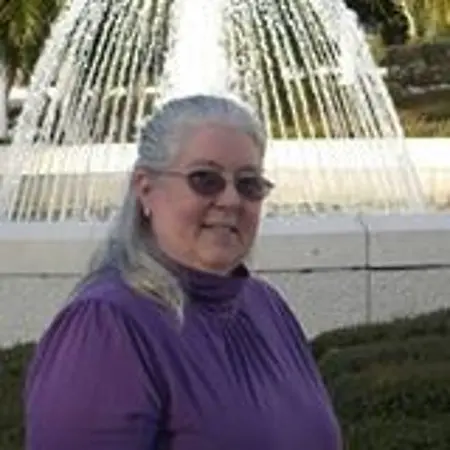
Her Story
About Ellen
My nursing journey began in 1978 when I became a licensed practical nurse out of desperation because I needed a job to support my kids. I swore I'd never go back to school after getting my Associate's degree in 1988, but here I am with a doctorate - it's hilarious how life works out. My early career has been working in critical care, emergency rooms, and local jails. However, education has always been important to me and throughout my career I have educated many on different diseases, on correctional facilities and the need for collaboration and communication. I've been a nurse consultant for at least 20 years, starting in 1999 at the state health office where I oversaw correctional facilities in Florida. In 2005, I moved to the Southeastern National TB Center at the University of Florida, and my work exploded because everyone said I was one of the few people who understood both public health and corrections and how they overlap. My main expertise is in corrections, public health, and infectious diseases - it used to be critical care, but infectious diseases became critical because correctional facilities are like third world countries, and transitioning inmates with infectious diseases back to the community is a real challenge. I based my dissertation on a training program we developed that brought together medical, security, and public health professionals - everyone told me I couldn't do all three together, but I proved that without all three legs of the stool, you're going to topple over. The most remarkable part of my journey is that I had a stroke at age 50 and lost my short-term memory, but I was able to build new neural pathways in my brain to complete my doctorate in 2016 from Walden University. Now I'm semi-retired and do a lot of free consulting because people just want quick answers. I'm also a service missionary through my church, facilitating addiction recovery programs, taking people to medical appointments, and explaining things in layman's terms. I sit on the Putnam County Affordable Housing Advisory Committee because housing is critical for homeless populations who need both housing and medical care. I still work as an advisor with the Florida Department of Health and Florida Department of Corrections, participating in twice-monthly discussions about TB in correctional facilities. I also continue to facilitate trainings and speak at conferences when invited.
Her Interview
Ten minutes with Ellen
01What do you attribute your success to?
I really think it's because I just cared. My mother was a very caring individual - she would give somebody the shirt off her back, and it tormented my father terribly, but I just saw some of the good things that came out of that, and that's what I wanted to continue to do. My husband would say it's frustrating, but honestly, it's about caring for people and being willing to speak up when I see something that shouldn't happen. I open my mouth and start doing something, getting people on my side and asking them what they think, what can we do, how can we do it. It's not really me - it's everybody else that is doing so much of the work and really putting their heart and soul into these things. It's just me and my drive that helps me, because when I see something that somebody should do something about, I'm always trying to help.
02What’s the best career advice you’ve ever received?
Don't sit back and just say, oh, that's too bad. Get involved, and do something about it. Get the people who are involved, try to find the standard for it, and try to get the people that are involved to work with you to find a way to do these things. You can use quality assurance, quality improvement, infection control programs - there are so many different things that you can do to get things on your side, but more importantly, on the side of what is right for humanity. I'd love to go to third world countries and talk to these leaders and try to help them to understand why they need to do it, so that they don't have to worry about half of their population dying from these diseases, and that includes their family.
03What advice would you give to young women entering your industry?
Don't be afraid to research and look something up and find out the causes of things. Research is going to be really important, but don't just look at the internet. If you're going to research something, use experts in that field that have been there, done that - not just the people that have come out of school and said, I'm going to write a book. When you talk to people, you can find out in the first 5 minutes whether or not they've done anything, or they're just all talk. I had the opportunity of meeting Bill Gates, Bill Clinton, and have listened to the words of Maya Angelou, Mother Teresa - people like that who are out there doing it, not just talking about it. It only took 3 minutes to realize that this is somebody that is incredible. If you're interested in really doing something to help people, start when you're young and use your time wisely. Do your research, and that way you get all of that out of the way. Education is so expensive now, so try to find ways to get people to help you with grants. If you're going to take out a loan, make sure you can pay it back, because otherwise, it cripples you for the rest of your life.
04What are the biggest challenges or opportunities in your field right now?
The biggest challenge is probably getting people to understand that the diseases of old are still here today, and they're evolving. One of the biggest challenges we had during COVID was just getting people to wear a mask - something as simple as that. I was involved in research around masks and how far a disease would travel if they were coughing or sneezing, and it just blew my mind that we had some people wearing the mask but keeping it below their nose because they said it was too much and couldn't breathe. I was able to wear (an N95) for 8 hours in the ER - there's no reason you can't do it. Even though you say you have asthma, it's not going to impair you, it's just your fear that will impair you. Yes, it was tough. We had nurses dying because they didn't wear the mask appropriately and ended up with COVID. Education and misinformation are definite challenges. And money, unfortunately, is always a challenge. I don't have a whole lot. I'm doing all this gratis because I know people don't have a lot of money. Although they don't understand sometimes the need for education, education is critical and ever-changing in the medical field. It's important to continue to listen to those who have knowledge and understanding and can assist with some of the challenges in this world.
05What values are most important to you in your work and personal life?
Besides family, it's people - love one another as you would take care of yourself, but do you actually take care of other people? There are a lot of people that need your help, and sometimes it's nothing more than just giving them a leg up, or doing a little education piece, or just helping them somehow to help themselves. There are so many people that we have that don't even know how to climb up out of the trenches, so to speak, and so they always do what they've always done, or what they've always been taught. I try to help them understand a little differently that they can do some things that would aid them, but it would also aid the community as well. I just want people to take care of each other, and if we did that we wouldn't have half of the problems that we have. Humility is a really important concept - if I'm doing something wrong, I want somebody to tell me. I try to keep a very open mind.
Join Influential Women and start making an impact. Register now.