
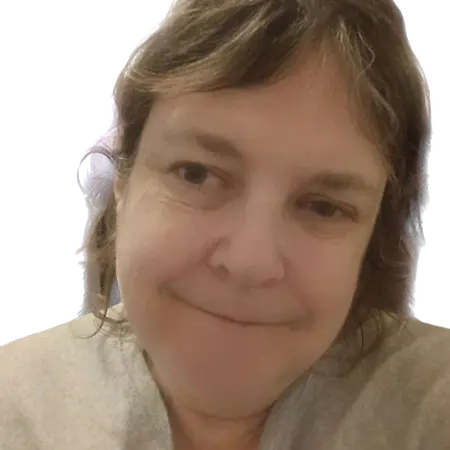
An inspiring message from a Transformational Thought Leader about civic engagement, community participation, and collaborative change-making. Emily emphasizes that meaningful societal improvement comes through active democratic involvement and collective effort toward identifying and solving problems.
Her Story
About Emily
Emily Pfister is an independent writer, content creator, and disability advocate based in Staunton, Virginia. She publishes essays and social commentary on Medium, shares fiction and essays on Substack, and produces YouTube videos about accessibility, confidence, and relationships. Drawing on her experience with visual impairment, she uses storytelling to show how barriers in employment, public transportation, and outdoor recreation affect everyday life. Pfister studied theater and psychology at Washington and Lee University and earned a graduate certification in arts administration. Before launching her independent practice, she worked in nonprofit fundraising, including for the American Institute for Cancer Research and American Farmland Trust. She draws on her background in psychology, theater, music, and visual art to develop workshops and creative projects on topics such as holiday isolation and disability equity. Her community work includes serving on a local Diversity, Equity, and Inclusion Commission, volunteering as a tree steward, and contributing to her local Sierra Club Group. In Staunton, she documented safety and accessibility concerns at a bus stop and raised them with public works officials and the transit provider. A Sierra Club member, she also encourages people with disabilities, including those with visual impairments, to explore parks and share their experiences outdoors. Emily studies multiple languages and promoted using words that show respect and inclusiveness towards others. Words that are not stigmatizing; Diversibilty is an intersectional word for people formerly considered 'disabled,' and holistic wellness and holistic well-being are appropriate terms for 'mental health.'.
Emily's passion is writing fiction and writing essays that convey a Christian Science perspective on how to interact with society. Including treating everyone as an inherently healthy and complete person facing challenges to those beliefs from our culture. She is also a supporter of civics and classics education.
Her Interview
Ten minutes with Emily
01What do you attribute your success to?
I credit the mentors who helped me see what I could do and promote my using the habit of working toward small, manageable goals. Deborah Gist introduced me to AmeriCorps, and Dr. David Elmes encouraged my interest in cognitive psychology and storytelling. Their guidance helped shape my commitment to learning, advocacy, and community service. I’ve also learned how much easier it is to speak up for others when I have people encouraging me to take that first step.
02What’s the best career advice you’ve ever received?
The best career advice I ever received was to work for myself. Advice from Seth D. Friedman that I didn't realize at the time was the best advice anyone has ever given me.
03What advice would you give to young women entering your industry?
I would tell women, and will tell them, to include as many characters with Diversibilities in your writing as you can. I posted on LinkedIn that People with Diversibilities are over 20 percent of the population in the United States and only appear in 7 percent of published books. Also, we currently view chronic illness as seperate from Diversibilty because of our poor work choices. Our antiquated and eugenics heritage must be overcome through inclusivity and intersectionality.
Also, go out of your way to make friends that are different than you are. Learn a foreign language and about a different culture such as a out Deaf Culture or Tribal Culture of a Native American Tribal Nation near you. It is to our detriment that we can not speak the languages of people who share space with us in this country or even consistently think to include them in the news.
One other thing. Push for employment quotes I er affirmative action and for the retention, not just the hiring of employees with Diversibilities. Many people are hired and demoted or fired after a short period of time who live with a Diversibilty. This needs to change and is a pivotal issue affecting why people with Diversibilities are very often and after-thought when it comes to discussions about who contributed to society, when in fact, a greater percentage of people with Diversibilities are entrepreneurs than others. Twelve to nineteen percent of Diverse people own their own businesses. Compare that to 9-11 percent of people who are not considered to be living with a Diversibilty.
One last piece of advice is to never stop learning. There are so many things that great people are writing and doing to change and improve society that you are really missing out of you are not engaging with authors and others to change the world. We do love in a Democracy and the Founders envisioned a very educated electorate that would participate in the Democratic process.
04What are the biggest challenges or opportunities in your field right now?
I see persistent barriers for people with Diversibilities in transportation, employment, voting and outdoor recreation. Something as basic as a bus stop without a sidewalk can make it difficult for someone using a wheelchair to wait safely for a ride. Through writing and video, I can show what those barriers look like in everyday life and bring them to the attention of people who can address them. I also see opportunities to help more people with Diversibilities explore parks, share their own stories, pursue entrepreneurship and full participation in the political process.
05What values are most important to you in your work and personal life?
I value inclusion, equal opportunity, environmental stewardship, and community service. I want people with Diversibilities to have a voice in decisions that affect their lives and a fair chance to participate in their communities. Through my writing and videos, I also want to help people build confidence and form stronger relationships. Stigmatization if people because of their impairments or health status needs to end.
Her Content Hub
Articles by Emily
Introduction
Empowering Change Through Collective Action and Democratic Participation
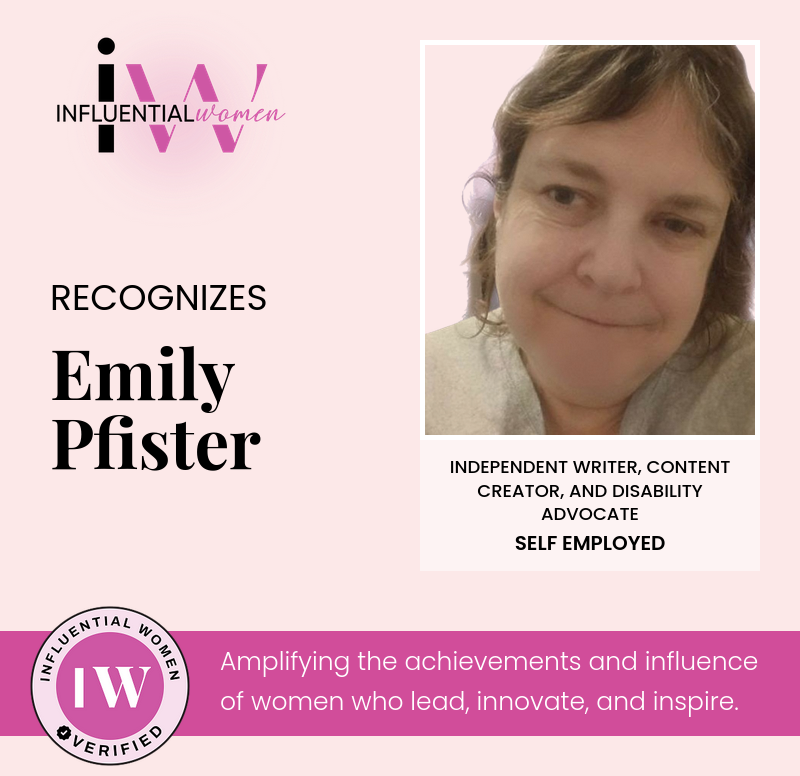
I am so thrilled to have been chosen as a Transformational Thought Leader by this publication. I would like to thank Kelly T. and everyone at Inspirational Women for this recognition.
More than anything, I want people to know that if we work together, society will change for the better. If we all participate in the democratic process, which includes more than just voting, society will improve. It is important to identify problems and solve them in our lives, our nation, and our communities.
We do not have to want to be elected officials to do this. We do need, however, to contribute something of our own toward our projects and the organizations we choose to join. We can shake things up, keep the things that work in good working order, and keep our sights on the things that don't so we can work to improve them.
I am so happy to have the opportunity to interact with other women who have been selected as Transformational Thought Leaders by Influential Women. I look forward to hearing from you.
Please feel free to contact me if you would like to engage in any type of interaction.
Emily
Join Influential Women and start making an impact. Register now.