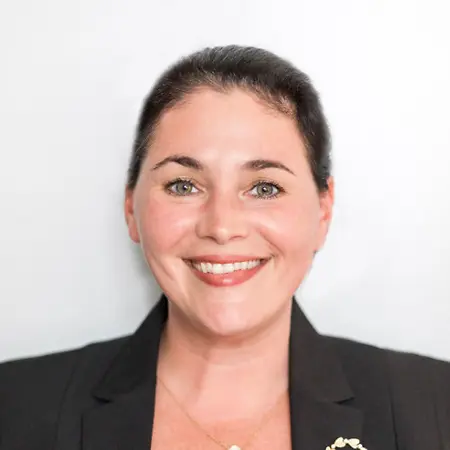
Her Story
About Emily
Emily Spencer is a military community advocate, nonprofit leader, and workforce development professional dedicated to empowering service members, veterans, military spouses, and their families. As the Florida Program Manager for the Onward to Opportunity (O2O) program at the Institute for Veterans and Military Families (IVMF), she works closely with transitioning military personnel and veterans, connecting them with career training, industry-recognized certifications, and employment opportunities that support long-term professional success. Known for her ability to build meaningful relationships and inspire others to achieve their goals, Emily has become a trusted resource within military communities across Florida and beyond.
In addition to her role with IVMF, Emily is the founder and Executive Director of Heartillery Group, a nationally recognized nonprofit organization she established to provide support, gratitude, and encouragement to deployed service members, veterans, and military families. Under her leadership, Heartillery Group has distributed more than one million handwritten cards and thousands of care packages to military personnel worldwide while building strategic partnerships with corporations, schools, civic organizations, and community groups. Her expertise spans nonprofit leadership, organizational development, program management, fundraising, public relations, and community engagement, with a proven track record of creating initiatives that generate lasting impact.
Emily’s passion for service is deeply rooted in her own experiences as a military spouse and advocate. After supporting her late husband's military service and deployment, she dedicated her career to strengthening the military family community and helping others navigate both personal and professional transitions. She holds a master’s degree in Operations Management from Harvard University and continues to champion opportunities that help military-connected individuals thrive. Whether mentoring learners, leading nonprofit initiatives, or fostering strategic partnerships, Emily is driven by a commitment to service, leadership, and creating pathways to success for those who have served our nation.
Her Interview
Ten minutes with Emily
01What advice would you give to young women entering your industry?
I would say find your network. Put yourself out there, and find, you know, all you need is one person that will stand behind you, and that will listen to you, and that will help guide you. You only need one person in your life like that. Everything else is noise. I was very fortunate that I had a few folks when I first moved to Florida, who got me out of the house when I had a brand new baby and brought me into this community, and I give them credit and gratitude every day. You need to put yourself out there. The opportunities are there, but you've got to be willing to take the risk. And sometimes it'll fail, and sometimes it won't. And when it fails, you gotta get back up, and you gotta dust yourself off. I always try to make myself available to anybody who has an idea, or who is thinking outside the box, or who is wanting just an ear to listen to. And just don't give up. It can be really, really hard. It's a hard, hard world. I'm a widow now, I have two small kids, and it is very, very easy to just stop. The harder thing to do is to keep moving. And I'll tell you that it's worth it every second that you keep moving forward. As long as you're moving forward, you're winning.
02What are the biggest challenges or opportunities in your field right now?
I think a challenge in my industry is workforce development and how that changes. Working with the military population is always kind of a fluid thing, where we have less people joining the service these days than historically in the past. So it's just about staying present and relevant, and making sure that people understand that these resources are out there, and that they're free. Mental health is also a really big issue, trying to make sure that our learners stay professionally resilient, and making sure that we're able to meet them where they are, so that we can provide the best services for them, even if it's not this program. One of the biggest challenges is just making sure that we are staying compassionate to folks' situations, and making sure that we can provide them the best possible resources, whatever that looks like for them and their families. The career landscape is difficult right now, so we need to make sure that our folks are competitive, and that they're doing everything that they can from a professional development standpoint to make themselves competitive in the roles that they're applying to.
Join Influential Women and start making an impact. Register now.