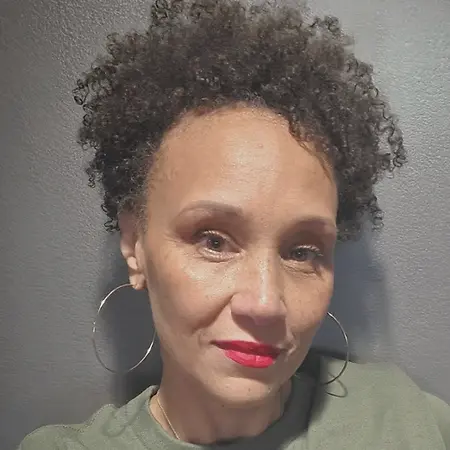
Influential Woman · Educational Consulting
Ericka Morris
Developing M squared educational consulting, Morris by way of Matthews
Hybrid, MO
Her Story
About Ericka
I have spent my career in education, working my way from the classroom level all the way up through various administrative and leadership roles. Throughout this journey, I've developed a deep understanding of the challenges educators face, particularly around mental health and PTSD, which often goes unspoken in our field. I'm currently building M squared educational consulting, a concept that reflects my heritage as a Morris by way of Matthews. This brand represents who I am: a straight shooter from Philadelphia who believes in being kind but not necessarily nice, meaning I'm committed to what I believe in and I'm not political in that way. I don't say one thing and believe another. My approach is grounded in integrity, authenticity, and evidence-based practices. I'm passionate about advocacy and supporting educators who need resources and support, particularly in navigating the often rigid and political structures in education. I believe in finishing what I start, even when that means taking breaks and coming back to complete goals like my master's degree. Right now, I'm in school and actively looking for my next position while developing this consulting practice that will allow me to pour into and support the educational community in a meaningful way.
Her Interview
Ten minutes with Ericka
01What do you attribute your success to?
I attribute my success to always wanting to learn and improve. I won't take no for an answer if I don't think it's the right answer. I really dig in my heels and have fortitude, but I also know when to take breaks when I have to. I didn't finish school all in one big swoop, and I didn't finish my master's degree in a quick swoop either. Sometimes you have to take a break and go back, but I just believe in finishing what I started. That persistence and commitment to seeing things through, even when it takes longer than expected, has been key to whatever success I've achieved.
02What advice would you give to young women entering your industry?
I would say to have faith in your own intuition and believe in it. When you start in a field like education that is very political, very rigid, and sometimes it's my way or the highway, it's important for you to believe in yourself and trust your intuition. Prioritize your own mental health and your own health over anything else. It's very hard for educators, and women are not socialized to put themselves first, so I would say try to learn how to do that. Also, be an advocate and build community with your colleagues and your friends. It's easier for you to support your boundaries, which is the ultimate form of self-care, if other people around you feel that they can also do that. So build community, trust your intuition, protect your boundaries, and believe that you do have what it takes. Just believe in yourself.
03What are the biggest challenges or opportunities in your field right now?
I'd say the biggest opportunities are that education is constantly changing and evolving, and because of technology and research, we are working with much more evidence-based approaches, materials, and canons. We are much more informed and much more willing to be informed and use that information. It started with being data-driven, and now across the education field, we are really looking at how technology and research is allowing us to have more evidence-based approaches grounded in real research. However, that is also our challenge. We are moving towards technology and AI, and we need to stay on top of what we're using technology for, how we're using it, how often we're using it, and the research about that as well. Technology can be a two-sided coin. For people like me who have been in the industry a long time and have gone from the classroom level all the way up, the opportunities are about finding ways to use that experience to move into consulting and facilitating. But the challenges include that we're headed into an educational environment where there's much less funding and much less grant money. Previously, we would have been able to have grant-supported interactions with school districts or funding-supported professional development opportunities, and those are now really dwindling. We have to do much more work in terms of how we can get in front of people and access places that we normally would be able to just have a grant funded or foundational funded opportunity in the past.
04What values are most important to you in your work and personal life?
Integrity is really important to me. I say what I believe, and I believe what I say, and my actions mirror that. I think character is really important. In education, it's easy to just go along with the status quo because that's just easier. I think that having character and not taking the easy way, standing behind what you think, and having integrity are among the most important things you can do in any field, but especially in education. When you're modeling adulthood to younger people, things like apologizing when you've made a mistake, having accountability, and doing that uncomfortable work of fixing things when you've broken them are priorities. Those are characteristics that I hope I'm always modeling and that I use as a guide. I ask myself, can I stand behind this? I don't believe in saying one thing and then doing something else. I believe in really just being authentic. Those are probably the most important characteristics to me.
Join Influential Women and start making an impact. Register now.