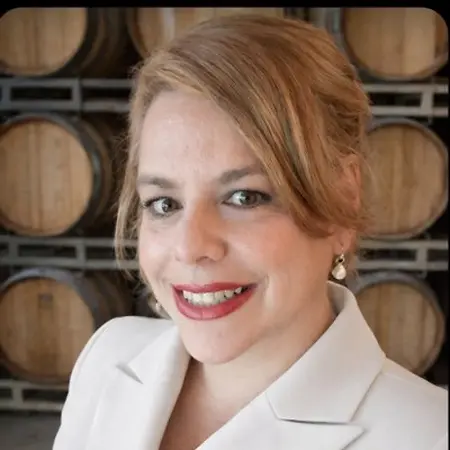
Demand Your Seat at the Table is a personal reflection on my journey as a third-generation Mexican American woman navigating education, career, leadership, and the expectations placed on women—particularly Latina women.
Her Story
About Heather
Heather Bravo is a seasoned human resources professional with 25 years of experience in the manufacturing industry, currently serving as a senior human resource business partner. She leads HR strategy, compliance, and talent initiatives across multi-site operations. She holds an AA degree in law and business administration from Delta College and DeVry University obtained in 2020, and is pursuing a second bachelor's degree in human resources from Capella University. She is a member of SHRM Central Valley for 20 years and serves as a mentor in a Latina organization focused on first-generation Latinas pursuing STEM careers. She was featured in San Diego Voyager and co-authored a book with 30 Latina women sharing their stories. She volunteers with St. Mary's Dining Hall food bank in San Joaquin County and supports the American Cancer Society.
Her Content Hub
Articles by Heather
Demand Your Seat at the Table
Breaking Expectations, Honoring My Heritage, and Using My Voice to Make Room for the Next Generation

Demand Your Seat at the Table: My Journey Through Heritage, Leadership, and Breaking Expectations
There is something almost surreal about sitting at a boardroom table and realizing: I have a seat at this table.
My career did not begin with a perfectly mapped-out plan guaranteed to lead me into those rooms. It began with a young woman learning very early that if she wanted something different for her life, she would have to work for it, educate herself, find her voice, and sometimes push against what other people expected her to become.
I grew up in a biracial Mexican and White family. I am a third-generation Mexican American Californian, and my family's connection to California reaches back generations. My heritage, traditions, and family history are not simply interesting facts about me. They helped shape the woman and leader I eventually became.
Growing up, however, there were expectations.
There was an assumption that because I was Latina, my path would be fairly traditional: grow up, get married, have children, and make my husband, children, and home the center of my life.
There is nothing wrong with a woman choosing that life.
What I rejected was the idea that it had to be my only choice.
I wanted a family. I also wanted an education. I wanted a career. I wanted financial independence. I wanted leadership. Most importantly, I wanted choices.
Growing Up Around Men Shaped My Leadership
I grew up around a lot of men, so many traditional stereotypes about how a woman was supposed to behave never fit me particularly well.
The men in my family worked hard. They showed up. They believed your word meant something. They believed in loyalty, honesty, family, responsibility, and taking care of what needed to be done.
I inherited much of my work ethic from them.
I also learned early that I was going to have to be strong enough to speak for myself.
One message that stayed with me as I entered the professional world was that I needed to be ten times better. Whether that standard was fair is almost beside the point now. I internalized it, and it became fuel.
I learned. I pursued education. I asked questions. I watched people who knew more than I did. I continued looking for opportunities to expand my knowledge because I never wanted to become complacent.
I am anything but stupid. But intelligence does not mean believing you know everything. Some of the smartest people I have encountered throughout my career have been comfortable saying, "I don't know, but I will find out."
I never want pride to prevent me from learning.
Human Resources Wasn't Originally the Plan
My original career path wasn't Human Resources.
With a legal background, I once considered going into law enforcement. But law enforcement was already heavily represented throughout my family, and ultimately, I decided I wanted to create a professional path of my own.
That path eventually brought me into Human Resources.
Looking back, HR was exactly where I needed to be. It brought together my interest in law, policy, business, people, communication, investigations, fairness, accountability, and leadership.
More than 25 years later, Human Resources has taken me into organizations, industries, workplaces, investigations, acquisitions, executive conversations, difficult employee situations, and leadership rooms I could not have imagined when I began.
Along the way, I have had several mentors. I didn't try to become an exact copy of any one of them. Instead, I watched. I took the best qualities I saw in each mentor and incorporated those lessons into my own leadership style. Just as importantly, I paid attention to behaviors I didn't admire and made conscious decisions about what I didn't want to carry forward.
Eventually, all of those lessons helped shape the HR leader I am today.
I am not perfect. I have made mistakes. There are situations I would handle differently today because experience changes you. But perfection was never the goal. Growth was.
HR Requires Both Strength and Humanity
My approach to Human Resources today is grounded in compassion, gratitude, grace, empathy, honesty, and accountability.
Those qualities are especially important during employee investigations and difficult employee-relations situations.
When an employee walks into HR for an investigation, complaint, disciplinary conversation, or another serious matter, it may be just another meeting on our calendar. For that employee, it may be one of the most stressful moments of their professional life. I never want to forget that.
Compassion doesn't mean ignoring facts. Empathy doesn't mean avoiding accountability. Grace doesn't mean lowering standards. It means remembering there is a human being sitting across from you while you do your job.
The same principle applies when working with managers. Managers need accountability, but they also need coaching and development. Sometimes HR needs to tell a leader something they don't want to hear. That is part of the job.
One of the principles I have carried throughout my career and personal life is simple:
Do the right thing, even when doing the right thing is the hardest thing to do.
And as I always say:
"The truth is like the sun—it will always come out."
I would rather deal with an uncomfortable truth today than spend tomorrow trying to maintain a comfortable lie.
Getting a Seat Isn't Enough
Eventually, my career brought me into rooms I once had to imagine myself entering. I began sitting at leadership and boardroom tables. And something became very clear to me:
Getting a seat at the table is only the beginning.
Once you get there, you have to be willing to use your voice.
I have watched talented women enter high-level professional positions and still unconsciously fall into traditional roles once they enter the room.
You hear phrases like "work husband" or "work dad." You sometimes see accomplished women taking responsibility for serving lunch, cleaning up after meetings, or automatically taking on nurturing or administrative roles that have nothing to do with the leadership positions they worked so hard to earn.
There is nothing wrong with helping someone or doing something kind for a colleague. I believe strongly in service and kindness.
The difference is whether you're doing something because you choose to or because you believe that, as the woman in the room, it is somehow automatically your responsibility. That distinction matters.
When I mentor women, one thing I stress repeatedly is:
Do not make yourself smaller once you finally get into the room.
You worked for your seat. You earned your seat. Now rise to the level of that seat.
Demand the Seat—and Then Earn It Every Day
I want women to demand a seat at the table. But demanding it isn't the end of the story. Once you obtain that seat, you have a responsibility to rise to the expectations that come with it.
- Prepare yourself.
- Know your business.
- Understand the numbers.
- Understand operations.
- Know your profession.
- Continue your education.
- Ask intelligent questions.
- And, when necessary, push back.
Sometimes you have to push the envelope. Sometimes yours will not be the most popular opinion in the room. Sometimes people will be uncomfortable with you.
Strong-willed, articulate, talented women can still encounter resistance when they speak with authority, establish boundaries, or challenge established ways of thinking.
That doesn't mean you should become less intelligent, less prepared, less ambitious, or less vocal. It means we have more work to do.
We have to normalize women using their voices.
- It is okay for a woman to be powerful.
- It is okay for a woman to disagree.
- It is okay to establish boundaries.
- It is okay to demand respect.
- It is okay to expect equal consideration and equitable compensation for your work.
- It is okay to walk into a leadership meeting knowing you belong there.
- And it is okay to say, "I disagree, and here's why."
That is not disrespect. That is leadership.
Education Is One of the Ways We Break Barriers
Education has remained incredibly important to me throughout my career. I have always wanted to learn more, pursue more education, and understand more about the world in which I work.
For women—and particularly for women from communities that have historically been underrepresented in advanced education and senior leadership—education can be one of the most powerful tools available to us.
That is why I care so deeply about encouraging young women to pursue education and careers in areas such as STEM, law, business, and leadership.
Through my mentorship with Ask a Latina, I want young women to see possibilities beyond whatever expectations may have been placed on them.
- I want them to pursue the degree.
- Apply for the internship.
- Ask for the promotion.
- Negotiate the salary.
- Walk into the interview prepared.
- Learn the business.
- And stop automatically assuming the person sitting across from them deserves the opportunity more than they do.
Your Goal Should Be to Develop Someone Who Can Replace You
There is another philosophy I strongly believe in:
If you are truly developing the next generation, your goal should be to prepare someone who can eventually take your job.
That doesn't threaten me. That is what leadership is supposed to accomplish.
- Teach younger professionals what you know.
- Let them observe.
- Give them meaningful assignments.
- Challenge them.
- Allow them to make mistakes.
- Correct them.
- Encourage them.
- Give them exposure.
- Bring them into rooms they haven't entered before.
- And eventually, prepare them to sit in your chair.
Hopefully, they will do some things better than you did. That is progress. That is how organizations become stronger. And that is how one generation creates opportunities for the next.
Success Comes With a Responsibility to Give Back
My career has expanded far beyond the traditional boundaries of Human Resources.
I founded Bravo & Associates, allowing me to explore entrepreneurship and apply my professional experience in another way.
My involvement in politics and community leadership began when I was just 18 years old, when I became involved in political campaigns. Years later, I returned to political work and helped with a mayoral campaign in the community where I lived.
I became a proud co-author of Boss Latina, celebrating Latina voices, experiences, leadership, and perseverance. My personal and professional journey was also featured in San Diego Voyager.
But accomplishments mean more to me when they create opportunities to give something back.
I volunteer at community dining halls because sometimes giving someone your time and treating them with dignity matters as much as writing a check. I support the American Cancer Society because cancer is a cause that holds a special place in my heart. And I mentor because I was mentored.
There were people throughout my career who saw something in me. Some encouraged me. Some challenged me. Some opened doors. Some taught me what great leadership looked like. Others unintentionally taught me what kind of leader I never wanted to become. I learned from all of them.
Now it is my responsibility to pass those lessons forward.
My Heritage Was Never Something I Needed to Overcome
One of the most important things I have learned is that I never needed to separate the professional Heather from the woman my family raised.
My heritage wasn't an obstacle I had to overcome to become successful.
My heritage is part of why I became successful.
My loyalty comes from somewhere. My work ethic comes from somewhere. My commitment to family comes from somewhere. My belief that your word should mean something comes from somewhere. My determination comes from somewhere.
I am proud of my Mexican and White family. I am proud to be a third-generation Mexican American Californian. I am proud of my traditions and the generations who came before me.
I can sit at an executive table and still love gathering around another kind of table with family and friends—cooking, barbecuing, laughing, telling stories, and enjoying each other's company.
I can pursue education and leadership while still loving travel, the ocean, the California hills, good food, family, friends, and the traditions that keep me grounded.
Ambition and humility can coexist. Strength and compassion can coexist. Authority and empathy can coexist. Being successful does not require becoming disconnected from where you came from.
More Than What Was Expected of Me
When I look back at the young Latina girl who was given an idea of what her future was supposed to look like, I don't resent the traditional life people imagined for her. I simply wanted the freedom to write a bigger story.
I became a mother. I built a family. And I built a career. I became an HR leader. I became an entrepreneur. I became a co-author. I became a mentor. I became involved in my community. I found my seat at the table. And I learned to use my voice once I got there.
After more than 25 years in Human Resources, I am still learning. I still want more education. I still want new experiences. I still want opportunities that challenge me enough to grow. And I still want the generation coming behind me to go further than I did.
So when a young woman asks me what she should do with her career, my answer is this:
- Learn everything you can.
- Get the education.
- Find mentors.
- Know your business.
- Ask questions.
- Take accountability when you make mistakes.
- Stay humble without making yourself small.
- Be loyal without surrendering your boundaries.
- Treat people with grace and empathy.
- Demand respect.
- Negotiate your worth.
- Push the envelope when the envelope needs pushing.
- And don't be afraid of being the strongest voice in the room when you know you have something valuable to say.
Most importantly, when you finally earn your seat at the table, use it.
Then look behind you. There will be another young woman trying to figure out how she gets there. Teach her. Mentor her. Bring her into the room. Prepare her to take your seat someday.
Because getting a seat at the table is an accomplishment. Using that seat to create a place for the next generation is a legacy.
Join Influential Women and start making an impact. Register now.