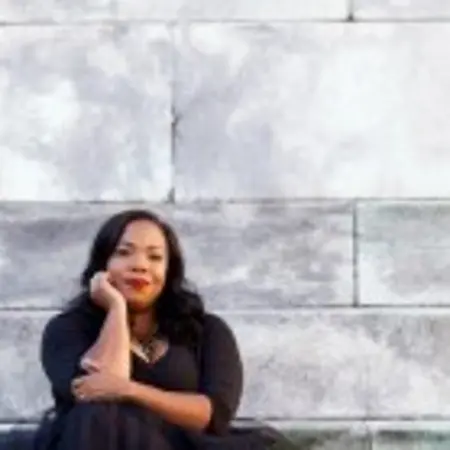
Her Story
About Ikeia
I started in healthcare because I really wanted to help people. When I was young, I was a nursing assistant, and I knew from then I wanted to be able to help people, even from a very small level of how nutrition helps to heal and providing activities of daily living that help patient healing. My reach has always been education in some capacity - at every step, I was always educating, not just how to take care of patients, but also teaching nurses how to take care of themselves. I teach at Johns Hopkins University School of Nursing, and I like to say I make nurses. I coordinate and teach the clinical component of nursing school, taking students into the hospital and teaching them how to invade space, how to go into a patient's room and show up in that space, how to give medication safely, and how to care for injuries and wounds. After the pandemic, I found myself really burned out and surrounded by poor outcomes. I started making self-care boxes for nursing friends, then started an Etsy shop, but I realized gifts are nice but temporary. I wanted to help other nurses who may be burnt out, so I got a coaching certificate and started The Crash Cart LLC to coach nurses. My main area of expertise is professional development - building resilience, helping nurses show up confidently at the bedside and transition out of bedside, teaching them how to show up to interviews, grow into leadership, and have a lasting and fulfilling career. I teach nurses how to first fill their own cup before they pour into others.
Her Interview
Ten minutes with Ikeia
01What’s the best career advice you’ve ever received?
The best career advice I've ever received really is to do it scared. I think that for me in my career, especially in the beginning, I'm a first-generation college graduate, and so I didn't have a point of reference for what success looks like. I never had a point of reference. I just knew that I wanted to make a difference. And so with that come a lot of uncertainty and a lot of fear. And so I would say just have faith and do it scared.
02What advice would you give to young women entering your industry?
I would say evaluate your reason for wanting to be a nurse. When I was in school and working as a student nurse, someone told me I'm not cut out for this. And I really thought about it. No one has the right to tell you where you belong. You have to define yourself. So just remain focused. Don't listen to the outside noise, but evaluate where you want to be as a nurse and affirm it for yourself. I thought that I wouldn't be able to go into certain specialties coming out of school, but really, the sky's the limit. Nothing is off-limits, and the only limit is yourself. Those are projections onto you that is not the truth about you. You have to define for yourself what your limits are, and don't let the projections of others sway you away from your goals.
03What are the biggest challenges or opportunities in your field right now?
I would say the biggest challenges is there's been a forever nursing shortage, but the nurses who are at the bedside are really burnt out. The trend is kind of like a K curve - nurses are burning out either in those first two years, or they're burning out between year 8 and 10. So how do we keep nurses at the bedside, but how do we also build resilience in them? Because with what's happening in the younger group, youngest in age of experiences, they're not just leaving the bedside, they're leaving nursing altogether. Imagine going through this rigorous program to become a nurse and paying upwards of $80,000 sometimes for a degree, and get to the bedside, and you only last a year. How do we build resilience in nurses? Is the expectation skewed of what the job actually entails, or are the nurses not resilient to be able to hold the hand of a patient that's dying, or having these crazy nurse-patient ratios? Where is the issue exactly? I would like to see some sort of resilient structure being built into the nursing curriculum to help nurses to be able to cope with the reality of the healthcare landscape.
04What values are most important to you in your work and personal life?
I would say my biggest values are, at work, really just truth and fidelity, and also authenticity. I am African American, and African American nurses make up just 9% of the nursing population, so a lot of times you don't see people who look like you. But being able to still show up authentic is important, because patients need that. Patients need you to show up as your authentic self.
Join Influential Women and start making an impact. Register now.