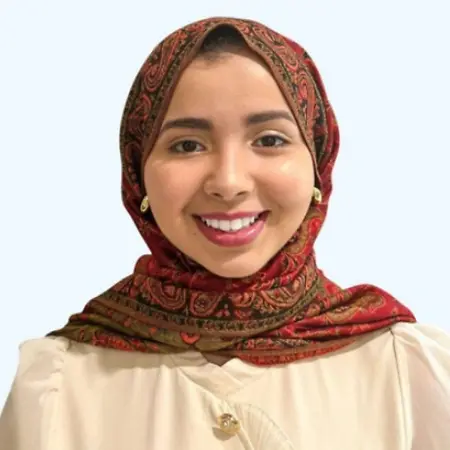
A poignant reflection on how cultural heritage, faith, and personal identity shape a aspiring physician-scientist's commitment to excellence, resilience, and compassionate care for underserved populations.
In Conversation
Jehan Idsassi for Bold. Brilliant. Unstoppable.
Read the transcript
Jehan Idsassi: It is exactly this type of dedication, this type of perseverance against all odds that makes you an influential woman.
What does being an Influential Woman mean to you?
Jehan Idsassi: To me, being an influential woman means never giving up and always staying true to yourself, even when life gets difficult, even when you fail, even when you feel like the world is ending. It always means to look at within yourself and tell yourself you can do this. And it's also about having great role models. Being influential is one thing, but being a woman in a society that oftentimes unfortunately discriminates against our background, our ethnicity, or religion, who we are, and quite frankly, just being female as a whole, it is important to stay grounded, to stay humble, and these are all the values that I always make sure to amplify to the best of my ability. Being a woman again is one part and being influential is all about the journey. It's not about winning the most awards, making the most money on certain projects, or, you know, success in terms of how people see you. It's about how you view yourself and how you feel about yourself even more so. Be comfortable, be true to yourself, and never let others sway your opinions or thoughts or just how your life should go. Again, being influential to me is about being who I am, which is a young Moroccan American Muslim woman who wears the hijab, and I'm so honored that I have the opportunity to advocate for female rights, particularly within the education and STEM sector. It's difficult being a minority in STEM. It's difficult being a woman in STEM. It's difficult being a woman. Don't get me wrong. But the thing about being an influential woman is that you look within yourself and you look at the challenges that may be presented within your career or within your educational journey, and you reassure yourself and reaffirm yourself that you can do this. Because if many, many women across generations, within the course of history have made significant progress in advancing the rights that we have today. Then why not? We contribute to that mission. We continue advancing the rights of young girls and women, not just within the US across the world, that unfortunately have many barriers, much more than what I would experience in my life, to access, for education, for a career, for just a normal life that every woman and young girl deserve. And it is exactly this type of dedication, this type of perseverance against all odds that makes you an influential woman. And I know within my educational journey thus far and towards the career path I have set for myself, becoming a physician scientist, it's gonna continue to be filled with challenges, and I'm aware of that, and I faced numerous challenges already. But within those challenges, I continue to look at the end goal. What is the end goal that I'm willing to achieve? And I fully, of course, am aware that I am a woman, but I know that there are young girls who I work with who simply look up to me, whether that's in my community mosque or within my own family in the US or in Morocco, or simply just those that I study with. They look up to me, and I cannot let them down, and this is a key trait of being an influential woman. And so to sum it all up. To me, being an influential woman is never giving up regardless of how difficult the odds are, and knowing that being a woman doesn't make you weaker, it only makes you stronger.
What's one piece of advice you would give to younger women chasing their dreams?
Jehan Idsassi: One piece of advice that I'd recommend to younger women pursuing their dreams is to simply always remain true to yourself and put yourself first above anything else. Now, this doesn't mean that you ignore everyone else in your life and other dreams that you may have, but it means that you must take care of yourself in order to be successful in pursuing your dreams. Hard work is difficult. It can be physically taxing, emotionally taxing. And so taking care of yourself again in a balanced way is very important. And the biggest thing also is to know that while you're chasing your dreams and aspirations, you're going to have people who want to push you down and not encourage you and simply disregard that you can ever accomplish anything remotely close to your aspiration. And I'm here to tell you and always to remind you that you can do anything you put your mind to. As women, it's easy to be overwhelmed with everything that we have to do in this life, but it is also very easy for us to motivate one another, support one another. And so while you're chasing your dreams, be in a community of supportive women, support each other, whether you come from different backgrounds, ethnicities, religions, etc. Staying true to yourself, but also acknowledging that the diversity is what makes us strong as women is also going to help in your journey of pursuing your aspirations. Again, you can do anything you put your mind to and recognizing that you have the ability and getting out of a mindset where, you make a mistake, that's not OK, or. You fail out one thing and your whole life is over. No. Everything is bigger really than it seems. And sometimes we, feel overwhelmed by a lot of what we have to do. But understanding that if you put yourself first, you never give up in this relentless aspiration of pursuing your dreams. And you stay true to yourself and certainly humble within this journey, again, you can put anything that you put your mind to and accomplish even more than, that initial goal that you had set for yourself. So remember, to all my young women and girls out there that you are strong, you are confident, and you can do anything, and oftentimes it is difficult, especially if you don't come from the same. Uh, starting level and maybe you have more resources than others, but that brings in another point of helping one another, right? Supporting each other. If another woman doesn't have the economic resources or maybe the emotional resources, then be that. For her, help her get there, and with that support, you can ultimately accomplish so much more together and accomplish your own dreams individually, while also seeing other women succeed, which is truly just as rewarding as seeing your own succeed.
Full transcript available
Her Story
About Jehan
Jehan Idsassi is the Founder and Executive Director of STEM Up Organization and a rising junior at the University of Maryland, College Park, where she is pursuing a dual degree in Neuroscience and History on the pre-medicine track. She is also a student in the GEMSTONE Honors Program and a first-generation college student of Moroccan immigrant heritage with Indigenous Amazigh roots. Having graduated a year early from Harford Community College with an Associate’s degree in STEM, Jehan has built a strong academic foundation rooted in interdisciplinary inquiry, scientific rigor, and a commitment to advancing healthcare as a future physician-scientist.
Her academic and research experience spans multiple areas of biomedical science, including immunology, neurobiology, and regenerative medicine at the University of Maryland. She contributes to ongoing research in stem cell–based and neuroinflammatory disease models, exploring mechanisms of cellular signaling, immune response, and therapeutic potential in neurological conditions. Through the GEMSTONE Honors Program, she also engages in collaborative, long-term research initiatives focused on translational neuroscience and neurodegenerative disease. Across her work, she is driven by the goal of advancing laboratory discoveries into meaningful clinical applications.
Jehan founded STEM Up during the COVID-19 pandemic after recognizing the lack of representation for minority women in STEM and witnessing educational inequities during visits to her grandmother’s village of Tefrout, Morocco. As a Muslim woman who wears a hijab, she is deeply aware of the importance of representation in science and education. Through STEM Up, she leads an international team of 16 members to provide mentorship, workshops, and educational resources that empower girls globally to pursue STEM careers. Her advocacy has included speaking engagements, White House-related experiences, and leading educational toolkit workshops at her local mosque, where young girls have come to see her as “the scientist.” In addition to her leadership in STEM equity, she is active in cultural organizations such as Al-Maghreb United, celebrating North African heritage, and remains committed to building authentic, community-centered impact through science, education, and advocacy.
Her Interview
Ten minutes with Jehan
01What do you attribute your success to?
I attribute my success first and foremost to God I am a big believer in faith, and I would not be here without the support and guidance that He's been able to give me. Second, I would say definitely my family, but my mother in particular. I'm very close with her, and she's always been there to support me throughout my entire journey. I've never had a moment where my family has never been there for me, and I'm very fortunate for this to be the case. I also have to credit my culture - I'm from Morocco, culturally speaking, and I'm also Amazigh, which means I'm indigenous to the lands of Morocco and the Maghrib region across North Africa. My culture has really provided so much support, and whenever I look at all my family members who live in Morocco and even those who live here in the US and across the world, it always gives me so much motivation to know that you can start your life from zero, from the ground up, and still be successful. You can still be a minority and still succeed in whatever you're doing, and as long as you have that community supporting you, you'll be able to accomplish that. And then obviously, mentors have been key in my journey as well.
02What’s the best career advice you’ve ever received?
The best career advice I've received, which I hear from a lot of my mentors like professors and principal investigators of labs, comes in three parts that all go hand in hand. Number one, be genuine and passionate. Number two, quality over quantity - that's a big one. And number three, stay true to yourself. Having passion for what you're doing is literally going to be the driving force that you're going to wake up to every day. If you have the opportunity to pursue something that you genuinely love and you're passionate about, and you have access to resources to succeed in that, then you should do it solely for that reason. When you stay true to yourself and you always prioritize quality of your work versus how much work you're doing, you'll see the results. I found that when I stretch myself too thin, it just doesn't end up well, so I always require balance in everything I do. In time, you'll see the results that you worked very hard for.
03What advice would you give to young women entering your industry?
My advice is to look for spaces that are supportive of you and that deliberately give you resources to succeed. It's all about the community that you surround yourself with. I always made sure to go into cultural clubs that supported my cultural background and made me feel like there were other students on campus who understood me. When it came to STEM in particular, I exhausted every resource I had because many of the opportunities I've had in my advocacy career and in college have been through my own research since high school. The biggest thing I can advise is be that kind of cheerleader for yourself and make sure that you look for as many opportunities, but also seek help when needed. Don't be afraid to ask for help, whether that's a question or you need mentorship. I would not be where I am today without the mentors that I've had throughout my science journey and academic career. Being confident in yourself that you can find these opportunities and find spaces that welcome you and are going to help you is very important. But at the same time, you also must be able to ask for help when necessary, and it is not shameful to do so either. In fact, I believe asking for help is a sign of intellectual curiosity - you want to know more, you want to figure out why this was wrong, why something didn't happen according to your plan. All of these are ways to enhance your intellectual thoughts.
04What are the biggest challenges or opportunities in your field right now?
In terms of challenges within STEM Up, definitely the administrative tasks of working with the leadership team, because we've just finished expanding our team to 16 members. One member is in Morocco and a few members are in different institutions here in the US, so we're kind of split apart, and it's challenging communication-wise to make sure everyone is doing their tasks while also giving them leniency and helping guide them. Coordinating the chapter that we're launching at the University of Maryland College Park has also been challenging because people are on summer break and it's hard to coordinate a time to meet. In terms of really broad logistical things, it's definitely navigating the nonprofit registration process. In terms of education, the courses I'm taking like organic chemistry are very difficult - that was the hardest class I've ever taken. The challenging part is doing these classes but also continuously having the motivation to continue to succeed and never give up. I've had many times where I'm like, am I just not good enough for this? Is organic chemistry going to stop me forever? But thankfully, I was able to succeed in it and do well. These challenges are inevitable, but what motivates me is that I have girls who look up to me, not only at my local mosque who think I'm a scientist, but who want me to succeed, and I don't want to let them down. I want them to have a role model to look up to.
05What values are most important to you in your work and personal life?
The values that are very important to me in my work and personal life are definitely quality over quantity in anything. I was born in a household and in a religion and culture where if I'm going to do something, I must succeed fully in what I'm doing as much as I can. I've been in situations where I've stretched myself too thin, and I found that when I do so much at once, I kind of lost purpose of who I was and what was my real mission here. That can very much happen if you're just stuck on the glamour part of all of this - the advocacy, the features, and so on. So I really try to stray away from that, and even if I do approach that field, I do it in a way where it's in a healthy boundary. I know this is why I'm here to do it, and this is the work I'm going to publish. If someone wants to accept me for who I am and my background, then that's perfectly fine, and if they don't, then that's also okay as well. It's all about being understanding to the people in my personal life as well as to those I work with in my educational and professional career.
Her Content Hub
Articles by Jehan
Roots and Research
How My Identity as a Moroccan-American Muslim Woman Shaped My Path to Medicine and Science
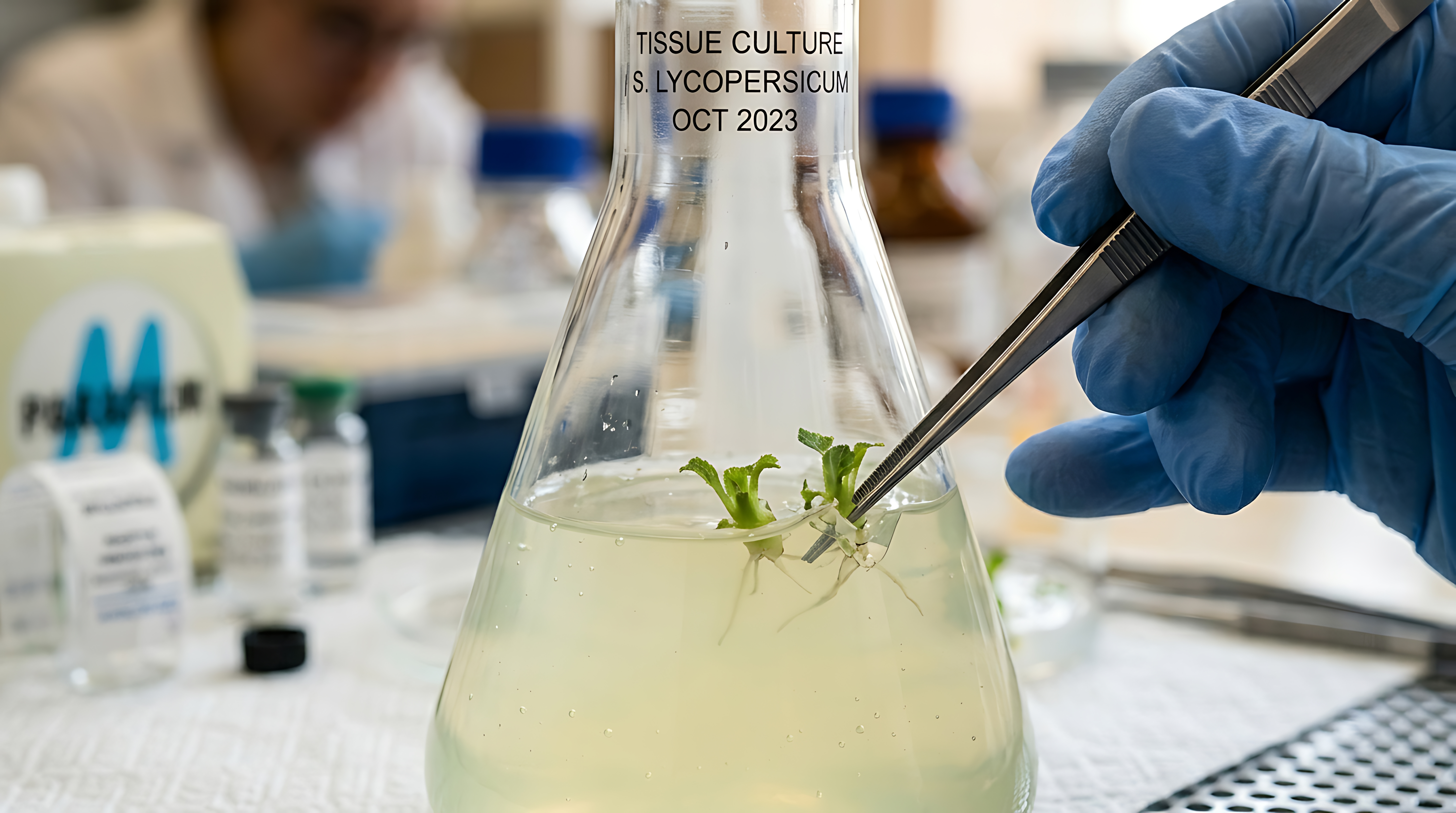
There is a particular kind of quiet that settles over a kitchen when my grandmother is cooking.
The strong smell of cumin and saffron rises before anyone is able to speak. Tamazight words drift between the clatter of pots as the words older than the borders that now call my family Moroccan, older than the empires that tried to erase them. I grew up inside this type of quietness, inside that language, inside a history that long taught me long before I understood it: that an identity carried honestly is its own kind of inheritance.
I am Moroccan-American. I am Muslim. I am Amazigh, meaning I am indigenous to the land my ancestors never left, even as wave after wave of conquest tried to convince them they had. And I wear the hijab, a piece of cloth that somehow manages to be both the most visible thing about me and the truest expression of something entirely internal. People often see these as four separate facts about me, items on a form. But they are not separate, rather they are the same root system, branching.
Free People
Before I knew the word "Amazigh" meant "free people," I knew it as a common saying my grandmother said with her chin lifted slightly higher than usual. The Amazigh are the original inhabitants of North Africa who are a people who outlasted Phoenician traders, Roman legions, Arab conquests, and French colonizers, not by refusing all change, but by refusing to disappear from the lands they lived in for centuries. They adapted. They endured. They kept their language alive in songs and proverbs even when it wasn't safe to speak it in the street. They stood strong in their home in a land which attempted to erase their culture and every piece of their identity.
That is the first lesson my cultural roots provided me with, long before I ever opened a biology textbook and learned about evolution: survival is not stagnation. You can be shaped by forces larger than yourself and still remain unmistakably and uniquely you. I think about this every time I sit with a problem set that refuses to resolve, or a patient case that doesn't fit the pattern I was taught. Persistence isn't stubbornness, but rather it is knowing which parts of yourself are non-negotiable, and bending everything else around them.
The Architecture of My Ambition
My faith gave me a second lesson, one that has quietly become the architecture of my ambition. In Islam, the concept of ihsan - excellence, doing things as though you can see what others cannot - is not reserved for prayer. It extends to how you treat a stranger, how carefully you do your work, how much of yourself you give to people who will never be able to repay you. The concept of healing, in this framework, is that it is closer to what a true act of worship is, not a career path.
It is for this reason that I am so heavily drawn to both medicine and research. Medicine asks you to sit with one person's suffering and respond to it with everything you have while science asks you to sit with a much larger, slower kind of suffering - disease at the level of populations, mechanisms, cells and respond to that with the same rigor and patience. Being a physician-scientist, to me, is simply ihsan practiced at two different scales simultaneously, both at the bedside and the bench.
Wearing the Hijab
However, it is certainly true that wearing the hijab in a post-9/11 America has never been a decision I took lightly or made easily, but it was a decision I'll never regret and one that simply came so natural to me. Wearing the hijab in today's society, has meant walking into rooms where I am, before I say a single word, already a question someone is silently asking. It has meant being underestimated not only because I am a woman, but because I am deemed to be less capable of succeeding due to my hijab and unfortunately occasionally feared resulting in me being reduced to a symbol before I am ever met as a person.
But it has also taught me something I now recognize as essential to the kind of scientist and physician I want to become: how to hold a conviction steady while the world tries to talk you out of it. Research, particularly in one's early years of training, is full of failed experiments, hypotheses that have to be reframed, and data that is not desirable but still full of information. Medicine is full of moments where the textbook answer doesn't match the patient in front of you or cases you encounter on a daily basis. In both, you need the same quiet stubbornness the hijab has trained into me daily, having both the ability to stay grounded in what you know to be true, recalibrate your approach, and keep going without losing yourself in the process.
The Blueprint
I don't believe my background is a footnote to my academic and professional ambitions. I firmly believe that it is the blueprint for them. Being Moroccan-American means I move fluently between speaking Darija, the Moroccan dialect of Arabic, and English whilst moving between both identities and medicine, more than almost any other field, demands that same type of fluency. It demands that you interpret between a patient's lived experience and a clinical chart, between diagnosing a patient and a frightened family in a waiting room, between what the data says and what your patient actually needs from you. Being Amazigh means I come from people who refused to let history erase their specificity, and that has made me deeply attentive to the patients and populations that medicine has historically overlooked are the ones whose symptoms get dismissed, whose pain gets undertreated, whose data is not representative of the population that is being targeted from the studies that are supposed to serve them. Being Muslim means I understand service as devotion, not sacrifice. And wearing the hijab has given me a daily practice in holding my ground with grace, which is, in the end, exactly what scientific inquiry and clinical care both require.
None of these threads are separate from my goal of becoming a physician-scientist. Rather, these threads are the exact reason that goal exists in the first place. Every fiber of how I think, what I notice, who I show up for, and why I refuse to quit when an experiment fails for the fourth time - all of it traces back to a kitchen full of Tamazight words, a grandmother with her chin lifted, and a scarf I tie every morning like a quiet promise to myself about who I intend to remain.
Nonetheless, I am still at the very beginning of this journey, and I know it will be filled with continued challenges. But alongside those challenges will come a deep and lasting satisfaction of knowing I am showing up for those in need, for those who cannot access basic resources, and for those who deserve to have someone to look up to. At the end of the day, I wake up every morning knowing that five-year-old Jehan would be proud of how far I've come, and my greatest hope is to be that same source of inspiration for other young girls and quite frankly for anyone daring to pursue a dream they so deeply deserve to achieve.
Join Influential Women and start making an impact. Register now.