Roots and Research
How My Identity as a Moroccan-American Muslim Woman Shaped My Path to Medicine and Science

There is a particular kind of quiet that settles over a kitchen when my grandmother is cooking.
The strong smell of cumin and saffron rises before anyone is able to speak. Tamazight words drift between the clatter of pots as the words older than the borders that now call my family Moroccan, older than the empires that tried to erase them. I grew up inside this type of quietness, inside that language, inside a history that long taught me long before I understood it: that an identity carried honestly is its own kind of inheritance.
I am Moroccan-American. I am Muslim. I am Amazigh, meaning I am indigenous to the land my ancestors never left, even as wave after wave of conquest tried to convince them they had. And I wear the hijab, a piece of cloth that somehow manages to be both the most visible thing about me and the truest expression of something entirely internal. People often see these as four separate facts about me, items on a form. But they are not separate, rather they are the same root system, branching.
Free People
Before I knew the word "Amazigh" meant "free people," I knew it as a common saying my grandmother said with her chin lifted slightly higher than usual. The Amazigh are the original inhabitants of North Africa who are a people who outlasted Phoenician traders, Roman legions, Arab conquests, and French colonizers, not by refusing all change, but by refusing to disappear from the lands they lived in for centuries. They adapted. They endured. They kept their language alive in songs and proverbs even when it wasn't safe to speak it in the street. They stood strong in their home in a land which attempted to erase their culture and every piece of their identity.
That is the first lesson my cultural roots provided me with, long before I ever opened a biology textbook and learned about evolution: survival is not stagnation. You can be shaped by forces larger than yourself and still remain unmistakably and uniquely you. I think about this every time I sit with a problem set that refuses to resolve, or a patient case that doesn't fit the pattern I was taught. Persistence isn't stubbornness, but rather it is knowing which parts of yourself are non-negotiable, and bending everything else around them.
The Architecture of My Ambition
My faith gave me a second lesson, one that has quietly become the architecture of my ambition. In Islam, the concept of ihsan - excellence, doing things as though you can see what others cannot - is not reserved for prayer. It extends to how you treat a stranger, how carefully you do your work, how much of yourself you give to people who will never be able to repay you. The concept of healing, in this framework, is that it is closer to what a true act of worship is, not a career path.
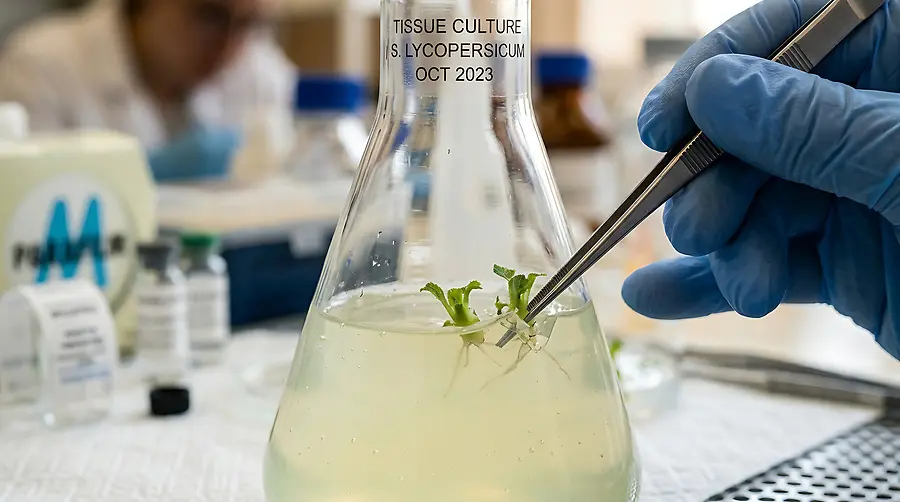
It is for this reason that I am so heavily drawn to both medicine and research. Medicine asks you to sit with one person's suffering and respond to it with everything you have while science asks you to sit with a much larger, slower kind of suffering - disease at the level of populations, mechanisms, cells and respond to that with the same rigor and patience. Being a physician-scientist, to me, is simply ihsan practiced at two different scales simultaneously, both at the bedside and the bench.
Wearing the Hijab
However, it is certainly true that wearing the hijab in a post-9/11 America has never been a decision I took lightly or made easily, but it was a decision I'll never regret and one that simply came so natural to me. Wearing the hijab in today's society, has meant walking into rooms where I am, before I say a single word, already a question someone is silently asking. It has meant being underestimated not only because I am a woman, but because I am deemed to be less capable of succeeding due to my hijab and unfortunately occasionally feared resulting in me being reduced to a symbol before I am ever met as a person.
But it has also taught me something I now recognize as essential to the kind of scientist and physician I want to become: how to hold a conviction steady while the world tries to talk you out of it. Research, particularly in one's early years of training, is full of failed experiments, hypotheses that have to be reframed, and data that is not desirable but still full of information. Medicine is full of moments where the textbook answer doesn't match the patient in front of you or cases you encounter on a daily basis. In both, you need the same quiet stubbornness the hijab has trained into me daily, having both the ability to stay grounded in what you know to be true, recalibrate your approach, and keep going without losing yourself in the process.
The Blueprint
I don't believe my background is a footnote to my academic and professional ambitions. I firmly believe that it is the blueprint for them. Being Moroccan-American means I move fluently between speaking Darija, the Moroccan dialect of Arabic, and English whilst moving between both identities and medicine, more than almost any other field, demands that same type of fluency. It demands that you interpret between a patient's lived experience and a clinical chart, between diagnosing a patient and a frightened family in a waiting room, between what the data says and what your patient actually needs from you. Being Amazigh means I come from people who refused to let history erase their specificity, and that has made me deeply attentive to the patients and populations that medicine has historically overlooked are the ones whose symptoms get dismissed, whose pain gets undertreated, whose data is not representative of the population that is being targeted from the studies that are supposed to serve them. Being Muslim means I understand service as devotion, not sacrifice. And wearing the hijab has given me a daily practice in holding my ground with grace, which is, in the end, exactly what scientific inquiry and clinical care both require.
None of these threads are separate from my goal of becoming a physician-scientist. Rather, these threads are the exact reason that goal exists in the first place. Every fiber of how I think, what I notice, who I show up for, and why I refuse to quit when an experiment fails for the fourth time - all of it traces back to a kitchen full of Tamazight words, a grandmother with her chin lifted, and a scarf I tie every morning like a quiet promise to myself about who I intend to remain.
Nonetheless, I am still at the very beginning of this journey, and I know it will be filled with continued challenges. But alongside those challenges will come a deep and lasting satisfaction of knowing I am showing up for those in need, for those who cannot access basic resources, and for those who deserve to have someone to look up to. At the end of the day, I wake up every morning knowing that five-year-old Jehan would be proud of how far I've come, and my greatest hope is to be that same source of inspiration for other young girls and quite frankly for anyone daring to pursue a dream they so deeply deserve to achieve.


