South Carolina's juvenile justice system fails to rehabilitate incarcerated youth through inadequate education. This article argues for expanding dual enrollment programs in secure facilities, leveraging federal Pell Grant funding and proven models from other states to reduce recidivism and transform young lives.
Verified Member
Influential Woman · Education
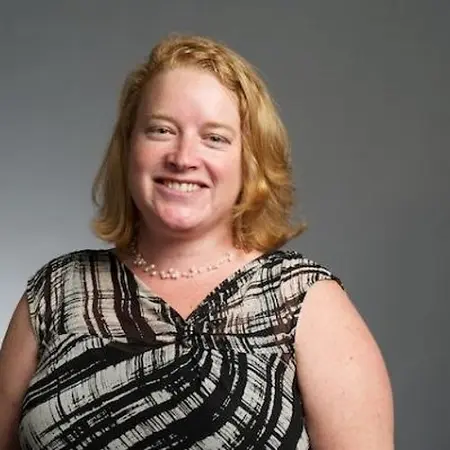
Dr. Kimberly M. Nolan
Consultant & Professor, RISE (Reimagining Instruction & Support in Education)
Columbia, SC 29201
1Article published
Her Story
About Kimberly
Dr. Kimberly M. Nolan is the founder of RISE (Reimagining Instruction & Support in Education), a consulting practice that helps schools, districts, and colleges turn education research into teaching that works. The practice is built on 25 years spent inside the systems she now advises, and on a conviction she inherited early: her mother built a career in academia, and Kimberly grew up watching what a life of teaching and service looked like up close.
Her own career started in a middle school science classroom in New York City. From there she moved into leadership as a dean of students and assistant principal at a K–8 school in Vermont, and after earning her doctorate, served as teaching principal of an alternative high school, the job that put her closest to students other schools had run out of answers for. She later advised in the community college system before joining Northeastern University, where she has taught for the past 13 years, chairing doctoral dissertations and building online and hybrid programs. She holds a Doctorate in Educational Leadership from the University of Vermont and master's degrees in Educational Leadership from Johnson State College and Secondary Education from Mercy College in New York City.
Her research and her advocacy meet in her 2024 book, Getting Out of South Carolina's Juvenile Justice System, published open access through Lived Places Publishing so that cost never stands between the book and the people it's about. She is a member and conference reviewer for the American Educational Research Association, and she serves on the board of EARN the Right, a nonprofit supporting young people in juvenile detention facilities across South Carolina, where she previously chaired the board. Across the classroom, the research, and the practice, her work holds one line: a student's hardest chapter shouldn't become their whole story.
Her Interview
Ten minutes with Kimberly
01What do you attribute your success to?
Staying close to students at every stage of my career. Over twenty-five years in education have taken me from a middle school science classroom in New York City to a dean's office, an assistant principalship in Vermont, and now thirteen years as a professor at Northeastern, and each of those roles taught me something about learners that the previous one couldn't. I'd also point to my time as an online educator. People assume distance learning is impersonal, but asynchronous discussion, office hours, and live sessions have given me some of the most genuine connections of my career. And underneath all of it is the education I received myself, in Vermont and at Mercy College in New York, I've never stopped drawing on it.
02What’s the best career advice you’ve ever received?
It came from my mother, who built her own career in academia and inspired me to follow this path. What she taught me was to pursue work that means something, to never stop learning, and to protect some balance while you do it. That last one took me the longest. I live near her in South Carolina now, and our time at her beach house, relaxing recharging is invaluable. In a profession this demanding, you can't pour from an empty cup. Caring for yourself is what makes it possible to keep showing up for everyone else.
03What advice would you give to young women entering your industry?
Stay committed to learning, always. Knowledge is the tool that opens doors and builds confidence, and in this field nobody can take it from you. I followed that advice through two master's degrees, a doctorate, and every new role I stepped into — science teacher, dean of students, assistant principal, principal, professor — and each time, being willing to learn something new is what made the next door possible. So keep expanding your skills. Seek out experiences that stretch you. Invest in yourself even when the payoff isn't immediate. A lifelong commitment to learning is what lets you adapt when the industry changes, lead with purpose, and matter in the lives of your students.
04What are the biggest challenges or opportunities in your field right now?
The biggest challenge in education right now is the distance between what research knows and what schools actually do. Findings stay in journals while the teachers who could act on them are asking for guidance on what to do differently on Monday morning. That gap is also the opportunity, and it's exactly why I founded RISE: to take twenty-five years of experience in education, leadership, and professional development and turn it into support that helps schools, organizations, and the people inside them grow. The industry keeps evolving, and staying innovative, adaptable, and responsive to what clients actually need is the ongoing work. What I bring to this chapter is what I've always believed in — continued learning, collaboration, and a commitment to making a real impact.
05What values are most important to you in your work and personal life?
Compassion, service, integrity, and a commitment to real change — those are the values I try to live in both directions, work and home. They're why I serve on the board of Earn the Right, a nonprofit supporting young people in juvenile detention facilities throughout South Carolina. And they trace back to my years as principal of an alternative high school in Vermont, where I saw firsthand what young people are up against and what becomes possible when someone provides guidance, resources, and a genuine path forward. My book, Getting Out of South Carolina's Juvenile Justice System, comes from that same commitment — and I published it open access so that cost never keeps it from the families, educators, and young people it was written for. Whatever the role — teaching, consulting, board service — the through line is the same: showing up for the people who need support the most.
Her Content Hub
Articles by Kimberly
Locked Out of Learning: Why South Carolina's Incarcerated Youth Deserve a Real Shot at College
How dual enrollment in college coursework can break the cycle of recidivism for incarcerated youth and transform South Carolina's juvenile justice system.
Education Is Not Rehabilitation Unless We Make It One: Why South Carolina Must Expand Dual Enrollment for Incarcerated Youth
Imagine being 16 years old, sitting in a secure juvenile facility, and knowing that you entered with only five of the 24 credits you need to graduate high school.
You are not unusual. You are, in fact, typical of the young people cycling through South Carolina's juvenile justice system every year.
And the system, as it currently operates, is not designed to change that.
Approximately 80% of young people released from South Carolina's secure juvenile facilities are rearrested within five years. That number is not an accident. It is the predictable result of a system that confines young people, provides them with inadequate educational programming, and then releases them into communities without the credentials, skills, or support they need to build a different life.
The system calls this rehabilitation.
It is not.
This is not a problem without a solution. We know what works. The research is clear, the models exist, and federal funding is now available. What is missing is the political will to extend to incarcerated young people the same educational opportunities we offer everyone else.
Who Is in These Facilities?
Before we talk about policy, we need to talk about people.
The young people in South Carolina's juvenile justice system are predominantly Black. Black youth make up approximately 65% of the state's incarcerated juvenile population, despite representing a much smaller share of the state's overall youth population.
This is not because Black young people commit more crimes. It is because they are more likely to be policed, more likely to be arrested, more likely to be charged, and more likely to be confined—at every stage of a system that was not designed with their futures in mind.
These are young people who have often attended under-resourced schools, experienced trauma, faced housing instability, and been pushed out of classrooms through punitive disciplinary policies long before they ever encountered the juvenile justice system.
By the time they arrive at a secure facility at age 16 with five high school credits, the system has already failed them—repeatedly.
Any serious conversation about juvenile justice reform has to begin here: with an honest accounting of who these young people are, what they have already survived, and what they deserve.
What the Research Tells Us
Here is what we know from decades of research on correctional education.
Young people and adults who participate in educational programs while incarcerated are significantly less likely to reoffend. A major study by the RAND Corporation found that people who participated in correctional education were 43% less likely to return to incarceration than those who did not. For every dollar invested in correctional education, approximately five dollars are saved in future incarceration costs.
These are not marginal gains.
These are transformative outcomes—and they are achievable.
Postsecondary education, in particular, produces some of the strongest effects. When incarcerated people have access to college-level coursework, reductions in recidivism are more pronounced, improvements in employment outcomes are more significant, and the long-term benefits to families and communities are more lasting.
College education in prison does not just change individual outcomes.
It changes communities.
Research on dual enrollment in traditional school settings consistently shows that it can significantly increase college degree completion, with some of the strongest effects among students from low-income backgrounds.
A landmark study by Berger et al. (2020), conducted through the National Center for Education Evaluation and Regional Assistance, found that students who participated in dual enrollment programs were significantly more likely to enroll in and complete college than their peers who did not, with low-income students demonstrating some of the largest gains.
Similarly, An (2013), writing in the American Educational Research Journal, found that dual enrollment participation had a strong positive effect on bachelor's degree attainment, particularly for students from disadvantaged socioeconomic backgrounds—precisely the population overrepresented in juvenile justice systems.
When we extend that opportunity to young people in secure facilities, we are not offering them charity.
We are offering them the same pathway to the future that we offer students in well-resourced high schools across the country.
A Federal Door Has Opened—South Carolina Needs to Walk Through It
For nearly 30 years, federal law prohibited incarcerated people from receiving Pell Grants—the federal financial aid that makes college accessible to low-income students.
That ban was lifted in July 2023.
Incarcerated students are now eligible for Pell Grant funding, which means that, for the first time in a generation, there is a viable federal funding mechanism to support college programming in secure facilities.
This is a significant development.
One of the most frequently cited barriers to implementing dual enrollment in juvenile facilities has been cost. That barrier has now been substantially reduced.
States that act quickly to leverage Pell Grant eligibility, combined with existing federal funding streams for neglected and delinquent youth, can build sustainable college programming in secure settings without requiring large new state appropriations.
South Carolina has not yet acted. It should.
Other States Are Already Doing This
South Carolina is not being asked to pioneer an untested idea.
Other states have already built the road.
In Maryland, the Pathways to Success program connects young people in secure juvenile facilities with community college partners through formal articulation agreements. Credits earned during confinement transfer seamlessly, and young people receive post-release enrollment support so that their education continues when they leave.
In Connecticut, the juvenile justice system has integrated dual enrollment into its educational programming through partnerships with the state's community college system, with documented reductions in institutional misconduct among participants.
In Colorado, the Division of Youth Services has established accredited college programming in secure facilities, with provisions for continued enrollment after release.
These programs work. They are not experimental. They are operational, they are funded, and they are producing outcomes that South Carolina's current approach cannot match.
The question is not whether dual enrollment in secure juvenile facilities is possible.
It is why South Carolina has not made it possible yet.
The Wall South Carolina Has Built
The primary obstacle in South Carolina is legislative.
The state's existing dual enrollment framework was designed for students in traditional high school settings. It does not include provisions for young people in secure confinement.
There is no explicit exclusion, but the absence of explicit inclusion has functioned as a de facto ban.
Young people in South Carolina's juvenile facilities are effectively locked out of dual enrollment—not because anyone decided they should be excluded, but because no one has yet decided they should be included.
That is a policy failure.
And it is one that can be corrected.
Beyond legislation, there are real logistical challenges. Secure facilities restrict technology access. Young people are sometimes transferred between facilities, disrupting academic continuity. Staff capacity is limited. Academic preparation gaps are significant—it is difficult to take college courses when you have only five high school credits.
These challenges are real, but they are not insurmountable.
They require investment, planning, and institutional will.
They do not require accepting an 80% rearrest rate as inevitable.
What Needs to Happen
Change the law.
The South Carolina General Assembly needs to amend the state's dual enrollment legislation to explicitly include young people in secure juvenile facilities. This is the foundational step. Without it, nothing else is possible at scale.
Use the federal money.
The state should immediately develop a plan to leverage restored Pell Grant eligibility, along with Title I funding for neglected and delinquent youth, to finance dual enrollment programming in SCDJJ facilities.
This funding exists.
South Carolina needs to claim it.
Build the partnerships.
The Department of Juvenile Justice should enter into formal agreements with South Carolina's technical college system and four-year institutions to establish clear pathways for credit transfer and continued enrollment after release.
Credits earned during confinement should not disappear when a young person walks out the door.
Make the programs culturally responsive.
Because Black youth make up the majority of South Carolina's incarcerated juvenile population, dual enrollment programs must be designed with their experiences, histories, and futures at the center.
That means instructors who reflect the communities they serve, curricula that affirm the intellectual and cultural assets of participants, and mentorship structures that connect young people to Black educators, professionals, and community leaders who can serve as models for what is possible.
Invest in academic support.
Young people entering secure facilities with five high school credits cannot be expected to walk into college coursework without support.
Robust developmental education, tutoring, and advising must be built into every dual enrollment program from the start.
Trauma-informed practices must be standard, not optional.
Technology infrastructure—secure internet access for educational purposes—must be treated as a necessity, not a luxury.
The Moral Argument
The policy case for dual enrollment in South Carolina's juvenile facilities is strong.
The fiscal case is strong.
The evidence base is strong.
But underneath all of it is a simpler argument, and it is the one that should matter most.
These are children.
They are 16 years old. They are in a facility run by the state, and the state has an obligation—moral, legal, and civic—to educate them.
Not to warehouse them.
Not to process them through a system that returns 80% of them to incarceration within five years.
To educate them. To invest in them. To treat them as young people with futures worth building.
South Carolina is spending money to incarcerate these young people.
The question is whether it is willing to spend money to educate them—to give them something to carry out the door when they leave that is more valuable than a criminal record.
The answer, if we are serious about justice, has to be yes.
References
An, B. P. (2013). The impact of dual enrollment on college degree attainment: Do low-SES students benefit? American Educational Research Journal, 50(5), 1045–1080.
Berger, A., Turk-Bicakci, L., Garet, M., Song, M., Knudson, J., Haxton, C., Hoshen, G., Stephan, J., & Cassidy, L. (2020). Early College, Continued Success: Early College High School Initiative Impact Study. American Institutes for Research / National Center for Education Evaluation and Regional Assistance.
Davis, L. M., Bozick, R., Steele, J. L., Saunders, J., & Miles, J. N. V. (2013). Evaluating the Effectiveness of Correctional Education: A Meta-Analysis of Programs That Provide Education to Incarcerated Adults. RAND Corporation.
Nolan, K. (2024). Getting Out of South Carolina's Juvenile Justice System: Education for Young Incarcerated Offenders. University of Westminster Press.
The Sentencing Project. (2021). Black Disparities in Youth Incarceration. The Sentencing Project.
Kimberly Nolan is a faculty member at Northeastern University and a scholar in carceral studies and education policy. She is the author of Getting Out of South Carolina's Juvenile Justice System: Education for Young Incarcerated Offenders (2024, Open Access). Her work focuses on postsecondary access and equity for system-involved youth.
Join Influential Women and start making an impact. Register now.