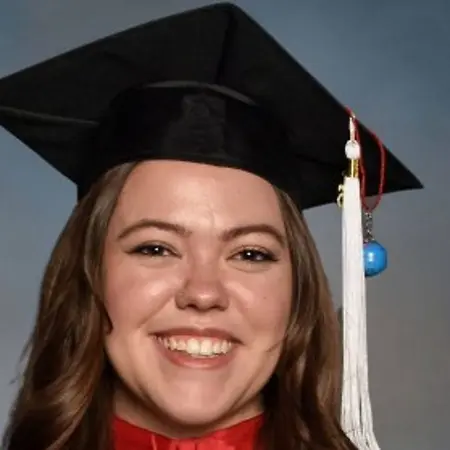
Her Story
About Kylee
My career journey has been one of exploration and discovery. I started my college journey at the University of Utah, initially accepted through the arts program, but I realized I wanted to keep art as a passion rather than a profession. I switched to psychology and criminology for a semester before finding my true calling in urban ecology. After three years in that program, I discovered environmental studies and sustainability and added it as a minor. I completed my Bachelor of Science degree in Urban Ecology with a minor in Environmental Studies and Sustainability, working at the Environmental Lab throughout my final year. I then pursued a master's degree in geography, which I completed in two years while continuing to work at the Environmental Lab. I recently defended my thesis on a paleoecological record of the Bear River Massacre site. My work focuses on analyzing sediment data, particularly pollen and charcoal, to understand past environments and identify interesting patterns in historical ecological data. In my typical day, I gather data in the laboratory and analyze it for any interesting peaks or changes in past environments. Each sediment sample presents unique challenges due to different compositions and locations, requiring me to adapt my analytical approaches. I've had the opportunity to present my research at the Great Basin Anthropological Conference in 2025, where I received valuable feedback from other archaeologists.
Her Interview
Ten minutes with Kylee
01What do you attribute your success to?
I've always just been very driven to continue learning, and I think that it kind of pushed me to do a master's. I never, ever would have thought I would do a master's. I've just been very driven to learn. My master's program was super, super difficult mentally - I lost my mom right as I went to my master's, and that takes a huge toll. I think that at university-wise, I'm probably done, but I really am excited to start doing hands-on learning.
02What’s the best career advice you’ve ever received?
It's been valuable to hear that you shouldn't take it personally when you get rejected for a job, even though you're qualified. They're just looking for a specific someone, and that may not be you, and it's not anything personal. It is a little difficult because I just got my master's, and I'm getting rejected for a lot of jobs, just because I feel like they're looking for a unicorn when they put out job listings - they have a lot of qualifications that they know that oftentimes they're not going to meet.
03What advice would you give to young women entering your industry?
It's going to be a long road, and just expect the unexpected. You could fall in love with something so outside of what you thought you would fall in love with. For example, I took a zoo archaeology class, and I absolutely just fell in love with it. I would also suggest to just take every single opportunity you can. If there's a class that your mentor wants you to take, maybe you should take it, even if you think you would hate it. It's going to turn out amazing, or it could be a good learning experience that, yeah, I for sure don't like it, but I've tried it. Just be open to so many things.
04What are the biggest challenges or opportunities in your field right now?
Every bit of data that we get is so different. Every place has different compositions, and so it's really hard to figure out what the best way to work on that sediment is. There's just different ways that we can analyze them, and sometimes some ways will work out, and other times it won't, and then that adds on a lot of time that we may not have budgeted for, or that we just simply don't have time for right now, and that makes it really, really difficult. It's also hard when you're starting out, and you just don't have that support that you need from a mentor. It's hard finding that little niche where you can ask for help, because sometimes in professional fields, it is hard to ask for help, because they just don't understand that you're still new, and you still sometimes need that little bit of guidance. I don't need you to hold my hand, but I do need a little bit more help. As far as opportunities, there's so many crazy opportunities. I've seen an environmental scientist for airlines. There's a lot of really cool private sector jobs, so you can be a private palynologist, which basically is just somebody who studies pollen. There's also a forensic palynologist, which I think is probably the coolest one I've heard of, where there's a crime scene and they can go swab shoes or tires and find plant pollen that is actually growing in a place that someone said they weren't. We can study past plants, do charcoal analysis which gives you a background on past fire regimes, and there's just a lot of really niche things that you wouldn't even think that would be a job.
05What values are most important to you in your work and personal life?
Communication is key. I had an advisor that I felt really fell through the cracks with communicating with me and really helping me out, and so I felt like communication was just a huge thing that I really valued. And then just honesty in general. I mean, if you have something going on in your life that is causing you to kind of slack on your work life, it helps a lot if you're just honest with people, and then they can recognize that, oh, you're not slacking, something else is going on.
Join Influential Women and start making an impact. Register now.