
A compassionate guide for women who prioritize others' needs over their own well-being. Explore self-care, boundaries, and the permission you need to stop running on empty and start honoring your own worth.

Verified Member
Influential Woman · Holistic Wellness | Yoga Instruction
LaToia Stake
Certified Yoga Instructor and Holistic Wellness Practitioner, Noriah's Ananda
Tulsa, OK 74106
5Years experience
1Article published
1Award received
“
Motherhood taught me that communication is about listening, empathy, and self-regulation not just expressing feelings, but taking responsibility for how I respond.
LaToia Stake · In Her Own Words
Her Story
About LaToia
LaToia Stake is a certified yoga instructor and holistic wellness practitioner based in Tulsa, Oklahoma, and the founder of Noriah’s Ananda Holistics. Since beginning her yoga instruction career in 2021, she has developed an integrative approach to wellness that combines trauma-informed yoga, meditation, breathwork, somatic movement, and sound healing. Through her work with studios, fitness centers, and community settings, she creates inclusive and supportive environments that encourage mindful movement, body awareness, stress management, and emotional well-being. Her professional training includes more than 200 hours of yoga, meditation, sound healing, and trauma-related instruction, along with additional credentials in nutrition coaching, personal transformation, crystal sound bowl healing, and somatic movement.
In addition to her wellness practice, Stake brings more than 13 years of broader professional experience in business operations, customer service, leadership, and billing analysis. In her role as a Billing Analyst at GC Services, she focuses on revenue assurance, billing reconciliation, data reporting, quality assurance, and process accuracy, using tools such as Excel, pivot tables, and specialized billing systems. Her previous leadership experience includes positions as a Shift Manager at PLS and Sales Supervisor at Macy’s, where she supported employee development, monitored performance, managed operational responsibilities, and implemented solutions to improve team results. She is also pursuing a bachelor’s degree in psychology at Southern New Hampshire University, with an expected completion date of May 2028, strengthening the academic foundation that informs her interest in human behavior, emotional intelligence, and holistic well-being.
Stake attributes her success to her passion for helping others, her empathy, and her ability to recognize and understand people's emotional needs. She believes that resilience, consistent effort, faith, honesty, loyalty, and integrity are essential to both professional growth and personal fulfillment. Her work reflects a commitment to combining analytical thinking and operational structure with compassionate, person-centered wellness practices. Outside of her professional responsibilities and studies, she enjoys spending time with her family and grandchildren, cooking, and reading. Through her corporate experience and holistic wellness practice, she aims to support personal growth, strengthen well-being, and help individuals cultivate greater self-awareness and resilience.
Her Interview
Ten minutes with LaToia
01What do you attribute your success to?
I attribute my success to my genuine passion for helping others and my ability to understand people on an emotional level. I have always considered myself an empath, with a strong sense of emotional intelligence that helps me recognize when something may be wrong and understand what others are experiencing. Within my family, I am often the person people turn to for advice and support. I bring that same understanding into my yoga and wellness practice, where empathy, connection, and helping others are central to my work.
02What’s the best career advice you’ve ever received?
The best career advice I have ever received is, “Just do it!” I believe in taking initiative, stepping outside my comfort zone, and pursuing opportunities rather than allowing fear or hesitation to hold me back. Sometimes, the most important step toward success is simply having the courage to begin.
03What advice would you give to young women entering your industry?
My advice to young women entering the wellness and fitness industry is to believe in themselves and not be afraid to pursue their goals. If you have a genuine passion for working with people and helping them improve their well-being, trust that passion and allow it to guide you. Be confident in your abilities, remain committed to learning, and remember that making a positive difference in people's lives is a meaningful foundation for a fulfilling career.
04What are the biggest challenges or opportunities in your field right now?
The wellness and fitness industry offers many opportunities to connect with people in the community and help them achieve their fitness and wellness goals. Building relationships, supporting others, and making a positive impact are some of the most rewarding aspects of this work. However, getting started can be challenging, particularly when attracting initial clients and establishing a recognizable brand. Building trust, developing community connections, and consistently demonstrating the value of my services are important steps toward long-term growth.
05What values are most important to you in your work and personal life?
The values that matter most to me are drive, resilience, faith, honesty, loyalty, and integrity. I believe in continuing forward even when setbacks occur, because challenges are opportunities to practice, improve, and grow. I do not view mistakes as failures; instead, I see them as part of the learning process. Whether in my professional responsibilities, my wellness practice, or my personal life, I strive to remain resilient, act with integrity, and stay committed to becoming better through experience.
Her Content Hub
Articles by LaToia
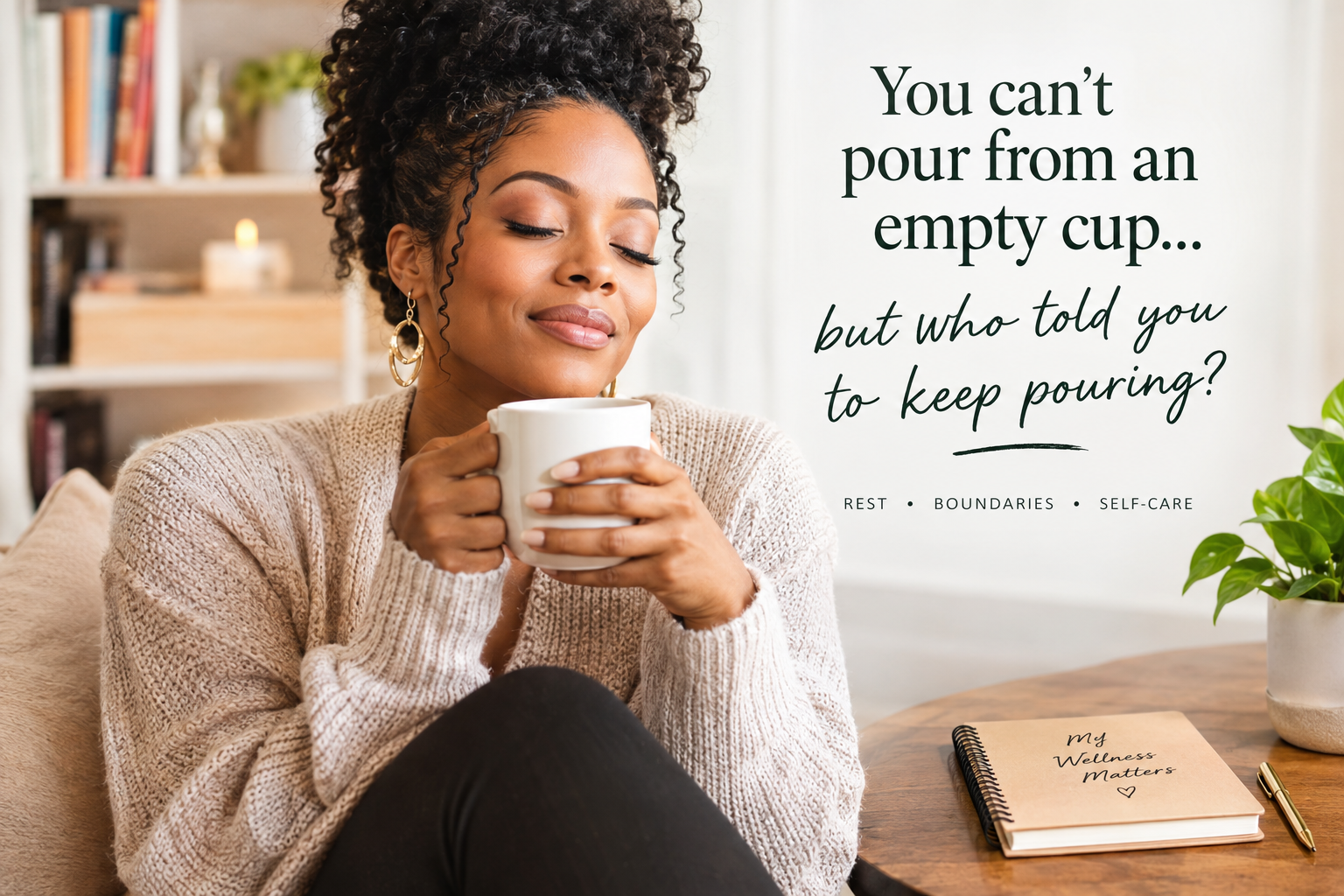
You Can't Pour from an Empty Cup, but Who Told You to Keep Pouring?
Learning to prioritize your own well-being while caring for others is not selfish—it's essential.
By Coach Toi | Founder of Noriah's Ananda Holistics | Wellness Practitioner and Psychology Student
You know that woman who everybody calls when something goes wrong?
She's the dependable one. The problem-solver. The one who remembers the appointments, checks on the family, handles business at work, and somehow knows where everybody left their keys.
If somebody needs help, they know who to call.
But here's a question we don't ask that woman nearly enough: Who checks on her?
Many women become so accustomed to taking care of other people that their own needs begin to feel optional. They push through exhaustion, postpone rest, and tell themselves they'll slow down when things settle down.
But life has a funny way of adding something else to the to-do list just when you think you're catching up.
And before you know it, you're running on caffeine, responsibility, and the hope that nobody asks you to do one more thing today.
Sound familiar?
The truth is, caring for other people is not the problem. Caring for other people while consistently neglecting yourself is where we need to start paying attention.
We've heard the saying, "You can't pour from an empty cup." It's a beautiful reminder that we need to take care of ourselves, too. But I think there's another question worth asking:
Who told us we had to keep pouring until the cup was empty in the first place?
The Pressure to Be Everything to Everybody
Women wear many hats. We may be employees, business owners, mothers, daughters, grandmothers, partners, friends, and caregivers. Sometimes, we occupy several of those roles before lunchtime.
We learn to anticipate other people's needs, solve problems, and keep things moving. We become so good at being dependable that people may not realize when we're struggling.
Sometimes, we don't even realize it ourselves.
We tell ourselves we're just busy. We're just tired. We just need to get through this week.
Then another week comes.
We may feel guilty when we rest because there's always something else that needs to be done. We may struggle to say no because we don't want to disappoint anyone. We may even believe that taking time for ourselves means we're being selfish.
But when did taking care of ourselves become something we needed to justify?
Being dependable is a wonderful quality. Being compassionate is a strength. Showing up for the people we love can be deeply meaningful.
However, those qualities should not require us to abandon our own well-being.
You can be a loving mother, a dedicated employee, a supportive friend, and a compassionate human being without making yourself available to everybody at the expense of your own health and happiness.
You are a person, too. You have needs, limits, feelings, and responsibilities to yourself.
Those things deserve consideration.
When Exhaustion Becomes Your Normal
Sometimes, we don't recognize how much we're carrying until our usual routines begin to feel harder than they used to.
Maybe your patience isn't what it normally is. Small inconveniences seem bigger. You find yourself withdrawing from conversations because you simply don't have the energy to explain how you're feeling.
Maybe you keep putting off things that matter to you because everybody else's needs seem more urgent.
Or perhaps you've become so accustomed to being the strong one that you don't know what to do when you need someone else to be strong for you.
These experiences don't automatically mean something is wrong with you. Stress, fatigue, competing responsibilities, and difficult circumstances can affect how we feel and function.
But they can be invitations to pause and pay attention.
As someone who studies psychology and practices holistic wellness, I believe self-awareness is an important starting point. Before we can make meaningful changes, we need to recognize what we're experiencing and become curious about what we need.
Instead of immediately criticizing yourself for feeling overwhelmed, try asking a different question.
Rather than saying, "What's wrong with me?" consider asking, "What's been demanding so much of me lately?"
That small shift can create room for a more compassionate and constructive response.
You may discover that you need rest. You may need to have a difficult conversation, establish a boundary, ask for help, or reconsider a commitment.
You may also discover that the stress you're experiencing is connected to circumstances that cannot be resolved through self-care alone.
Sometimes, the answer isn't learning how to carry more. It's recognizing that you shouldn't have to carry everything by yourself.
Self-Care Is More Than a Bubble Bath
Let's talk about self-care because I think we've sometimes made it sound more complicated than it needs to be.
Self-care can include spa days, vacations, shopping, and those wonderfully peaceful moments when nobody needs anything from you.
And if you enjoy those things, by all means, enjoy them!
But self-care also happens in less glamorous moments.
It's going to bed instead of staying up to finish one more task.
It's eating a proper meal instead of realizing at 3 p.m. that you've been running on coffee and determination.
It's taking a few minutes to breathe before responding to a stressful message.
It's admitting that you need help instead of pretending you have everything under control.
It's making a doctor's appointment, reaching out to a mental health professional, or telling someone you trust that you've been having a difficult time.
And sometimes, it's recognizing that a situation is asking more of you than you can reasonably give.
As a wellness practitioner, I encourage people to explore simple practices that help them reconnect with themselves. Mindful breathing, gentle movement, meditation, and quiet reflection can offer opportunities to slow down and notice what's happening in the present moment.
These practices don't have to be elaborate. You don't need an hour of uninterrupted silence, an expensive wellness retreat, or a perfectly decorated meditation room.
Sometimes, you can begin by sitting quietly for five minutes, taking a comfortable breath, and asking yourself how you're actually doing.
The goal isn't to create another obligation.
Self-care should support your life, not become another item on your to-do list that makes you feel like you're falling behind.
It's also important to remember that personal wellness practices are not substitutes for professional medical or mental health care when that support is needed.
You deserve access to the resources, relationships, and care that support your well-being.
Boundaries Are Part of Taking Care of Yourself
One of the most challenging parts of prioritizing yourself can be learning to say no.
For women who are accustomed to helping others, setting boundaries may bring feelings of guilt, discomfort, or fear of disappointing someone.
We may worry that people will think we're selfish. We may feel responsible for solving problems that aren't ours to solve. We may say yes before we've even had a chance to consider whether we have the time or energy to follow through.
But a boundary isn't a declaration that you don't care.
It's a way of recognizing what you can reasonably give while respecting your own needs.
You can love your family and still need time alone.
You can support a friend without becoming responsible for every problem they're facing.
You can be a committed employee without being available every hour of the day.
You can care about someone's feelings without making yourself responsible for preventing every disappointment they experience.
And you can change your mind when you realize you've agreed to more than you can manage.
Boundaries may require difficult conversations, and not everyone will immediately understand or appreciate them. That doesn't automatically mean you've made the wrong decision.
Healthy boundaries are about being honest about your limits, communicating respectfully, and recognizing that your well-being matters, too.
You don't have to stop caring about other people to start caring about yourself.
You simply have to stop treating your own needs as if they always belong at the bottom of the list.
You Don't Have to Earn Your Rest
Somewhere along the way, many of us learned to treat rest as a reward for completing everything.
We'll rest when the house is clean.
We'll rest when the work is finished.
We'll rest when everybody else is taken care of.
But what happens when everything is never finished?
There will always be another email, another errand, another responsibility, or another person who needs something.
If rest only becomes acceptable after every responsibility has been handled, we may spend our lives waiting for permission that never comes.
Rest is not a reward reserved for people who have done enough.
It's a basic part of caring for ourselves.
You don't have to reach the point of complete exhaustion before you're allowed to slow down. You don't have to justify every quiet moment by explaining how productive you were earlier.
You can rest because you're tired.
You can take a break because you've been working hard.
You can spend time doing something you enjoy simply because it brings you happiness.
And you can allow yourself to experience a moment of peace without immediately filling it with another responsibility.
Your worth is not measured by how much you accomplish, how many people depend on you, or how well you hide your exhaustion.
You are worthy of care even when you're not doing anything for anybody else.
Start With One Small Change
If you're reading this and recognizing yourself in these words, I don't want you to finish the article feeling like you now have ten more things you need to do.
You have enough on your plate already.
Instead, consider starting with one small change.
Ask yourself:
- How am I really feeling? Permit yourself to answer honestly without judging your feelings.
- What has been taking the most out of me lately? Identify a responsibility, situation, or pattern that may be contributing to your stress.
- What do I need more of? Perhaps it's rest, support, quiet time, connection, movement, or professional guidance.
- What can I permit myself to say no to? Consider one commitment you can decline, postpone, share with someone else, or approach differently.
- What is one thing I can do for myself this week? Choose something realistic that supports your well-being rather than adding pressure.
You don't have to change your entire life overnight.
Maybe you take a short walk without answering your phone. Maybe you spend a few minutes practicing mindful breathing. Maybe you ask a family member to help with a responsibility you've been managing alone.
Maybe you finally admit that you're overwhelmed and allow someone you trust to support you.
Small steps count.
And if you recognize that your stress has become persistent, interferes with your daily life, or feels difficult to manage on your own, consider reaching out to a qualified health or mental health professional. Seeking support is a meaningful form of self-care, not a failure to handle things yourself.
The goal isn't to become a woman who never gets tired, never feels overwhelmed, or never needs help.
The goal is to become a woman who recognizes her needs and responds to them with the same compassion she offers everyone else.
Your Cup Matters, Too
I believe we need to change the way we talk about strength.
Strength isn't always pushing through.
Sometimes, strength is acknowledging that you're tired.
Sometimes, it's asking for help.
Sometimes, it's setting a boundary that you know someone else may not appreciate.
Sometimes, it's recognizing that the way you've been doing things is no longer working for you and permitting yourself to try something different.
And sometimes, strength is simply deciding that you will no longer measure your worth by how much you can endure.
The people you love may benefit from your care, your support, and your presence. But you deserve to experience the same qualities in your relationship with yourself.
You deserve patience when you're learning.
You deserve compassion when you're struggling.
You deserve rest when you're tired.
And you deserve support when life becomes too heavy to manage alone.
So, the next time someone reminds you that you can't pour from an empty cup, remember that you have a choice, too.
You can refill your cup.
You can ask someone to help you carry it.
You can set it down for a while.
And you can decide that you don't have to keep pouring simply because everyone has grown accustomed to receiving.
You are allowed to care for others without abandoning yourself.
Because the woman who is always there for everybody else deserves someone who shows up for her, too.
And that someone can start with you.
Take a breath. Check in with yourself. Permit yourself to be human.
Your cup matters, too.
Join Influential Women and start making an impact. Register now.