An exploration of how our separation from nature has led to environmental crises, and why designing with humility—creating landscapes that restore ecosystems and strengthen communities—is essential for a sustainable future.
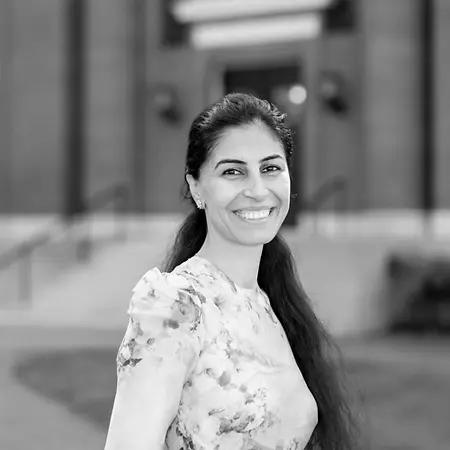
Influential Woman · Landscape Architecture
Leyla Uysal
Landscape Architect and Designer, Harvard University Graduate School of Design and MIT
Cambridge, MA
2Articles published
3Awards received
Her Story
About Leyla
Leyla Uysal is a designer, landscape architect, researcher, and entrepreneur with nearly 17 years of experience spanning architecture, urban planning, landscape architecture, and the luxury goods industry. Her journey began at an early age when she designed her first home, sparking a lifelong passion for creating places that are both meaningful and resilient. That passion has evolved into a career dedicated to advancing climate resilience through landscape architecture, environmental planning, and sustainable design.
Leyla earned her first graduate degree from Harvard University before pursuing doctoral studies in Environmental Planning and Policy at the Massachusetts Institute of Technology (MIT). She later returned to Harvard Graduate School of Design to pursue a Master of Landscape Architecture, integrating design, planning, and environmental research to develop long-term, nature-based solutions to today’s climate challenges.
Alongside her academic work, Leyla is the founder of a Swiss watch brand that collaborates with small European manufacturers while celebrating the resilience, craftsmanship, and cultural heritage of Kurdish women from Türkiye. She also supports two nonprofit organizations in Türkiye and advises municipalities across the Mesopotamian region on landscape planning, ecological resilience, and sustainable development.
Her work extends internationally through her involvement with the United Nations Harmony with Nature initiative and MIT’s Resilient Communities Lab, where she contributes to conversations on ecological governance and resilient futures. Across all of her work, Leyla is driven by the belief that success is measured by the positive impact we have on others and on the natural world. She attributes her success to maintaining a long-term perspective, remaining true to her purpose despite external noise, and using her knowledge to help communities thrive and inspire others to overcome barriers.
Her Interview
Ten minutes with Leyla
01What do you attribute your success to?
I attribute my success to resilience, curiosity, and the courage to think differently. I’ve never been afraid to follow an unconventional path if I believed it could create a meaningful impact. Staying focused on the bigger picture, continuing to learn, and remaining true to my values have guided every stage of my journey. For me, success isn’t about personal recognition—it’s about leaving people, places, and the world better than I found them.
02What’s the best career advice you’ve ever received?
The best career advice I ever received was to be more focused and intentional. While I have always been a visionary who naturally thinks about the long term and connects ideas across disciplines, my mentors encouraged me to pair that vision with discipline and execution. It was valuable advice, even if it didn’t come naturally to me.
At the same time, one lesson I have learned for myself is that no one understands your purpose better than you do. Listen to advice, learn from those with more experience, but don’t let other people’s expectations define your path. If you genuinely believe in an idea and are willing to put in the work to test it, have the courage to pursue it—even when others don’t yet see the vision. Your inner voice, guided by curiosity, integrity, and perseverance, will often lead you through the most difficult moments.
03What advice would you give to young women entering your industry?
Don’t be afraid to take an unconventional path. Some of the most meaningful careers are built by connecting disciplines, asking difficult questions, and challenging assumptions rather than following a predefined route.
Be curious, keep learning, and don’t let anyone convince you that you have to fit into a single box. Build expertise, but also cultivate empathy, resilience, and the courage to think independently. There will always be people who doubt your ideas or underestimate your potential. Listen with an open mind, but don’t let external voices drown out your own.
Most importantly, remember that your career is not just about personal success. Use your knowledge to improve the lives of others, protect the environment, and leave every place and community better than you found it. The greatest impact comes when ambition is guided by purpose.
04What are the biggest challenges or opportunities in your field right now?
We are living through one of the most significant periods of environmental and societal transition in modern history. Climate change is no longer a distant concern—it is reshaping how we design, build, and inhabit our landscapes. Longer and more intense wildfire seasons, more frequent and severe flooding, biodiversity loss, prolonged droughts, and increasingly destructive natural disasters are challenging the way we think about the built and natural environment.
For landscape architects and environmental planners, these challenges also represent extraordinary opportunities. Our responsibility extends beyond creating beautiful spaces; we must design landscapes that are resilient, adaptive, and capable of responding to an uncertain future. Every project is an opportunity to restore ecosystems, strengthen communities, and help people reconnect with nature while improving quality of life.
I believe the future of our profession lies in thinking long term—working with nature rather than against it, integrating scientific knowledge with local and Indigenous wisdom, and creating places that can evolve alongside a changing climate. If we approach our work with curiosity, humility, and a deep sense of responsibility, today’s greatest challenges become tomorrow’s greatest opportunities for innovation and positive change.
05What values are most important to you in your work and personal life?
The values that guide both my work and my personal life are respect, curiosity, and a deep sense of responsibility toward our planet and all the living systems that share it. I believe we are not separate from nature—we are part of it. That perspective shapes every design, planning, and research decision I make.
One of my mentors, Professor Richard Levins, once told me that I seem to “pick up my chair, sit somewhere in the universe, and look back at the Earth.” He meant that I naturally step back to see the bigger picture while also paying close attention to the relationships and details that connect complex systems. I’ve always appreciated that observation because it reflects the way I approach both life and my work.
I certainly don’t have all the answers, and I make mistakes like anyone else. But I believe curiosity, humility, and the willingness to keep learning are essential. When we care deeply about the world around us and remain open to seeing connections that others may overlook, we can create solutions that are not only more resilient but also more meaningful.
Her Content Hub
Articles by Leyla
The Most Dangerous Design Mistake We Keep Making
Why Our Greatest Challenge Isn't Climate Change—It's Believing We're Separate From Nature
The Most Dangerous Design Mistake We Keep Making
Every civilization has believed it could control nature. Every civilization has eventually been reminded that it cannot.
For centuries, we have designed rivers to flow where we wanted, coastlines to remain fixed, forests to stay outside our cities, and landscapes to behave according to our plans. We called it progress. Nature simply adapted in ways we failed to anticipate.
Today, climate change is exposing the limits of that mindset. Longer wildfire seasons, more frequent flooding, biodiversity loss, and rising temperatures are not isolated events. They are reminders that the natural systems supporting life on Earth are deeply interconnected. When one part of the system changes, everything else responds.
I don't believe climate change is our greatest challenge.
I believe our greatest challenge is believing that we are separate from nature.
As landscape architects, planners, scientists, and designers, we often talk about "protecting nature" as though it exists somewhere outside our cities and outside ourselves. But we are not separate from it. Every decision we make—from how we manage water to how we design neighborhoods—shapes the ecosystems that ultimately shape us.
This realization has transformed the way I approach my work.
How Can We Create Places Where Both People and Nature Can Thrive Together?
My career has taken me through architecture, urban planning, entrepreneurship, landscape architecture, and environmental policy. At first glance, these may seem like unrelated disciplines. Yet I have always been asking the same question:
How can we create places where both people and nature can thrive together?
That question has led me to think beyond individual projects and toward systems. Healthy landscapes are not created by adding more trees or building larger parks alone. They emerge when we understand the relationships among water, soil, biodiversity, culture, economics, governance, and the communities that depend on them.
One of my mentors once told me that I seem to "pick up my chair, sit somewhere in the universe, and look back at the Earth." I have always appreciated that observation because it reflects how I naturally think. I like stepping back to see the whole system before focusing on its individual parts. Often, the solutions we are searching for only become visible when we understand the relationships between those parts.
Designing with Humility
This way of thinking has convinced me that the future of design is not about imposing greater control over nature. It is about designing with humility. Nature has spent billions of years adapting, regenerating, and finding balance. We have much to learn from those processes rather than trying to replace them.
The greatest opportunity for our profession is no longer simply creating beautiful places. It is creating landscapes that restore ecosystems, strengthen communities, improve public health, and remain resilient in a changing climate. Beauty is still important—but today, it must be accompanied by function, adaptability, and ecological responsibility.
I remain optimistic because I believe every challenge carries the possibility of transformation. The environmental crises we face today are also an invitation to rethink how we design, how we govern, and how we define progress.
Perhaps the most important shift is not technological but philosophical.
The moment we stop seeing ourselves as separate from nature and begin recognizing that we are part of it, we stop trying to conquer the planet and start learning how to live with it.
I believe that is where the future of design begins.
A landscape architect explores how recognizing humanity's place within nature, rather than seeking to control it, offers solutions to climate change and creates resilient, living systems that benefit both people and ecosystems.
We Don’t Need to Conquer Nature. We Need to Remember We Are Part of It.
Designing resilient futures by recognizing humanity's place within natural systems.
We Don't Need to Conquer Nature. We Need to Remember We Are Part of It.
We often speak about climate change as if it is a problem waiting to happen. It isn't. It is already here. We see it in the increasing intensity of wildfires, devastating floods, prolonged droughts, biodiversity loss, and communities struggling to adapt to conditions that are changing faster than ever before.
As a landscape architect and environmental planner, I don't see these events as isolated disasters. I see them as signals that the systems we have created are no longer aligned with the systems that have sustained life on this planet for millions of years.
Controlling Nature
For a long time, our profession focused on controlling nature. We straightened rivers, hardened coastlines, drained wetlands, and designed landscapes to remain static. Nature has been reminding us that it doesn't work that way.
The Landscapes of the Future Must Be Living Systems
The landscapes of the future must be living systems. They must be capable of changing, adapting, and healing over time. Our responsibility is no longer simply to create beautiful places. Beauty matters, but today, beauty must also perform.
- A park should cool a neighborhood during extreme heat.
- A wetland should reduce flooding while restoring biodiversity.
- Public spaces should strengthen both ecological and human resilience.
Throughout my career, I have become increasingly convinced that the solutions we need already exist around us. Nature has spent billions of years solving problems that we are only beginning to understand. The challenge is not inventing entirely new answers—it is learning to observe more carefully, remain curious, and work with natural systems rather than against them.
Look Back at the Earth
One of my mentors once told me that I seem to "pick up my chair, sit somewhere in the universe, and look back at the Earth." I have always appreciated that observation because it reflects how I naturally think. I like stepping back to understand the relationships among things before focusing on the individual pieces. Climate, culture, water, biodiversity, communities, and economies are not separate conversations—they are part of the same system.
This perspective has shaped every stage of my journey, from architecture and urban planning to landscape architecture and environmental policy. These disciplines may appear different, but I have always been asking the same question:
How can we create places where both people and nature can thrive together?
I don't believe the future belongs to those who build the biggest or the fastest. I believe it belongs to those who understand complexity, think across disciplines, and are willing to design with humility.
An Opportunity to Rethink
Climate change is undoubtedly one of the greatest challenges humanity has ever faced. But it is also an opportunity to rethink how we live, how we design, and how we define progress.
If we begin seeing ourselves not as separate from nature but as part of it, I believe we won't simply create more resilient landscapes—we will create a more resilient society.
Join Influential Women and start making an impact. Register now.