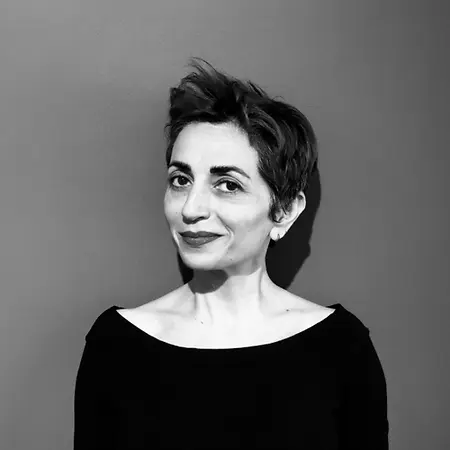
Her Story
About Lina
From a very young age, I had a keen sense of injustice, understanding that some people have been denied access and opportunities and voice and choice for reasons I could not understand and did not accept. When I was a teenager, I took a course on women's history in high school that blew my mind and changed how I think about women's rights. It was a tour of violence against women around the world, and the injustices that women have been subjected to in every place and time absolutely changed my life. I started volunteering, protesting, looking for ways to get involved and be the change that I wanted in the world. I did my first overseas assignment in 1997 in Bangladesh, which opened up a whole other door for me to two decades of work overseas doing international aid work in humanitarian emergencies, most of which was focused specifically on sexual violence prevention and response. I lived in Afghanistan for four years as the country director of an international organization working on women's rights, and I was fascinated by what I was seeing and experiencing, speaking to Afghan women and learning from them. In 2015, I moved into academia, taking up the position of executive director of an academic institute focused on women's rights for close to a decade. I also started my own firm, Better for Women, towards the tail end of that, which is where I am today. I've written several books, given TED Talks, participated in an Oxford Union debate, and done speaking engagements and media representation. It's been an extraordinary ride so far, and I'm not done yet, because as you can see by the state of the world, we cannot afford to be done.
Her Interview
Ten minutes with Lina
01What advice would you give to young women entering your industry?
I would say firstly, she has to decide if she wants to do this as a career, or if she can find ways to do it within whatever space she has. She doesn't have to be a full-time career activist and throw herself into the wild, or the front lines of a war, unless she wants to. She can see the possibility of doing this work in ways that are equally impactful within the spaces that she has, because that's where we exert the greatest influence. It's in our families, in our communities, in our workplaces, in our immediate surroundings. We have relationships with people who know us and trust us, where we see things that need to be changed, that need to evolve. You could work in any office in any country in the world and champion a policy to end sexual harassment. That already alone would be an extraordinary impact. It's about seeing the possibilities in igniting other people to join that fight, igniting men and boys. If she's a mother, it would be raising a young man who understands things like nonviolence, boundaries, consent, equality, respect for women, who's grown up doing his part of household chores and labor without a gendered lens. I think it starts with small things, and it starts with modeling that behavior.
02What are the biggest challenges or opportunities in your field right now?
Right now in the U.S., I think we really need to do more to make public spaces safe for women and girls, to give them access to safe spaces and support. We've got to look at both sides when we talk about ending violence against women. The response side with shelters, hotlines, legislation, ending impunity, places to report, all of that stuff, yes. But I really would like to see the prevention side scaled up. That's going to take a lot of long-term effort and commitment. Education at a very basic level, changing the way that we think and learn, infiltrating our popular culture with role models and messages and edutainment that helps change the way that we think about women and girls, about our relationships, about what's happening to men and boys, and this resurgence of a toxic masculinity, and a sense of entitlement, and a dramatic increase in violence against women. Every day this is in the news. We have to stop this.
03What values are most important to you in your work and personal life?
I believe in supporting other women. I believe in championing and cheerleading for other women, and I love to be in spaces where women do that for me as well. I naturally gravitate to the kinds of things that create space for that to happen. I love women's voices and stories, and I've dedicated my whole life to this. Whatever we can do for each other, to amplify our causes and our brands and share each other's work, there's no limit. For me, the bigger enemy is our own apathy, the potential that we have to feel so overwhelmed by the problem that we don't do anything at all. I want to make sure that any promotion I get is genuine promotion that did not come with any cost from me. That's just an important part of my principles.
Join Influential Women and start making an impact. Register now.