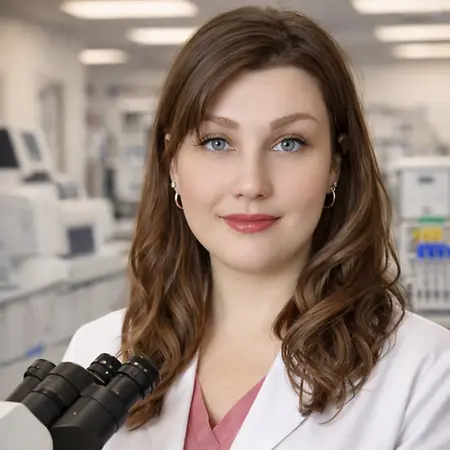
A clinical laboratory scientist reveals the critical, often invisible role behind 70% of medical decisions, challenging misconceptions about lab work and advocating for recognition of expertise in healthcare's backbone.
“
I slowed down in the chaos, moving inch by inch. Because forward is forward, no matter the pace. When life settled, I was already in motion, ready for clarity.
Mariah Riddick, MLS(ASCP) · In Her Own Words
Her Story
About Mariah
Mariah Long Riddick, MLS(ASCP), is a certified Medical Laboratory Scientist specializing in immunohematology and transfusion medicine. Currently working at a reference laboratory in Norfolk, Virginia, she is part of a team that resolves some of the most challenging blood bank cases for local hospitals and patients needing special blood products, applying her expertise to ensure safe and precise transfusions. With nearly nine years of experience in clinical laboratory science, Mariah has developed a deep understanding of both the technical and analytical aspects of laboratory work, combining her love of problem-solving with a commitment to patient care. Growing up in rural northeastern North Carolina, local opportunities for college education was limited especially for individuals coming from lower income backgrounds, yet she utilized the local community college as a start to pursuing her dreams. She began her academic journey at College of the Albemarle, earning an Associate of Science in Medical Laboratory Technology in 2017, and later completed a bridge program at Northern Michigan University, graduating with a Bachelor of Applied Science in Clinical Laboratory Science in 2021. Along the way, she excelled as a clinical chemistry supervisor, trained numerous colleagues, and cultivated a passion for mentoring and education within the field. Throughout her career, Mariah has focused on advancing her skills and specializing in her areas of interest. Her dedication to immunohematology and clinical chemistry reflects her love for solving complex laboratory puzzles, while her professional philosophy emphasizes integrity, transparency, and kindness. Beyond her technical expertise, she is committed to fostering the next generation of laboratory professionals, guiding them through hands-on training and encouraging curiosity, resilience, and excellence in laboratory medicine.
Her Interview
Ten minutes with Mariah
01What do you attribute your success to?
I contribute my success to where I come from and the mindset it gave me. Growing up in a rural community like Perquimans County, NC taught me early on how to be resourceful, grounded, and determined. There’s a certain strength that comes from having to work with what you have—and not letting that limit what you believe is possible.
Getting into clinical laboratory science was not a straight path for me—it was shaped by obstacles that could have easily stopped me. Although I was an honors student in high school I came close to not graduating due to being considered truant. I had an intense struggle with anxiety and mental health my senior year of high school leading to increased absences. Luckily, I had a team of teachers and a guidance counselor that believed in me and helped make a way for me to graduate on time. When I was able to start making plans for college and a career I found that coming from a low-income community and family, with limited local access to colleges and educational resources, pursuing this career required me to be persistent from the start. I relied on Pell Grants to even make school possible, and while working as a pharmacy technician, I balanced long hours on the job with the demands of MLT school. Before I applied for MLT school, I was terminated from a Medical Assistant program due to an absence policy after an illness, which was incredibly discouraging and could have been the end of my journey. But instead of giving up, I found another path and went back to the same college to pursue my MLT, allowing that setback to reroute me rather than define me.
I also carry the perseverance and resilience of the women who came before me. Their strength, sacrifices, and ability to keep going no matter the circumstances set the foundation for how I approach challenges. Because of them, I’ve learned how to stand firm, adapt, and keep pushing forward even when things aren’t easy.
A big part of my success is grit—the willingness to keep pursuing opportunities even when doors seem closed. I’ve learned not to take “no” as the final answer, but as a delay, a redirection, or a sign to grow and try again. Timing matters, and I trust that just because something isn’t meant for me right now doesn’t mean it never will be. When the opportunity comes back around, I make sure I’m ready for it.
02What’s the best career advice you’ve ever received?
The best career advice I ever got was: “Take every experience you can get—nothing is too small to count.”
Early on, I thought only big roles or impressive titles were worth putting on a resume. But I learned that even small opportunities—helping on a project, volunteering, shadowing someone, picking up an extra responsibility—can build real skills and show initiative. Those experiences add up, and over time they tell a much bigger story about who you are and how you work.
Now I see a resume less as a list of titles and more as a reflection of growth, curiosity, and effort—and even the smallest steps play a part in that.
03What advice would you give to young women entering your industry?
When you’re trying to figure out your path—whether it’s school, career, or life in general—there is no single right answer. I’ve found that what made you happy as a child often reflects what will bring fulfillment as an adult. Stay curious, explore your options, and pursue what genuinely interests you.
04What are the biggest challenges or opportunities in your field right now?
One of the biggest challenges in laboratory medicine is recruitment and staffing shortages. Low staffing increases workload and puts pressure on accuracy and turnaround times, impacting patient care. At the same time, there’s an opportunity to mentor and actively recruit new professionals into the field, which can help strengthen the workforce and ensure quality care.
05What values are most important to you in your work and personal life?
Integrity, authenticity, honesty, transparency, and professionalism are foundational values for me. At the core of everything, I also prioritize kindness and giving people grace, because the energy we bring to interactions affects others and shapes the environment we work in.
Her Content Hub
Articles by Mariah
Before Medicine Speaks
The Invisible Foundation: Why Clinical Laboratory Scientists Are Essential to Modern Medicine
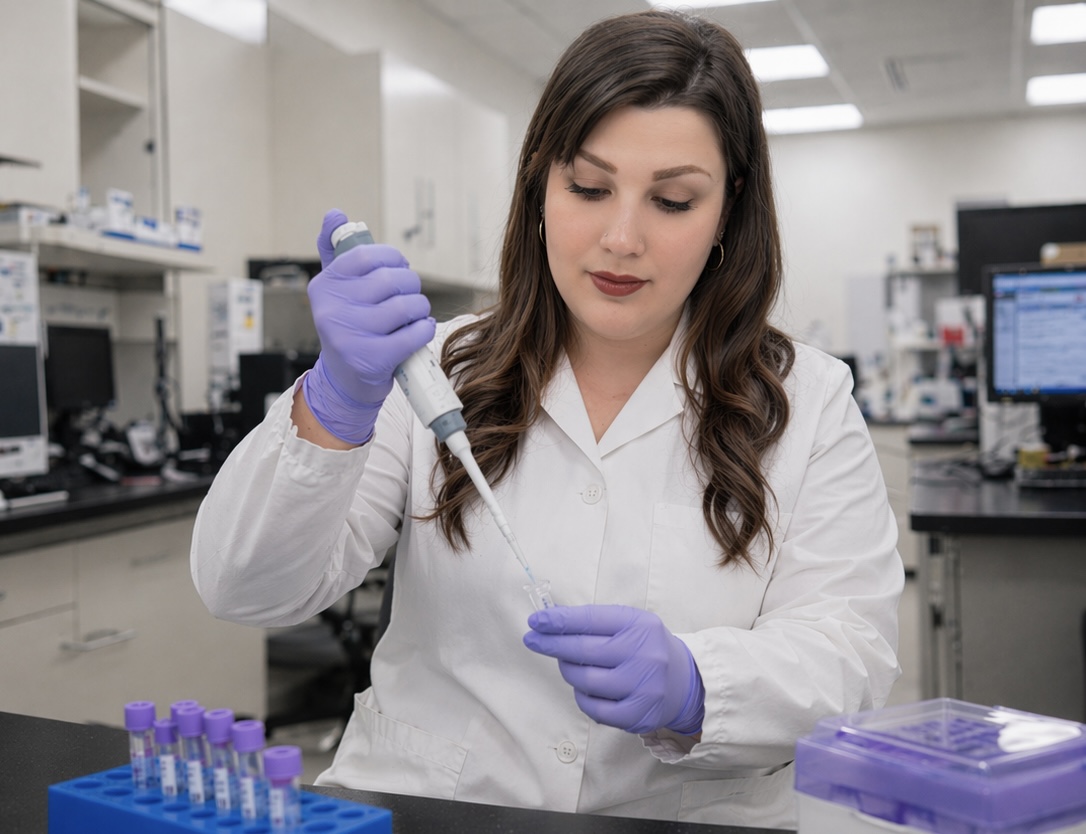
If the clinical laboratory ceased function today, modern medicine would come to a halt. Not slowly. Not eventually. Immediately.
There would be no confirmed diagnoses. No way to safely transfuse blood. No clarity on infections, organ function, or disease progression. Physicians would be left to make decisions without the data that quietly guides nearly everything they do. And yet, despite this reality, the professionals responsible for producing that data remain largely unseen—and often underestimated.
I am one of them.
As a clinical laboratory scientist—and as a woman in science—my work does not happen at the bedside. I am not the face a patient remembers or the voice that delivers their diagnosis; however, my work is embedded in that diagnosis. The World Health Organization estimates that approximately 70% of medical decisions are based on laboratory results. That means that before a treatment is chosen, before a condition is named, and before a life is saved or altered, someone like me has already done the work to make that decision possible.
And still, there is a persistent misconception—even within healthcare—that we simply “push buttons.” That we load samples, press buttons, and wait for answers to appear. It is an oversimplification that strips away the complexity, responsibility, and expertise this role demands. Because when those machines fail, we fix them. When results don’t align with the clinical presentation, we investigate. When something looks off, we do not ignore it; we question it, verify it, and sometimes stop it from reaching a patient altogether.
Automation may be a tool, but it is not a substitute for judgment.
Behind every result is a series of decisions that require more than technical skill. We perform manual differentials under a microscope, identify microorganisms through culturing techniques, analyze body fluids cell by cell, and determine blood compatibility through methods that leave no margin for error. We are not just producing data—we are validating truth. Because an incorrect result is not just a mistake; it can lead to a misdiagnosis, the wrong treatment, or harm that could have been prevented.
What we do requires a specific kind of mind: analytical, detail-oriented, and unwilling to accept uncertainty at face value. Every abnormal value raises a question. Every inconsistency demands an answer. There is no autopilot in this work. There is only constant evaluation, critical thinking, and accountability.
And as a woman in STEM, there is an added layer to that identity. While the broader STEM workforce is still largely male-dominated—often around 70% in many sectors—the clinical laboratory is an exception. It is a space where women are not only present but prominent. And yet, even within that presence, the depth of our expertise is still too often underestimated.
So no, I don’t stand at the bedside. I stand behind the science that supports it.
And medicine, whether it acknowledges it or not, stands on us.
Join Influential Women and start making an impact. Register now.