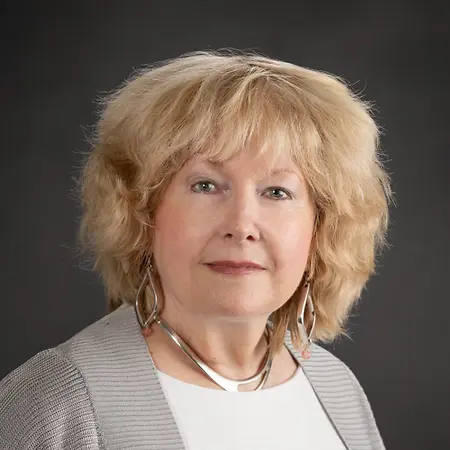
Dr. Marie Kiely Tynan's new poetry collection explores bipolar depression's complexities through raw, lyrical verse and classical inspirational poetry, offering hope and resilience for those managing mental illness.
Her Story
About Marie
Dr. Marie Kiely Tynan is a retired NASA professional whose distinguished career spanned 35 years from 1980 to 2015. Her work encompassed management analysis, internal controls, computer security, technical writing, training, quality management, and organizational systems. Among her notable accomplishments, she served as NASA Headquarters' first Computer Security Manager, led internal-controls initiatives, contributed to IT policy and oversight, and developed the first automated Inspector General audit tracking system. She also played a significant role in implementing ISO 9001 management systems within NASA Headquarters' Office of Facilities and Management. Tynan's career was distinguished by her ability to move from a humanities-based academic background into increasingly technical and managerial environments. She earned a PhD in English Literature from the University of North Carolina at Chapel Hill in 1979, along with a master's degree from UNC in 1973 and bachelor's degree in 1971 from the University of Alabama, where she was inducted into Phi Beta Kappa. Her technical and managerial development continued throughout her NASA career through extensive professional education and computer training. She attended Harvard's School of Business In Strategies for Enhancing Executive Influence. Her accomplishments were recognized through exceptional service, leadership, performance, computer-security, and agency-wide awards, as well as her selection as a Senior Fellow of the Council for Excellence in Government. Following her NASA career, Tynan continued to pursue writing, learning, and community involvement. She has authored Bipolar Extremes: A Memoir, published in 2019, and later published Bipolar Extremes: The Poems, combining her own poetry with selections of classical poetry. Her literary work reflects her interest in using writing to promote greater understanding, resilience, and hope for victims of bipolar disorder, their families, and friends.. She remains active through organizations including the Daughters of the American Revolution and the Wednesday Club, while continuing to read, travel, write, and share the lessons of a career defined by perseverance, adaptability, continuous learning, and a willingness to take on difficult challenges.
Her Interview
Ten minutes with Marie
01What do you attribute your success to?
A solid family background with my mother as a college graduate and role model in academics and business. My ballet teacher was a strong woman who had her own companies in New York and Washington, DC, before returning to my home town of Bluefield, WV, to care for her elderly parents and teach classes in ballet, tap, and toe dancing. She was strict and insisted on excellence in practice and performance. My grandfather was a successful small businessman and a prominent leader in our community. These three people established a strong learning environment for me and encouraged my achievements through high school, college, and graduate school.
02What’s the best career advice you’ve ever received?
The best career advice I have received is simple: don’t give up and keep your head up despite challenges. Early in my NASA career, I experienced challenges as a woman working in a technical environment. There were jokes about women, and some people questioned whether my PhD in English was appropriate for NASA. There were times when people did not take me seriously, but I knew I was well trained and capable. I continued learning, took computer classes throughout my career, and developed the technical knowledge necessary to succeed.
03What advice would you give to young women entering your industry?
I encourage young women entering the industry to pursue degrees in engineering, finance, or science because those fields are highly valued in today's environment. I also encourage women to step forward rather than waiting to be recognized. Volunteer for difficult assignments, pursue team-lead opportunities, and make yourself visible through your work and contributions. Take advantage of management classes and professional-development opportunities at NASA, widen your horizons, and do not feel that you have to remain in one position throughout your entire career. Be willing to explore new opportunities and challenge yourself.
04What are the biggest challenges or opportunities in your field right now?
One of the biggest challenges in my own career was transitioning from academia into technical writing and training at NASA. I earned my bachelor's, master's, and PhD degrees in English literature, and then moved into an environment that was highly technical. I was hired specifically because I was non-technical but had strong communication skills and a PhD. I had to learn technical subjects and develop new skills while demonstrating the value of my academic background. That experience taught me that having the willingness to learn and adapt can open opportunities even when your education does not appear to directly match the field you enter.
05What values are most important to you in your work and personal life?
Integrity
Her Content Hub
Articles by Marie
Bipolar Extremes: The Poems (2026) by Dr. Marie Kiely Tynan
A NASA scientist's poetic journey through bipolar disorder and personal triumph.

Dr. Marie Kiely Tynan has published a new book, Bipolar Extremes: The Poems, released by Dorrance Publishing Company, Inc., in 2026.
This volume provides a raw, lyrical perspective on the complexities of bipolar depression, the resilience to keep working, the redemption of spirit, and the power of the written word. The book contains her poems written during a bipolar low episode, along with an anthology of her favorite inspirational classical poetry from the 16th through the 20th centuries.
Her purpose is to help people living with bipolar illness understand that the depths of depression can be managed and overcome with support from family, mental health professionals, friends, work associates, and others who offer empathy and sympathy.
Dr. Tynan suffered from bipolar disorder from her youth until age 76, although she was not diagnosed until 2003, at age 53. She spent her entire career with NASA while experiencing the bipolar ups and downs of the illness, managing to work full-time through the many episodes.
Her ability to write about her many successes and leadership awards despite her illness is a tribute to the power of one's mind to resist destruction and overcome disability.
Join Influential Women and start making an impact. Register now.