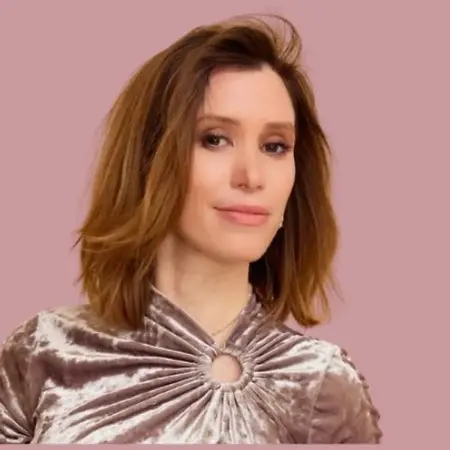
Marine Collins Ragnet, Head of Innovation  - Peace Research and Education Program on Influential Women

Influential Woman · Academia

Marine Collins Ragnet

Head of Innovation - Peace Research and Education Program, New York University

New York, NY

Certifications · Degrees · Memberships

Degree Business Administration Degree Graduate Master's Degree from New York University Member UNESCO's Women for Ethical AI Working Group Member All Tech is Human Member Women in GovTech

Her Story

About Marine

I started my career in advertising, but very quickly felt the desire to shift into something that was a bit more purpose-driven, so I shifted to working in diplomacy. I worked a little bit with the Tibetan government and the Dalai Lama in Dharamshala before joining the French Ministry of Foreign Affairs, and then eventually the European Diplomatic Service, the Department of State, and then more recently New York University, where I founded a program around ethical AI. When I first joined the French Ministry of Foreign Affairs, I was very quickly offered a job in a minister's office, and I was one of the youngest advisors there. It was one of my first experiences in diplomacy at all, and I felt very thankful for that opportunity. It was probably the most high-pressure job I had and have had, but it was incredibly interesting and led me to very interesting postings in India and then Central African Republic. I like to think that I work at the intersection of peace and technology. There was a lot of negotiation and humanitarian work in the diplomatic world, but I'm doing a lot of work with AI now, and kind of bringing that peace angle into the AI work. My team and I are trying to bring a bit more of a global majority perspective and give voices to actors in the AI space who are not necessarily represented. We do a lot of work with data labelers, and we also work with Indigenous communities and other communities who are impacted by AI, by how AI is defining the world, but aren't included in conversations.

Her Interview

Ten minutes with Marine

01What do you attribute your success to?

I would say there's always a little bit of luck, but having the right support system is important. I spent a whole year without a salary trying to build the research program that I then run, so it was really important at that time to get moral support from the people around me who believed in that. The people you meet are the most likely to contribute to that success. You meet someone great in your work and they're doing something that you're very interested in, and I think it's really important to keep that relationship going and to not be afraid to tell people that you admire their work. I think we have to be more friendly with each other and more supportive, especially as women.

02What advice would you give to young women entering your industry?

I think there's nothing wrong with trying out a lot of different things. I actually think that makes a career stronger, it makes a personality stronger, and then it makes you more resilient as well. Your career is going to experience change, and sometimes that change is unwanted, and having that ability to kind of put yourself out of that comfort zone, because you've tried many different things, or you've lived in many different places, or have experienced a lot of different potential careers or jobs, I think is the best career advice. It also kind of gives you a way to see things and think about things out of the box, which is very important.

03What are the biggest challenges or opportunities in your field right now?

In terms of opportunities, I think new technologies is a field that is emerging so quickly, and there are so many open questions. I don't think two researchers or economists with the same opinions on how AI is going to impact the job market. So I think there's a lot of room to kind of think about these questions and try to find solutions to them, which I think is a great opportunity. But on the other end, I would say it's also a field where building credibility is challenging, because there's a lot of big names, big companies, and a lot of the work is very concentrated. Very focused on Global North perspectives, certain universities, certain subjects, certain institutions. That's part of what I'm trying to do with my work and what my team is trying to do with our work, is also to bring another perspective, bring a bit more of a global majority perspective, and give voices to actors in the AI space who are not necessarily represented. For example, we do a lot of work with data labelers, but we also work with Indigenous communities and other communities who are impacted by AI, by how AI is defining the world, but aren't included in conversations.

04What values are most important to you in your work and personal life?

In our work, we believe a lot in equality, so all of our work is participatory driven. We consider the people that we work with as researchers or co-managers of the project with us. That's how I approach a lot of the projects that I'm working on. And then personally, I think being kind and empathetic and kind of understanding where people are coming from is always important.

Join Influential Women and start making an impact. Register now.