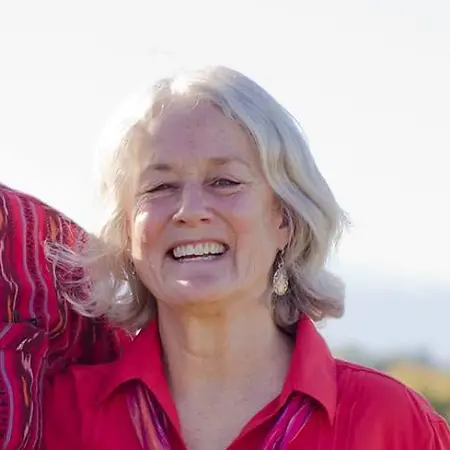
Her Story
About Mary
Mary Raynard is a retired Human Resources leader whose career spanned roughly 45 years across higher education, technology, hydroelectric power, music, and environmental consulting. With a degree in English Literature and Psychology from Smith College, she began as a first-grade teacher before an interview at Brown University Medical School led her into HR. She then built her foundation at Wang Laboratories, where she rotated through programs, communications, benefits, and recruiting roles, and later held senior leadership positions at Consolidated Hydro, Rykodisc, and The Cadmus Group, where she served as Vice President of Human Resources for 14 years.
Throughout her career, Mary combined interpersonal insight with analytical rigor to shape policies and workplace culture grounded in organizational values, mission, and ethics. At Cadmus, she guided two major acquisitions, strengthened the total compensation program, built a national recruiting process, and led the internal training program known as Cadmus College. She also championed flexible schedules, remote work, and family leave, often well ahead of legal requirements or industry norms, and negotiated her own remote arrangement from New Mexico years before it became commonplace.
Since retiring in 2015, Mary has turned to a new chapter of study, service, and education. She completed a Master's in Theological Studies at Iliff School of Theology, where her thesis, "Education as Empire," examined her great-aunt's work as a teacher in the American Indian boarding school system. Today she shares that research as a public speaker, and she contributes her business expertise to program development, governance, and strategic planning at First Universalist Church of Denver and Iliff. She has also served with Denver Hospice and as a trained mentor through Mentor Collective, demonstrating that her influence extends well beyond any job title.
Her Interview
Ten minutes with Mary
01What do you attribute your success to?
I attribute my success to passion, emotional intelligence, curiosity, and a willingness to learn every dimension of Human Resources. Rather than limiting myself to one specialty, I embraced the full breadth of the profession, building experience in employee relations, communications, compensation and benefits, policy and program development, organizational culture, and leadership. I began my career as a first-grade teacher and found HR almost by accident. My time at Wang Laboratories became my "HR boot camp," giving me broad exposure to the field.
I take particular pride in turning progressive ideas into meaningful workplace practices. At The Cadmus Group, I helped implement family leave policies that included maternity and paternity leave, flexible schedules, and remote-work options, which were uncommon at the time. I also negotiated the opportunity to work remotely from New Mexico years before remote work became mainstream. I believe HR should connect policies with values, ethics, employee needs, and the realities of people's lives. My career taught me that effective HR requires both heart and analytical ability: listening carefully and communicating with empathy, but also understanding data, policies, business realities, and organizational strategy. I also credit my success to having the courage to challenge conventional thinking when I believed a better approach would serve both employees and the organization. Today, retirement is not an ending for me but another chapter of purpose, and I continue to see influence as something that evolves into legacy.
02What’s the best career advice you’ve ever received?
The best lessons I carried through my career centered on learning, mentorship, communication, and authenticity. I learned to approach my work wholeheartedly, stay curious, and keep seeking to understand how organizations and people function. I also learned that technical expertise alone is not enough. Successful HR professionals must understand organizational politics, communicate well, cultivate emotional intelligence, and build relationships at every level of an organization. The ability to listen and understand different perspectives can be just as valuable as knowing the policy or the numbers. Most importantly, I believe people should enjoy what they do. A career can span decades, and finding meaning in the work makes the journey richer.
03What advice would you give to young women entering your industry?
Enter HR wholeheartedly, learn as much as you can, and gather as many experiences as possible. Find good mentors who will challenge and encourage you and who can teach you how to navigate an organization, understand its politics, and become an effective communicator and bridge builder. Recognize that HR has two distinct sides: the human side of relating to people and the analytical side that demands spreadsheets and data. Develop both, especially if you aspire to leadership roles. Understand the organization around you, communicate thoughtfully, stay curious, and never stop learning. Above all, enjoy your work and find a path that lets you bring your strengths and values to the table while you continue to grow.
04What are the biggest challenges or opportunities in your field right now?
I see HR as a profession that must continually balance the human side of work with the analytical and business side of organizations. Today's professionals have an opportunity to use their expertise to create policies and cultures that recognize employees as whole people while still supporting organizational goals and accountability. I believe the strongest HR leaders will keep connecting workplace decisions to organizational values, ethics, mission, and the evolving needs of employees.
05What values are most important to you in your work and personal life?
Integrity, compassion, ethics, service, respect, learning, authenticity, and mission-driven impact have guided me in both my professional and personal life. I believe leadership carries a responsibility to consider not only what an organization can do, but what it should do, and how its decisions affect the people involved. My continued volunteerism reflects that commitment to service. Through my church, public speaking, governance work, and efforts to educate others about the history and legacy of Indian boarding schools, I use my experience and voice to contribute to something larger than myself.
Join Influential Women and start making an impact. Register now.