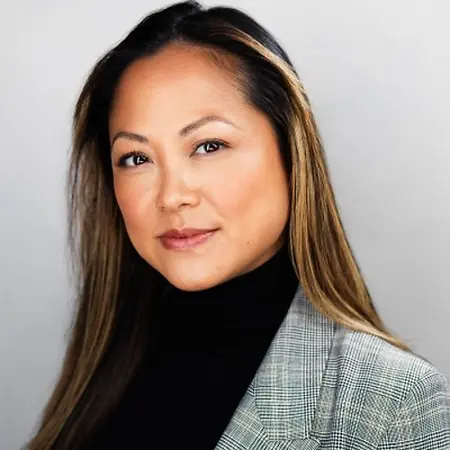
Her Story
About Melissa
I have been in my field for over 20 years, doing change and transformation work for organizations and clients. As a change practitioner, I realized that we were always made to make the organization the hero and not the person. So in the last 2 years, I launched my own business to change that narrative, taking everything I've learned from a change and transformation perspective for organizations and applying it to the human, so the human is the hero. After returning from maternity leave of my second child a few years ago, I experienced postpartum depression. I was the highest performing global partner the year prior, and when I came back, I was laid off for not hitting the same numbers as everybody else, but I was gone for 6 months, and it crushed me. During that time, I focused on identifying a therapist, which is really stigmatized in my culture as a daughter of two Chinese immigrants, as well as continuing my work with an executive coach. I found myself frustrated because I felt like I was only addressing my past with a therapist and my future with a coach, and I felt like I was compartmentalizing my needs. So I started to search for therapy and coaching and community all in one, and nothing existed, so I created it. That's what Maloo Journey is - something that never existed before, combining therapy and coaching all in one. I don't believe that leaders are addressing the root causes of employee needs. Gone are the days where you can separate your professional life with your personal life. When employees are going through volatile changes, potential reductions in staff, AI integration, a training or a pizza party isn't going to get them excited when they lost their friends or manager the day before - they're probably going through grief or identity crisis. The opportunity is to help leaders address the root causes of what people are actually going through, versus just the training.
Her Interview
Ten minutes with Melissa
01What do you attribute your success to?
Oh my goodness, I attribute my success to all these women that have done this before me, that have created the opportunity and the privilege to be able to chase my dreams right now and experience joy. These are my mother, this is my grandmothers, it's the people that came before them. It's all the women mentors that have been in my life, my peers, where we celebrate each other's milestones, my children who teach me that they can be great teachers as well, the assholes and the terrible companies I've worked at that also have taught me what not to do, right? And what true leadership is. So, gosh, like, I would have to say it's just the whole village.
02What’s the best career advice you’ve ever received?
I think the best career advice came from my mother, but my mother's not much of a verbal communicator, she's more of an action communicator. I would say, you know, she is my hero because she didn't care about the status quo, and is a really esteemed architect, and was in an architecture field where it was predominantly men, and she knew from her childhood that this is her dream, so she never allowed the status quo to prevent her from reaching her dreams. And so, I would say that's probably the best advice that I've ever seen in action that I try to implement in my day-to-day life.
03What advice would you give to young women entering your industry?
I would give advice - my advice is be a lifelong learner. Everything and every hump and every bump is a lesson to learn. And it makes you wiser for going through it.
04What are the biggest challenges or opportunities in your field right now?
The biggest opportunities in my field right now - what I've launched is a combination of therapy and coaching all in one, so really dealing with the fact that I don't believe gone are the days where you can separate your professional life with your personal life, and that also is true in organizations. I think in organizations, the opportunity there is that I don't believe that leaders are addressing the root causes of employee needs. So, for instance, in a market right now where there's a lot of different volatile changes that's happening, potential reductions in staff, AI integration, a training or a pizza party isn't going to get an employee all of a sudden excited about a job when they lost their friends or manager the day before. They're probably going through grief or identity crisis, right? And so I think the opportunity is to help leaders address the root causes of what people are actually going through, versus just the training. I think some of the challenges are these outdated stigmas with regards to the value that you can get from pursuing your own therapeutics or coaching journeys. And so, I would love to be able to start destigmatizing that by introducing this type of support to more and more individuals, from youth to women to men, and give themselves the ability to give themselves the permission to get the support that they need to experience joy and alignment.
05What values are most important to you in your work and personal life?
Integrity. I really feel like I used to allow organizations too much power to be my worth, and now no longer, and I live a life that is based on asking the question to myself, will I be proud of what I did today? And oftentimes, it's a very difficult decision, but living with integrity is something that's really critical, and like, it's completely embedded into the heart of who I am.
Join Influential Women and start making an impact. Register now.