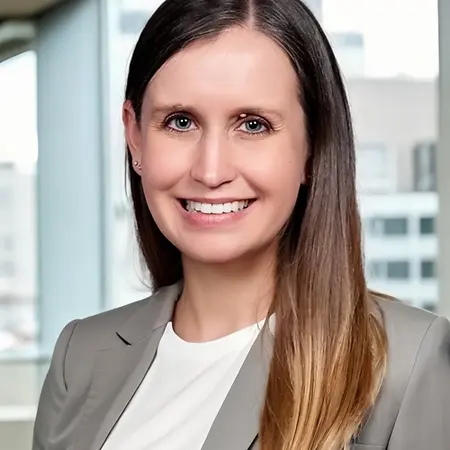
Her Story
About Michelle
Dr. Michelle Deeg-Davis, PhD, LPC (OR), LMHC (WA), CCMHC, ACS, is a Trauma Counselor with Wholehearted Counseling LLC and an Assistant Professor of Counseling at George Fox University. Based in the Portland/Vancouver area, she brings expertise in trauma-informed counseling, clinical mental health, counselor education, and professional supervision. As a licensed professional counselor in Oregon and a licensed mental health counselor in Washington, she is dedicated to helping individuals navigate challenging experiences while preparing the next generation of counseling professionals.
In her clinical and academic work, Dr. Deeg-Davis emphasizes compassionate, trauma-informed care and the importance of creating supportive environments for both clients and counselors. She is particularly passionate about counselor wellness and self-care, recognizing that mental health professionals must prioritize their own well-being in order to remain present and effective in supporting others. Her professional credentials as a Certified Clinical Mental Health Counselor (CCMHC) and Approved Clinical Supervisor (ACS) further reflect her commitment to high-quality clinical practice and professional development.
Through her roles at Wholehearted Counseling LLC and George Fox University, Dr. Deeg-Davis combines clinical practice, counselor education, supervision, and advocacy for the counseling profession. She is committed to equipping counselors with the knowledge, resilience, and practical skills needed to provide ethical and effective trauma-informed care. Her work reflects a strong dedication to service, education, counselor wellness, and improving the quality of support available to individuals experiencing trauma and other complex life challenges.
Her Interview
Ten minutes with Michelle
01What do you attribute your success to?
I attribute my success to perseverance, compassion, education, and a willingness to keep moving forward even when I have questioned myself. My journey into the mental health field began in 2006 and has included clinical counseling, school counseling, higher education, teaching, research, and private practice. Growing up as a farmer’s daughter in southeast Idaho, I learned early the value of determination and resilience, and my experiences overcoming educational challenges taught me not to allow self-doubt or circumstances to define what is possible. Throughout my career, mentors, clients, students, family, and colleagues have shaped my growth and reminded me of the power of meaningful relationships and unexpected opportunities. I am especially passionate about trauma-informed care and believe healing begins when people feel safe enough to be seen, heard, and understood. My work has also reinforced that caring for others requires caring for ourselves, which is why I prioritize wellness, boundaries, and resilience in both my clinical practice and counselor education. Ultimately, I believe success is built through continuous growth, trusting my abilities, remaining open to learning, and having the courage to keep moving forward while helping others do the same.
02What’s the best career advice you’ve ever received?
The best career advice I have received has come through people and experiences rather than a single quotation. My middle school counselor showed me the profound impact one caring professional can have by simply showing up for someone during a difficult chapter. Years later, a former client helped me recognize another important calling in my career: supporting children and families affected by substance abuse and incarceration. Those experiences taught me that we may never fully know how deeply our actions can influence another person’s life. A counselor’s encouragement, a teacher’s belief, or a moment of genuine compassion can stay with someone for years. I carry that lesson into my own teaching and clinical practice by encouraging others to trust their experiences, remain open to unexpected opportunities, and recognize that their personal journeys can become a source of professional wisdom and purpose.
03What advice would you give to young women entering your industry?
I encourage young women entering the mental health and counseling profession to lean into their experiences, trust their abilities, and not second-guess a path that feels meaningful to them. Imposter syndrome and outside expectations can create unnecessary limitations, particularly in academic and professional environments, but a perceived weakness does not have to become a permanent boundary. Ask questions, seek mentors, pursue opportunities for education and growth, and give yourself permission to discover what you are capable of rather than accepting someone else’s assumptions about you. Your experiences can become a source of strength and professional wisdom, so remain curious, stay open to unexpected opportunities, and have the confidence to define your own path.
04What are the biggest challenges or opportunities in your field right now?
One of the greatest opportunities I see in mental health and education is the continued development of authentic, trauma-informed systems of care. At the same time, one of the biggest challenges is recognizing that trauma-informed practice is more than implementing a program or checking a box; it requires an ongoing cultural and organizational shift in how we understand and support people. Creating meaningful change within established systems can take time, commitment, and collaboration. I believe educators, counselors, and institutions have an important opportunity to build environments where safety, wellness, resilience, and human connection are treated as foundational elements of effective care and education rather than secondary considerations.
05What values are most important to you in your work and personal life?
Family, education, compassion, empathy, advocacy, equity, and wellness are central to both my personal life and professional work. I believe every person deserves to be treated with dignity and to have a safe environment where they can explore their experiences, heal, and discover their own resilience. That philosophy guides my clinical practice and my teaching, where I encourage future counselors to establish healthy boundaries and intentional wellness practices before taking on the emotional demands of trauma work. I believe sustainable compassion requires us to care for ourselves as intentionally as we care for others. My own journey has taught me that our experiences, including the challenges we face, can become powerful sources of purpose. From being supported by a caring counselor early in my life to preparing future clinicians today, I strive to turn perseverance into purpose and personal experience into a commitment to help others heal, grow, and believe in themselves.
Join Influential Women and start making an impact. Register now.