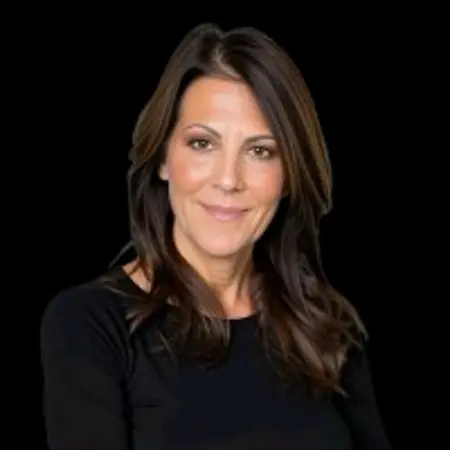
Her Story
About Michelle
I entered housing as more of an accident, needing part-time employment with benefits for my young son after being homeless as a teen and becoming a single parent. I took a job working for GE Capital Mortgage Services in St. Louis. The mortgage industry is full of folks who have high school educations, don't have advanced degrees, but have been wildly successful, and also a number of women. After about 10 years of grinding it out, I found a startup company here in St. Louis called Nexstar Financial, being founded by former Citibank executives and funded by the private equity firm KKR. I went to work for an absolute female powerhouse executive who was an equity shareholder in the company, and I enjoyed several years of intense growth and sponsorship working for her and a few other women. I've been very fortunate to have gone from this story of homelessness to winding up in a position as the chief of staff to a gentleman who ran Freddie Mac in Washington, D.C. I'm currently working on my story and have committed it to paper. A couple of the guys from the Tom Clancy franchise have seen the manuscript and feel it has legs, so I've been invited to double my word count and work on a second rewrite. I attribute my success in housing to the fact that I was homeless and that I actually care. I recognize housing as a basic need, and I understand it to be, having been a single mom lacking in education, how important it is. I found not only a career within housing but a home within housing, because it's full of salt-of-the-earth, down-to-earth people willing to invest in raw talent versus pedigree.
Her Interview
Ten minutes with Michelle
01What do you attribute your success to?
I attribute my success to the fact that I actually care. I was homeless as a teen, and I've got this crazy story. I attribute my success in housing to the fact that I was homeless and that I actually care, that I recognize housing as a basic need. I understand it to be, having been a single mom and lacking in education, how important housing is. I found not only a career within housing but a home within housing, because housing finance is full of salt-of-the-earth, down-to-earth people. It's a unique culture where people are willing to invest in raw talent versus pedigree. I always recognized the importance of being able to enjoy the stability that housing brings to not only your personal equation but when you do have small children in the home. I was able to enjoy the sponsorship and the security that was provided to me by the industry and by those men and women who were investing personally and professionally in me. I feel a moral obligation to my community, to my country. I've had so many people who have been invested in my survival and my success, and housing and a need for it has been a central theme throughout my life. I genuinely feel a moral obligation to figure this out.
02What advice would you give to young women entering your industry?
Don't be afraid to set the example. We don't always have to assimilate. I think it's okay to be the trendsetter. I think it's okay to stand apart and stand alone a little bit. We don't have to move in a pack. It's okay if there's an outlier, or one or two of us that are different, because we're all paving a cow path somewhere for the other women, just because we're all not moving in a herd in one direction doesn't necessarily mean that we're not going anyplace. I think there are extraordinary women out there who are not showcasing everything that they have and their uniqueness, and I think that can be an inspiration for other women. I would say to my younger self, you should have been out telling that story 20 years ago, because how many more people could you have helped had you started advocating earlier and started doing all of these things earlier. But I was so concerned with assimilating and requiring validation and not wanting to make waves. I think we need to encourage each other to be more unique amongst the women, and we need to celebrate that. We're all paving a cow path somewhere, and as long as we're all moving in a forward direction, we're all gonna benefit.
03What are the biggest challenges or opportunities in your field right now?
The number one issue we have is the lack of supply. It's estimated we're somewhere between 3 and 11 million homes short, probably closer to 7 to 11 million homes, and the vast majority of that is affordable housing. We need more supply - supply, supply, supply. The supply chain has normalized a bit post-pandemic, but certain parts have yet to recover. We also have permitting issues, and everybody likes to say we need more affordable housing, but the reality sounds more like 'not in my backyard.' There's the issue of whether projects really pencil - are the builders able to make any margin? The National Association of Home Builders estimates there is around $93,000 worth of compliance costs in every single family residential build. If you're talking about affordable housing as being $350,000 and below, and you've got $100,000 worth of regulatory compliance costs already embedded in that, there's just not a lot of room. That's why you've seen the shift to multifamily. There are other things going on too - capital restraints for single-family residential, land costs, loan programs, down payment assistance, valuation issues. It's a big ecosystem with a lot going on. We have a huge uphill battle educating policymakers. I think it's a long-term sticker, 7 to 10 years before we're able to really move the needle, because it's all about supply and how quickly can we build, and is there profit and margin to be made in the affordable housing space.
04What values are most important to you in your work and personal life?
I feel a real moral obligation to my community, to my country. I genuinely feel a moral obligation to figure out the housing crisis. I was raised and housed by some Vietnam vets who were Special Forces guys - pretty amazing individuals. I've had so many people who have been invested in my survival and my success, and housing and a need for it has been a central theme throughout my life. A couple years ago, I was diagnosed with breast cancer and contracted a life-threatening infection with a really shitty prognosis. I didn't think I was going to make it, but I did make a huge turnaround, and I am now more committed than ever to leaving a legacy behind. I want to be able to leave behind credit to my name that says I made a lasting impression here and I made things better. I want somebody to one day be able to say, 'Yeah, the Helper Act, Michelle Young was really an advocate and really active in that.' I would like to leave this world with credit to my name that I made things better. I think it's important as women that we support other women, and we definitely support this next generation. It's important that we support the men who support us as well - that's part of our success too. I'm just gonna stay authentic, and I'm just gonna stay committed, and I'm gonna try to strive to the higher ideal.
Join Influential Women and start making an impact. Register now.