Inspired by Will Guidara’s "Unreasonable Hospitality," this reflection asks what all our discipline and well-designed systems are ultimately meant to make possible: the freedom to notice, respond, and create moments of care that one person may never forget.
Her Story
About Nicole
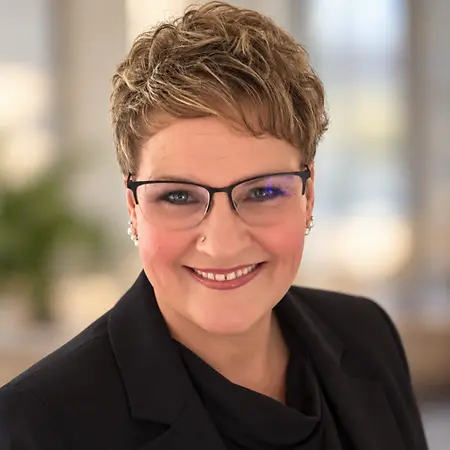
Nicole C. Polen-Petit, PhD, is a higher education leader, academic psychologist, and passionate advocate for expanding educational opportunity. She serves as Dean of the School of Arts, Letters, and Sciences and Regional Vice President for the Inland Empire at National University, where she has spent more than 16 years advancing student success, academic quality, and innovative approaches to serving today’s learners.
A first-generation college graduate herself, Nicole understands both the transformative power of higher education and the courage it can take to pursue it. She earned her bachelor’s degree in Psychology from Whitworth University and an MS in Child Development and PhD in Human Development from the University of California, Davis. Before moving fully into higher education, she worked in community mental health as a Child Development Specialist and Clinical Training Director, experiences that continue to shape her deeply human-centered approach to leadership.
Over more than 25 years in higher education, Nicole has served as a faculty member, program director, associate dean, and dean. At National University, her work centers on creating educational opportunities that recognize the whole lives students bring with them. NU students are students AND parents, professionals, service members, caregivers, community leaders, and more. Nicole believes higher education is at its best when it is designed around that reality rather than asking students to overcome institutional barriers in order to succeed.
Her leadership has spanned academic innovation, program development, student success, workforce and regional partnerships, and efforts to strengthen the connection between a college education and economic mobility. She is a strong champion of the liberal arts and the durable human skills they develop, believing that critical thinking, communication, creativity, collaboration, and adaptability are increasingly essential in a rapidly changing, AI-influenced world. She has also helped lead initiatives focused on improving completion and belonging for nontraditional and virtual learners, including co-writing a $4 million U.S. Department of Education grant that established National University’s Peer Navigator Network.
Nicole’s scholarship and academic work have included psychology, human development, qualitative research, human sexuality, sexual and gender identity, and sexual violence. Today, she brings that foundation in human development to a broader question that drives much of her leadership: How can higher education better meet people where they are while helping them get where they want to go?
Through her work at National University and with partners throughout California’s Inland Empire and beyond, Nicole continues to champion educational access, student success, regional opportunity, and economic mobility. At the heart of her work is a simple belief: education can change the trajectory of a life, and institutions have a responsibility to make that possibility real for more people.
Her Interview
Ten minutes with Nicole
01What do you attribute your success to?
I attribute much of my success to the people who have invested in me along the way. I was incredibly fortunate to have parents who believed deeply in the value of education and encouraged my curiosity, as well as mentors, educators, colleagues, and leaders who saw potential in me, sometimes before I fully saw it in myself. I have tried to honor that investment by remaining curious, being willing to learn and grow, and never assuming I have arrived. I believe some of our greatest growth happens when we surround ourselves with people who challenge our thinking, offer perspectives different from our own, and care enough to push us beyond what is comfortable. My success has never been mine alone. It reflects the generosity, wisdom, encouragement, and occasional well-timed nudge of so many people who have shaped who I am and how I lead.
02What’s the best career advice you’ve ever received?
The best career advice I’ve received is to fully embrace who I am. I’ve had the privilege of learning from some extraordinary leaders throughout my career, and for a long time I thought growth meant figuring out how to lead more like the people I admired. What I’ve learned instead is that the goal isn’t to become someone else. It’s to learn from others, take in the lessons that stretch and challenge me, and then allow my own strengths, experiences, personality, and even quirks to shape the leader I am becoming. The best version of my leadership will never be an imitation of someone else’s. It will be the fullest and most authentic version of my own.
03What advice would you give to young women entering your industry?
My advice to young women entering higher education is to be brave enough to take your seat at the table, even when you aren’t completely sure you are ready for it. Don’t wait until you have every credential, every answer, or complete confidence before raising your hand for an opportunity. Your perspective matters, and leadership is stronger when the people making decisions bring different experiences, voices, and ways of seeing the world to the conversation. Learn from the people you admire, find mentors who will both champion and challenge you, and then trust yourself enough to use your own voice. And when you earn a seat at the table, remember to make room for others. Success is so much more meaningful when we use it to open doors wider for the people coming behind us.
04What are the biggest challenges or opportunities in your field right now?
One of the greatest challenges and greatest opportunities facing higher education is recognizing that today’s students are living increasingly complex lives. At National University, we often call our students “ANDers” because they are rarely just students. They are students AND parents, employees, caregivers, service members, community leaders, and so much more. Yet many of the systems and traditions in higher education were designed for a very different kind of student experience.
The challenge before us is not simply providing access to higher education but ensuring that access leads to meaningful success. Getting a student through the door is not enough if our policies, processes, schedules, support systems, or even our assumptions about what a “college student” looks like create unnecessary barriers once they arrive.
At the same time, as higher education responds to rapidly changing workforce needs, emerging technologies, and increasing pressure to demonstrate the economic value of a degree, I believe we must resist creating a false choice between career preparation and a broad, meaningful education. The liberal arts are not a luxury we can afford to leave behind. In an AI-influenced world, the deeply human skills they cultivate, including critical thinking, communication, creativity, ethical reasoning, curiosity, and the ability to understand perspectives different from our own, may be more important than ever. Preparing students for work should also mean preparing them to adapt, lead, contribute, and continue learning across a lifetime.
That is where I see tremendous opportunity. We have better data, new technologies, greater flexibility in how and where learning happens, and a much deeper understanding of the experiences our students bring with them. We have an opportunity to redesign higher education around the whole student rather than asking students to continually redesign their lives around us.
For me, the future of student success is about meeting students where they are without lowering expectations for where they can go. It means maintaining academic quality while creating clearer pathways, removing unnecessary friction, recognizing learning that has already occurred, strengthening connections between education and economic mobility, and ensuring students know they belong.
Our ANDers are incredibly capable. The opportunity before higher education is to build institutions equally capable of serving them while preserving the breadth, curiosity, and humanity that make higher education truly transformative.
05What values are most important to you in your work and personal life?
The values most important to me are authenticity, empathy, curiosity, courage, and connection. I want to show up as the same person whether I am sitting in a leadership meeting, talking with a student, working alongside colleagues, or at home with the people I love. Authenticity matters deeply to me, but so does remembering that how we make people feel matters. I try to lead and live with empathy, to remain genuinely curious about experiences and perspectives different from my own, and to have the courage to speak honestly, particularly when something matters.
I also place tremendous value on relationships. Very little that is meaningful in my life or career has been accomplished alone, and I believe we are better when we invest in one another, assume good intent, challenge each other with care, and make room for both growth and grace. And somewhere in all of that, I think there has to be joy. I believe deeply in working hard and taking responsibility seriously, but also in laughing often, loving people well, celebrating the good stuff, and not taking myself too seriously.
Her Content Hub
Articles by Nicole
Making Room to Notice: "Unreasonable Hospitality" in Higher Education
How disciplined systems and human attentiveness together create institutions where people truly feel seen and valued.

The larger and more complex an organization becomes, the more it tends to rely on systems that make recurring work predictable. We standardize. We automate. We build processes that can be replicated, measured, and scaled. Much of leadership is, quite rightly, committed to this work. Realistically, institutions cannot fulfill ambitious and meaningful mission-driven work without discipline, sound systems and processes, and responsible stewardship.
Lately, though, I have been thinking a great deal about what all that discipline is meant to make possible. Our university president assigns what he affectionately calls “dessert” each month. These are books, articles, videos, and other resources intended to help us think, stretch, and learn together as leaders. Regrettably, none of these desserts have ever included whipped cream.
One of those desserts was Will Guidara’s Unreasonable Hospitality. The book is an impressive and inspiring tale of how Guidara’s leadership at Eleven Madison Park helped transform it into the BEST restaurant in the world. It is a story about excellence, certainly, but not excellence as polish or performance alone. Eleven Madison Park’s success came from combining extraordinary operational discipline with an even more extraordinary attentiveness to people, both those being served and those doing the serving.
To say this book was transformative for me as a leader is an understatement. It gave language, structure, and evidence to instincts I already held about care, culture, and service, while also challenging me to think much more deliberately about the experiences we create in the work we do. Considering people has always come naturally to me. I am a deep empath, sometimes to a fault, and my instinct is almost always to begin with care. Balancing that instinct with sustainability and operational discipline is a newer leadership muscle for me, and one I am still working to build.
One of Guidara’s ideas that has stayed with me is his 95/5 principle. His premise is that leaders should manage 95 percent of their resources with great discipline so they preserve the freedom to use the remaining 5 percent in ways that may initially seem “unreasonable.” At Eleven Madison Park, that 5 percent created opportunities to surprise people, personalize an experience, or respond meaningfully to something a member of the team had noticed.
At National University, that principle became tangible for me when we flew one of our students from the East Coast to San Diego so she could attend our inaugural student art exhibition and see her own creative work displayed alongside that of her peers. She had never been on an airplane. We could have held the exhibition without her in-person presence, but it mattered deeply to the experience we wanted to create. I hope that weekend allowed her to feel not only recognized as an artist, but also seen, valued, and fully part of the academic community her work had helped bring to life.
As someone who has been accused, often lovingly, of being a little “extra,” I first understood 95/5 as permission to create memorable moments. Over time, however, I have come to see 95/5 as something more consequential. It is also a way of thinking about organizational design.
Of course, the 95 percent matters. Students, faculty, and staff need institutions to be consistent, dependable, and capable of operating at scale. But as we strengthen the systems designed to serve many, we cannot lose the time, flexibility, and attentiveness needed to respond to the individual person in front of us.
Our students do not enter our university as standardized cases. They arrive with histories, responsibilities, ambitions, complications, and needs that do not always correspond neatly with the processes we have built. When our systems leave no margin, they may still be efficient, but they leave very little room to notice when someone needs something the standard response cannot provide.
For me, that margin is the real value of the 5 percent. It may look like the time for one more conversation, the freedom to solve a problem that falls between departmental boundaries, or the discretion to recognize that a technically correct answer may still not be a helpful one. It does not require extravagance. Often, it simply requires attention.
This is particularly important in higher education because students entrust us with much more than a transaction. They invest their time, resources, aspirations, and, in many cases, tremendous personal and family sacrifice. Many are simultaneously employees, parents, caregivers, military service members, community leaders, and so many other things. At National University, we call them ANDers because “student” is never their only identity. Their educational experience cannot and should not be separated from the complexity of the lives in which that education is taking place.
We often say that we design education for the students we serve. Unreasonable Hospitality has pressed me to consider what that claim looks like when it moves beyond words on a page. It should be visible in our academic calendars, course structures, communications, technologies, policies, and support systems. It should also be visible in the ordinary interactions through which students decide whether an institution truly sees them. None of this requires us to lower academic expectations. Access and hospitality are not the opposites of rigor and excellence. They can and should coexist. A course can be intellectually demanding while also being thoughtfully designed. A policy can be firm and communicated with dignity. A student can be held accountable while still understanding that the institution is invested in their success. We should remain uncompromising about what students need to learn, while being far more imaginative about how we help them reach that learning.
That distinction matters because not every obstacle a student encounters is evidence of academic rigor. Some obstacles are simply inherited friction, processes, or conventions that have remained in place long after we have forgotten why they exist. Thoughtful hospitality asks us to distinguish between productive challenge, which is central to education, and unnecessary difficulty, which may only test a student’s ability to navigate the institution.
Guidara’s work also helped me think differently about the people responsible for creating these experiences. Eleven Madison Park did not become exceptional because one leader personally orchestrated every moment of hospitality. It became exceptional because Guidara cultivated a culture in which people were trusted to notice, empowered to act, and supported in exercising judgment.
This connects strongly with another book that has influenced my leadership, Garry Ridge’s Any Dumb-Ass Can Do It. Ridge writes candidly about the value of caring for people and the cultures that become possible when employees feel known, trusted, and genuinely valued. Both books challenge the assumption that care is somehow separate from performance. We often do our most creative and committed work when we know that we matter to the people alongside us.
We cannot ask faculty and staff to create experiences of belonging for students while allowing those same employees to feel invisible within the institution. The experience of the people doing the work inevitably becomes part of the experience of those they serve. That does not mean abandoning accountability or standards. It means pairing clarity with care, and structure with trust. It means creating enough room for people to bring their humanity, creativity, and professional judgment to the work rather than reducing every interaction to a script.
I was so affected by Unreasonable Hospitality that I gave a copy to every faculty and staff member in my school as a commencement gift a year ago. Commencement is our most visible celebration of educational achievement, but it rests upon hundreds of much quieter moments that happen along the way. A faculty member notices a shift in student engagement. A staff member makes the warm handoff. A colleague remembers what matters. These small acts may never directly appear on a dashboard, but they shape whether students experience an institution as a system or a community.
As artificial intelligence and automation become increasingly woven into our work, I keep returning to a simple question: What will we do with the capacity these tools create? Technology can help us remove friction, recognize patterns, and respond more quickly. I hope we use those efficiencies not simply to process more, but to create more room to listen, notice, connect, and care.
Unreasonable hospitality in higher education is not about endless grand gestures or saying yes to every request. It is certainly not about asking already committed faculty and staff to exhaust themselves in service of others. It is about designing institutions where care is not accidental or dependent on a few extraordinary people. When a student’s wonderfully complicated life does not fit neatly within one of our processes, there should still be room for someone to respond with judgment, generosity, and humanity.
Although I have experienced this most directly in higher education, I do not think the lesson belongs to education alone. Whether we are designing technology, leading a research team, caring for patients, building a business, or serving a community, people experience our values most clearly in the moments when the standard process is not quite enough. When we manage the 95 percent with discipline, the remaining 5 percent gives us room to respond with judgment, creativity, and “unreasonable hospitality.” In any sector, that is where our mission becomes something people can actually feel.
Join Influential Women and start making an impact. Register now.