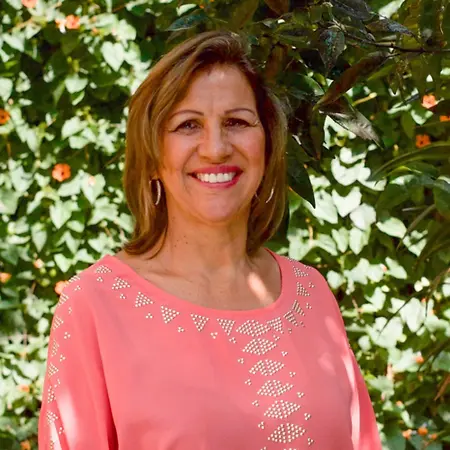
Her Story
About Nidia
I spent my entire professional career in Colombia, working for over 30 years in urban planning and renewal. I started around 1994 with Mayor Jaime Castro on Bogotá's strategic plan, then moved to Medellín working on partial plans, which are a form of urban planning in cities, especially urban renewal plans. My field of action was always socioeconomic issues and community management, with a focus on protecting residents and the population. I was a pioneer in protecting populations in cities when renewal plans come in. My strength has been developing many policies and instruments to convince developers and builders that they also benefit from this way of working with people. At the beginning, I faced a lot of opposition from developers, but over time I demonstrated how development benefits must be distributed equitably and how obligations should be proportional to benefits. I worked with public and private entities, with builders, with investors, with national and local government, in Medellín, Bogotá, Bucaramanga, and various cities throughout the country. I also taught classes at the university in graduate programs, where my students asked me where this was written, and I said I didn't know because I had developed it myself. That's when they asked me to write it down. I helped unblock a partial plan that was very blocked by people in Bogotá for the Universidad de los Andes by listening to the people and understanding what they were saying. I also worked on the first TransMilenio project in Bogotá, where I advocated for including a social strategy, which the World Bank required before approving the plan.
Her Interview
Ten minutes with Nidia
01What do you attribute your success to?
I attribute my success to listening to people and generating empathy to understand their feelings. That's where the cycle of support and progress with community work begins. When I started focusing on this, one of the things that helped me most was listening to people. I helped unblock a partial plan that was very blocked by people in Bogotá for the Universidad de los Andes by listening to what they were saying. The best wisdom is in the people, even people who are labeled as ignorant or those without higher education. I don't call them ignorant because they are very wise - life itself has taught them, and their own experiences teach them to identify benefits and problems, opportunities and difficulties, opportunities and threats. They discover this in their life and experience. When you listen to people and generate empathy to understand their feelings, that's where it starts. I would gather all the information from them - I didn't invent it, they gave it to me. They told me where the problems were and they gave me solutions. They proposed them to me. The only thing I did was collect everything and structure it well into strategic lines from what they told me.
02What’s the best career advice you’ve ever received?
The first person who made me think about getting into this world of working with people was my human geography teacher in high school, her name was Martita. She had us study human geography topics, and in fifth year of high school I wrote an essay about the belts of misery in Bogotá. That's when I understood the tremendous dimension of poverty in our city and inequality. I emphasize a lot in my book that inequality and social injustice were part of the factors that made my family leave Colombia - social inequality, corruption, social injustice, corruption that does so much damage and that people cannot allow because it takes away their resources. She was the first person who introduced me to this field. I didn't have many people who taught me because there weren't many people who believed in this. Once I went to the university where I graduated to propose to the dean that we create a course on this, and he told me it was ridiculous, that it was ridiculous for an economist to get involved in this. He discouraged me, so I moved away and decided to do it on my own. I didn't have many people who promoted this or helped me with it.
03What advice would you give to young women entering your industry?
I would tell her to focus on people and that development resources must always benefit equitably those who participate in it, those who should participate. All actors in a territory who are present in a territory must be included, they cannot be excluded. She should get close to communities, make an effort to listen to people. One of the things that helped me most when I started focusing on this was listening to people. The best wisdom is in the people, even if they are people labeled as ignorant, people without higher education or sufficient studies. But I don't call them ignorant because they are very wise - life itself has taught them and their own experiences teach them to identify benefits and problems, opportunities and difficulties, opportunities and threats. They discover it in their life and experience. So I always invite people to listen to people. When you listen to people and generate empathy to understand their feelings, that's where the cycle of support and progress with them begins, with community work.
04What values are most important to you in your work and personal life?
The most important values to me are justice and equity. I emphasize a lot in my book that inequality and social injustice were part of the factors that made my family leave Colombia - social inequality, corruption, social injustice. Corruption does so much damage and people cannot allow it because it takes away their resources. Throughout my life I have worked to ensure there is justice and equity when territory is transformed. My main focus is that benefits must be proportional to burdens - all people, all actors in the territory must have benefits and obligations. I have implemented programs and projects throughout my life that demonstrate how development benefits must be distributed equitably and how obligations must be proportional to benefits. What cannot be allowed is unjust or inequitable development. It has to be just development where all actors in development win. I have a matrix of actors - builders, investors, the community, the city - each one has roles and functions, commitments and responsibilities. They have to contribute, they receive benefits, but they also have responsibilities and obligations. Everyone does.
Join Influential Women and start making an impact. Register now.