Exploring why most Americans avoid end-of-life conversations and how having this sacred dialogue with loved ones can transform medical decisions, ease family grief, and ensure your voice is honored when you cannot speak for yourself.
Influential Woman · Post-acute healthcare
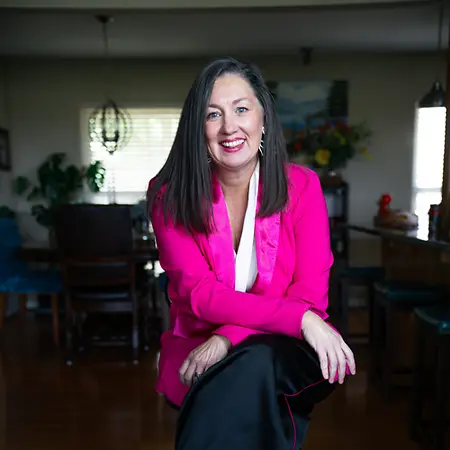
Nikki Patton
Sales Leadership Consultant, Always-Human Consulting
San Antonio, TX 78148
2Articles published
Her Story
About Nikki
Nikki did not plan to spend her career in hospice. Nobody does. Her path wound through home health, post-acute care, and the broader healthcare sales landscape before hospice found her. What found her there was a gap.
The gap between what families needed and what they were getting. Between what patients wanted to say and what they were actually saying. Between the professionals who knew how to enter hard conversations and the vast majority who had never been taught.
That gap became her life's work.
"The rooms most people avoid are the rooms where the most important work happens. The professionals who learn to enter them — fully, without flinching — are the ones who change not just their census numbers but the entire experience of dying in their communities."
Over 20 years, she built the Always Human Standard: a framework for presence-based communication in serious illness care that is not a personality trait but a teachable, replicable skill. She has trained raw recruits and cynical veterans alike — and watched both kinds become professionals that families request by name.
Along the way, she also became the family member. Five times, she has had a person she loves live with her in their final months. She has sat in both chairs in the same rooms. That dual experience — clinical expertise and personal grief held simultaneously — is the foundation of everything she writes, teaches, and speaks about.
Her Interview
Ten minutes with Nikki
01What do you attribute your success to?
I'm going to pivot just slightly, and it's actually been as a caregiver to hospice patients. That is my why, and that's the reason I do what I do every day. I've been able to sit at the bedside of people that I love and hold sacred space with them until they took their last breath. Without those moments, I would not have the desire to do what I do. When I found this field and was able to share really intimate moments with families who were in pain, I knew that's where I was supposed to be. It fit my soul.
It breaks everything open. Every time. I knew what was happening medically. I knew the trajectory. I knew what each decline meant. And I still lay awake wondering if it was enough. The clinical knowledge does not protect you from the grief. In some ways it makes the grief more specific — you know too much to pretend. What I discovered is that there is a particular loneliness in being a healthcare professional who becomes the family member, and almost no support structure for it. That is a gap I talk about in everything I do now.
02What’s the best career advice you’ve ever received?
"LEAN IN"
It means: 70 percent of Americans say they want to talk about end-of-life care with their doctor. Less than 30 percent ever do. Why is that gap so persistent?
It is not a knowledge problem. It is a courage problem — and it belongs to the system, not the patient. We built a healthcare system so focused on treatment, on fighting, on the next intervention, that we forgot to make room for the truth. Patients are waiting for someone to give them permission to ask the real question. When nobody does, they carry it alone. That grief — the grief of the things left unsaid — is preventable. That is what I spend my time trying to change. It is why i wrote a Sacred Conversation. A Sacred Conversation is not about death. It is about not leaving the people you love guessing. It is the conversation where someone finally asks what you actually want — not what the treatment plan says, not what the family hopes, but what you want. And someone stays to hear the answer without flinching. I call them sacred because they happen in the fullest space of a human life — the space between diagnosis and death that most of us leave empty. And because the people who receive them never forget them.
03What advice would you give to young women entering your industry?
I have sat with families in the hardest moments of their lives and helped them figure out what came next. I also trained other professionals to do it. The sales part was about building trust with physicians, discharge planners, and social workers — showing up consistently, asking real questions, and being the person they could call when a situation got complicated. The work was relational at its core. The census numbers followed the relationships. If you are looking to enter the hospice industry, lead with integrity, develop your humanity and be consistent. It isn't rocket science, but it is human science.
04What are the biggest challenges or opportunities in your field right now?
What is the most urgent thing you want policymakers to understand about hospice and end-of-life care right now?
Two things. First: Medicaid cuts to end-of-life care are not a budget line. They are a nurse who does not show up. They are a family left alone in a crisis they were not prepared for. Second: there is an entire population of healthcare professionals who are simultaneously serving as family caregivers — carrying clinical knowledge that does not protect them from grief, and with no institutional support structure for what it costs them. We have 63 million family caregivers in this country. We have no data on how many of them are also the professionals delivering care. We have never asked.
What do you want family caregivers to know right now?
Nobody is asking how you are doing. Not really. They ask how your loved one is doing and they mean the patient. You are allowed to be afraid and tired and grieving and present all at the same time. You are allowed to want this to be over and to never want it to end, sometimes in the same hour. And you do not have to manage. Sacred Conversations was written for you — not to give you more to do, but to give you language for what you are already carrying.
The caregiving crisis:
• 63 million Americans currently provide ongoing, complex care to adults or children with a medical condition or disability — up 45% since 2015. (NAC and AARP, 2025)
• By 2030, roughly 25% of the U.S. population will be over 65. (U.S. Census Bureau)
05What values are most important to you in your work and personal life?
I'm building a platform and a community where people who are very passionate about end-of-life care can spend their careers doing work that is meaningful and helpful, but also do it with integrity and deep passion. My greatest accomplishment has been as a caregiver to hospice patients - that is my why. I've been able to sit at the bedside of people that I love and hold sacred space with them until they took their last breath. When I was able to share really intimate moments with families who were in pain, I knew that's where I was supposed to be. It fit my soul.
You have also been a family caregiver to five hospice patients. What does it feel like to be on that side of it?
It breaks everything open. Every time. I knew what was happening medically. I knew the trajectory. I knew what each decline meant. And I still lay awake wondering if it was enough. The clinical knowledge does not protect you from the grief. In some ways it makes the grief more specific — you know too much to pretend. What I discovered is that there is a particular loneliness in being a healthcare professional who becomes the family member, and almost no support structure for it. That is a gap I talk about in everything I do now.
Her Content Hub
Articles by Nikki
The Conversation Nobody Has Until It's Almost Too Late
Why 70% of Americans die without ever having the conversation that matters most.
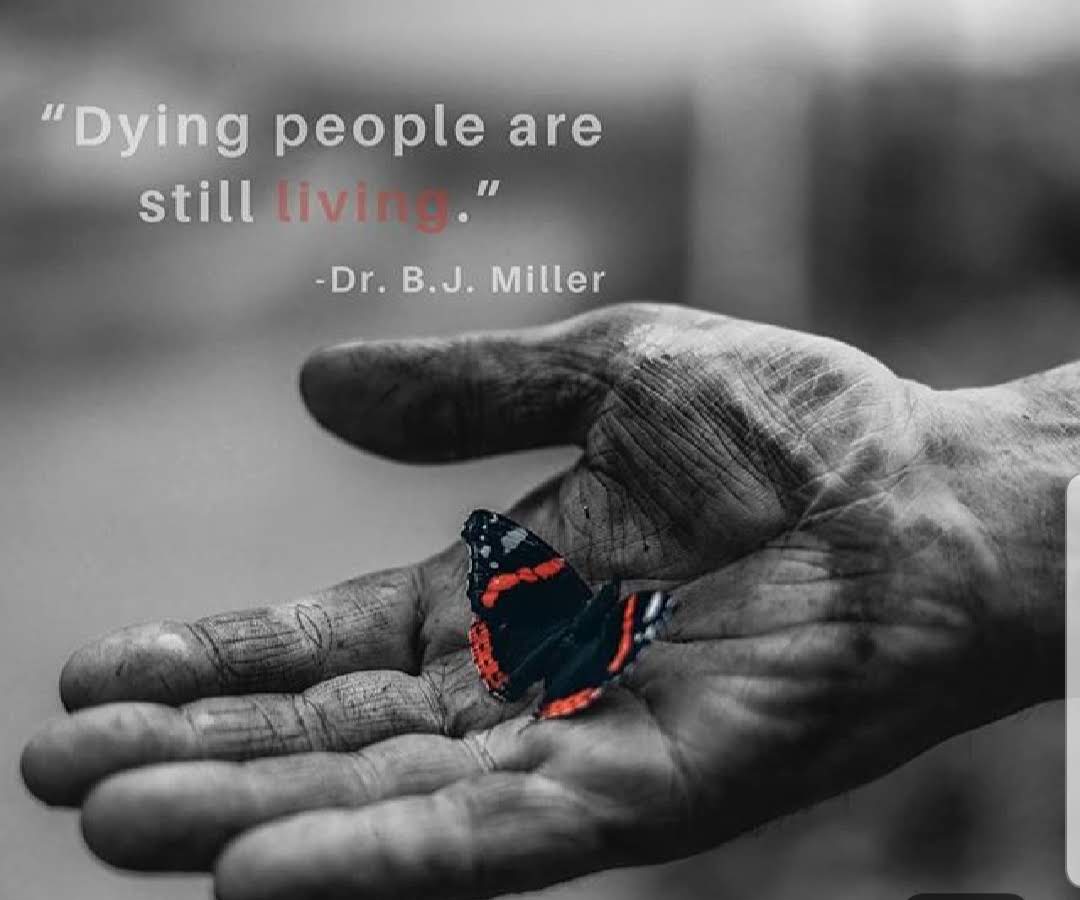
70% of Americans say they want to die at home, surrounded by the people they love. Fewer than 25% actually do.
Source: California Attorney General's Office / Advance Care Planning Research
So let me ask you directly: Have you had the conversation?
Not the conversation where everyone agrees things will be fine. Not the one where you get halfway through and change the subject because it feels like too much. The real one. The one where you sit down with the people who matter most to you and say, plainly, what you want if you cannot speak for yourself.
Most people have not. And in this industry, we see what that costs families every single day.
The data tells the story:
90% of Americans say end-of-life conversations with family are important.
27% have actually had those conversations.
7% have discussed their wishes directly with their doctor.
Read that again. Nine in ten Americans say talking to their loved ones about end-of-life wishes is important. Only 27% have actually done it. And while 80% of people say they would want to talk to their doctor about end-of-life wishes if seriously ill, only 7% report having had that conversation.
That is not a small gap. That is a crisis. And it is a quiet one, because the consequences do not show up until a family is standing in a hospital hallway at midnight, making decisions they were never prepared to make for a person who never told them what they actually wanted.
"The most sacred conversation you will ever have is the one that gives your loved ones permission to honor you instead of guess at you."
Why we avoid it
The reasons are consistent and understandable. People say they just keep putting it off (26%), they don't know how to start (23%), or they are simply scared to have the conversation (16%). Parents don't want to worry their children. Adult children don't want their parents to think they are ready for them to go. And somewhere underneath all of it is the belief—quiet but persistent—that talking about death might bring it closer.
It does not. But avoiding the conversation does guarantee one thing: someone else will make the decisions.
In the absence of a clearly stated plan, families default to doing everything. Not because that is what their loved one would have chosen, but because no one wants to be the person who stopped fighting. That instinct is love. But love without guidance is not a plan. And in a medical crisis, the absence of a plan means the system makes choices that may have nothing to do with what the person actually valued.
What a sacred conversation actually looks like
It does not have to be formal. It does not require a lawyer or a social worker in the room, though those resources are valuable. It starts with a willingness to say the things that matter out loud to the people who need to hear them.
It includes questions like: Where do you want to be when you are dying? What does a good death look like to you? What are you most afraid of? Who do you trust to make decisions if you cannot? What does quality of life mean to you when you are very ill?
These are not morbid questions. They are the most loving questions one person can ask another. They say: I want to know you fully. I want to honor you. I do not want to guess.
They are also the questions that need a document behind them: an advance directive, a POLST, a healthcare power of attorney. The conversation is the beginning. The paperwork makes it real and binding when it counts.
The cost of silence
I have sat with hundreds of families in the sacred space of serious illness. The ones who had the conversation are not the ones who avoided grief. Grief comes for everyone. But they are the ones who could move through it without the additional weight of wondering if they did the right thing. They knew. Their loved one told them. And that knowledge is a gift that cannot be given after the fact.
The families who did not have the conversation carry a different kind of grief. They carry the weight of decisions made in crisis. The regret of not knowing. The family conflict that surfaces when no one is sure what their loved one would have wanted and everyone has a different answer. That grief does not end at the graveside. It follows people home.
"You will not be here to advocate for yourself. Someone will speak for you. The only question is whether you gave them the words."
This is your invitation
If you are a healthcare professional, you already know this. You have seen the difference a completed advance directive makes. You have seen what happens when there is none. And yet research consistently shows that even clinicians—even hospice professionals—often delay these conversations in their own families. Knowing the stakes does not automatically make it easier to sit down at the kitchen table and start.
So start small. Start with the person closest to you. Tell them one thing you would want if you were very ill. Ask them the same. You do not have to solve every scenario in one conversation. You just have to begin.
If you are a caregiver or a family member reading this, the same invitation applies. The time to have this conversation is before you need it. Before the diagnosis. Before the crisis. Before the midnight phone call. The conversation you have today is the gift your family opens when they need it most.
Dying is not the failure. Dying without being known is.
Have the sacred conversation. Write it down. Let the people you love carry your voice into the room when you can no longer be there yourself.
Nikki is a CEO and Executive Vice President of Hospice Sales with 20 years of experience in end-of-life care, a sales consultant to healthcare executives, and the founder of Always Human Hospice Consulting LLC. She is also a caregiver, author, and speaker on hospice sales, advance care planning, and the human side of serious illness. Learn more at Always Human Hospice Consulting.
A compassionate exploration of the unique struggle hospice professionals face when they become caregivers themselves, navigating the gap between clinical knowledge and emotional grief while honoring both roles.
You know what's coming. You just didn't know it would be this hard.
For hospice professionals who are also caregivers, grief does not wait for the workday to end. It lives in both rooms at once.
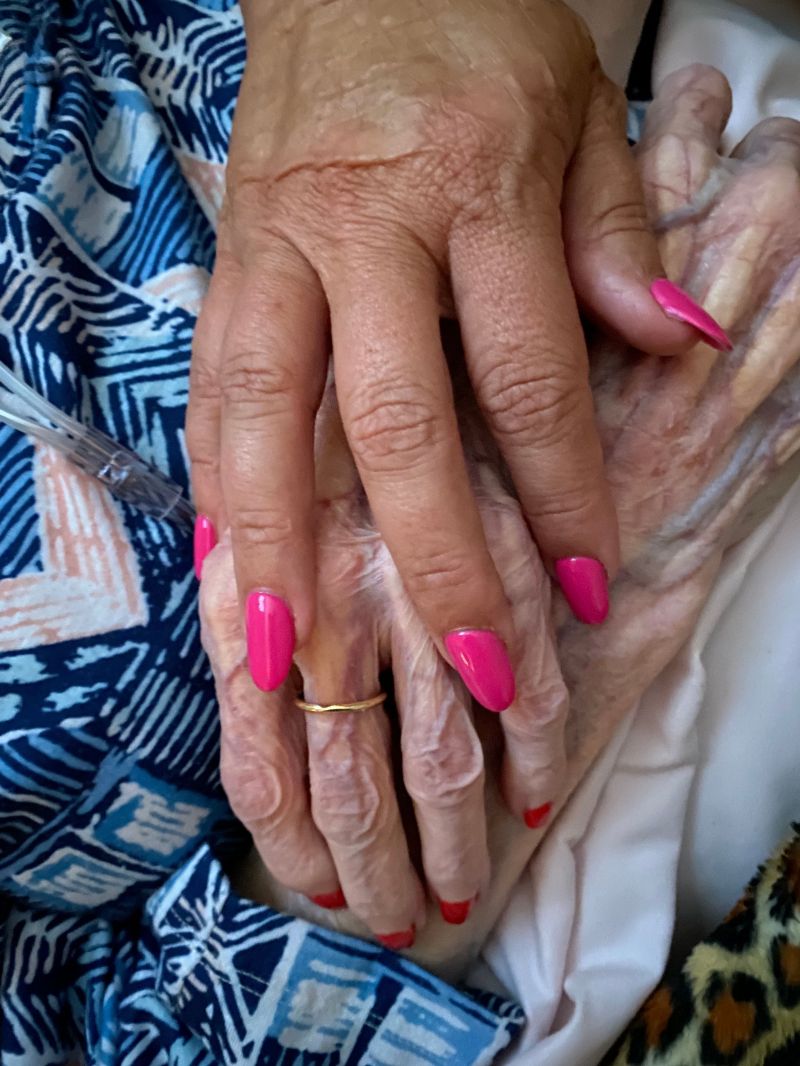
You have sat across from hundreds of families in the worst moments of their lives. You have handed tissues. You have explained what active dying looks like with a calm voice and steady eyes. You have driven home from those visits, made dinner, returned emails, and shown up the next day to do it again.
Then the call came for you. And suddenly, the room you have always stood on the outside of became the room you live in.
Being a hospice professional who is also a caregiver is one of the most disorienting experiences this industry can produce. You carry knowledge that most families would give anything to have. You understand the trajectory. You can read the signs. You know how to talk to the nurse, how to read the medication changes, and how to advocate in a care conference. You know all of it.
And it does not protect you from grief. Not even a little.
"Knowing the clinical roadmap does not mean you are prepared for the emotional terrain. Those are two entirely different maps."
The Weight of Knowing
There is a particular kind of loneliness that comes with professional knowledge in a personal crisis. When your loved one enters the active phase of dying, you recognize it. You know what the mottling means. You know what the breathing change signals. You have explained those signs to families with compassion and clarity.
But in that moment, standing at the bedside, you are not a clinician, a sales professional, or an educator. You are a daughter, a husband, a son, or a friend. And the knowledge you have spent years accumulating becomes a strange, heavy thing to carry—because it strips away the one comfort many families get, which is not knowing what comes next.
You grieve in advance. You grieve in real time. And you grieve while everyone around you assumes you are handling it better than most because of what you do for a living. That assumption is one of the most isolating parts of this experience.
The Professional Mask in a Personal Space
Hospice professionals are trained, consciously or not, to hold space for others. You move through hard conversations with a kind of grounded steadiness that takes years to develop. It becomes part of how you carry yourself.
And when you become the caregiver, that same training can work against you. You default to the role you know. You manage the logistics. You communicate with the care team in clinical language because it is faster and easier. You hold the family together. You are the one who knows what to do next, so you do it, and you keep doing it, right up until you realize you have not let yourself fall apart at all.
The grief does not go away because you are organized and competent. It goes underground. And underground grief is patient. It will wait.
"You can spend your whole career giving others permission to grieve. At some point, you have to give it to yourself."
What No One Prepares You For
No training, no CEU, and no professional mentor prepares you for the moment you recognize the signs of imminent death in someone you love. You have the language. You do not have the armor.
No one tells you that your professional identity can become a wall between you and your own grief. That colleagues may not check in because they assume you are fine. That you may find it genuinely hard to accept care from a hospice team because you know how the system works from the inside, and the distance that usually gives you professional confidence suddenly makes it difficult to receive.
And no one tells you how surreal it feels to return to work, to sit with a family, and to explain the dying process with steady hands while you are living it yourself at home that night. That experience does not make you a fraud. It makes you fully human, doing one of the hardest things a person can do twice over.
Finding Your Way Through It
There is no professional shortcut through grief. There is no version of this where your clinical knowledge accelerates the process or makes the loss smaller. What it can do, if you let it, is help you be more intentional about what you need.
You already know that anticipatory grief is real. You already know that isolation makes loss harder. You already know the value of having someone sit with you in the hard parts. Let yourself receive that—not as a patient, but as a person.
Tell someone at work what you are carrying—not because you need to manage how they see you, but because the people in this industry are uniquely equipped to understand what it costs to do this work while also living it. You do not have to hold both roles alone.
And when the professional in you wants to take over, when you want to manage and coordinate and communicate and plan, pause. Let the caregiver in you have a moment too. Sit at the bedside without an agenda. Hold the hand. Say the things that do not have a clinical category.
That is not weakness. That is the whole point of this work.
You have spent your career reminding families that the end of life is still life. That every person deserves to be seen, held, and accompanied. You know this to be true.
Let it be true for you too.
Nikki is a CEO and Executive Vice President of Hospice Sales with 20 years of experience in end-of-life care, a sales consultant to healthcare executives, and the founder of Always Human Hospice Consulting LLC. She writes and speaks on hospice sales, caregiver education, and the human side of serious illness.
Join Influential Women and start making an impact. Register now.