You know what's coming. You just didn't know it would be this hard.
For hospice professionals who are also caregivers, grief does not wait for the workday to end. It lives in both rooms at once.

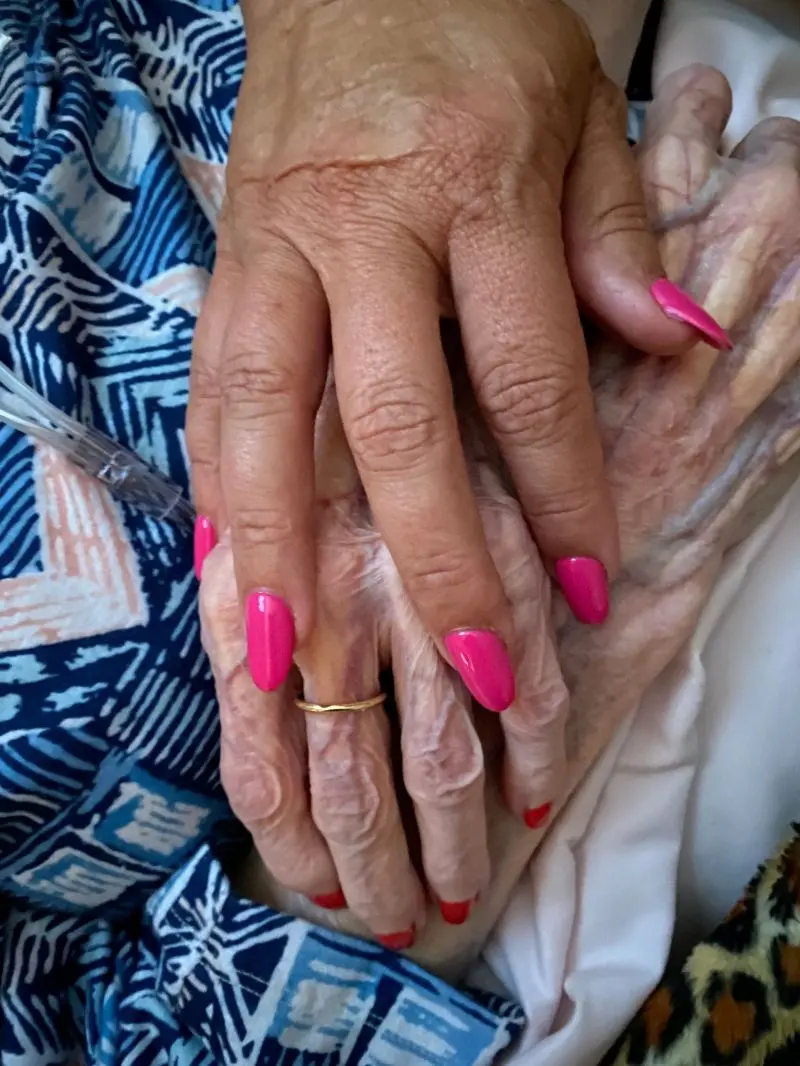
You have sat across from hundreds of families in the worst moments of their lives. You have handed tissues. You have explained what active dying looks like with a calm voice and steady eyes. You have driven home from those visits, made dinner, returned emails, and shown up the next day to do it again.
Then the call came for you. And suddenly, the room you have always stood on the outside of became the room you live in.
Being a hospice professional who is also a caregiver is one of the most disorienting experiences this industry can produce. You carry knowledge that most families would give anything to have. You understand the trajectory. You can read the signs. You know how to talk to the nurse, how to read the medication changes, and how to advocate in a care conference. You know all of it.
And it does not protect you from grief. Not even a little.
"Knowing the clinical roadmap does not mean you are prepared for the emotional terrain. Those are two entirely different maps."
The Weight of Knowing
There is a particular kind of loneliness that comes with professional knowledge in a personal crisis. When your loved one enters the active phase of dying, you recognize it. You know what the mottling means. You know what the breathing change signals. You have explained those signs to families with compassion and clarity.
But in that moment, standing at the bedside, you are not a clinician, a sales professional, or an educator. You are a daughter, a husband, a son, or a friend. And the knowledge you have spent years accumulating becomes a strange, heavy thing to carry—because it strips away the one comfort many families get, which is not knowing what comes next.
You grieve in advance. You grieve in real time. And you grieve while everyone around you assumes you are handling it better than most because of what you do for a living. That assumption is one of the most isolating parts of this experience.
The Professional Mask in a Personal Space
Hospice professionals are trained, consciously or not, to hold space for others. You move through hard conversations with a kind of grounded steadiness that takes years to develop. It becomes part of how you carry yourself.
And when you become the caregiver, that same training can work against you. You default to the role you know. You manage the logistics. You communicate with the care team in clinical language because it is faster and easier. You hold the family together. You are the one who knows what to do next, so you do it, and you keep doing it, right up until you realize you have not let yourself fall apart at all.
The grief does not go away because you are organized and competent. It goes underground. And underground grief is patient. It will wait.
"You can spend your whole career giving others permission to grieve. At some point, you have to give it to yourself."
What No One Prepares You For
No training, no CEU, and no professional mentor prepares you for the moment you recognize the signs of imminent death in someone you love. You have the language. You do not have the armor.
No one tells you that your professional identity can become a wall between you and your own grief. That colleagues may not check in because they assume you are fine. That you may find it genuinely hard to accept care from a hospice team because you know how the system works from the inside, and the distance that usually gives you professional confidence suddenly makes it difficult to receive.
And no one tells you how surreal it feels to return to work, to sit with a family, and to explain the dying process with steady hands while you are living it yourself at home that night. That experience does not make you a fraud. It makes you fully human, doing one of the hardest things a person can do twice over.
Finding Your Way Through It
There is no professional shortcut through grief. There is no version of this where your clinical knowledge accelerates the process or makes the loss smaller. What it can do, if you let it, is help you be more intentional about what you need.
You already know that anticipatory grief is real. You already know that isolation makes loss harder. You already know the value of having someone sit with you in the hard parts. Let yourself receive that—not as a patient, but as a person.
Tell someone at work what you are carrying—not because you need to manage how they see you, but because the people in this industry are uniquely equipped to understand what it costs to do this work while also living it. You do not have to hold both roles alone.
And when the professional in you wants to take over, when you want to manage and coordinate and communicate and plan, pause. Let the caregiver in you have a moment too. Sit at the bedside without an agenda. Hold the hand. Say the things that do not have a clinical category.
That is not weakness. That is the whole point of this work.
You have spent your career reminding families that the end of life is still life. That every person deserves to be seen, held, and accompanied. You know this to be true.
Let it be true for you too.
Nikki is a CEO and Executive Vice President of Hospice Sales with 20 years of experience in end-of-life care, a sales consultant to healthcare executives, and the founder of Always Human Hospice Consulting LLC. She writes and speaks on hospice sales, caregiver education, and the human side of serious illness.


