
Discover why pursuing multiple passions isn't scattered thinking—it's multipotentiality. Explore how embracing diverse interests, creativity, and nonlinear career paths leads to greater innovation, fulfillment, and authentic success beyond societal expectations.
Verified Member
Influential Woman · Banking
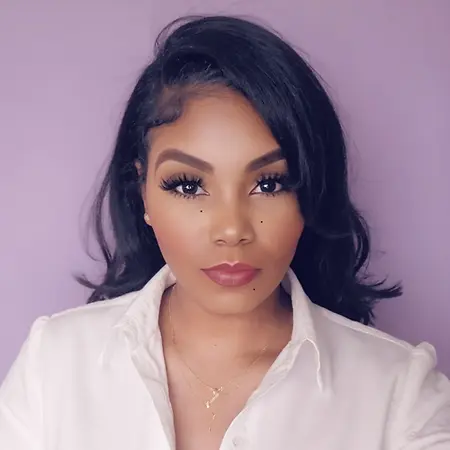
Porchia Hare
Senior Relationship Banker, F.N.B Corp | Sis & Ann | Published Author
Charlotte, NC 28262
1Article published
1Award received
Her Story
About Porchia
Porchia Hare is a Senior Relationship Banker and Second-in-Command (2IC) at F.N.B. Corporation, where she supports branch leadership, oversees daily operations, and delivers personalized financial solutions that help clients achieve both immediate and long-term goals. A commissioned Notary Public, Porchia is known for her client-first approach, combining strong relationship management skills with a deep understanding of financial services to build trust and drive meaningful outcomes.
With experience across retail banking, customer service, and operations, Porchia brings a well-rounded perspective to her role. She has served as a Universal Banker and continues to expand her impact through mentorship, operational support, and a commitment to service excellence. Her background also includes community engagement through campaign staff work, reflecting her dedication to civic involvement and leadership beyond the branch.
Porchia is currently pursuing a Master of Business Administration with a concentration in International Business at Southern New Hampshire University, where she maintains a 4.0 GPA and has earned multiple Honor Roll distinctions. She also holds certifications in Emotional Intelligence and loan origination, reinforcing her belief that technical expertise and emotional awareness go hand in hand. Passionate about people, growth, and future-driven solutions, Porchia continues to build a career rooted in service, integrity, and impact.
Her Interview
Ten minutes with Porchia
01What do you attribute your success to?
I attribute my success to the mentors who have guided me throughout my life, especially my grandparents. Their wisdom, work ethic, and belief in me shaped my values and approach to both my career and personal growth. Their support continues to influence how I lead, learn, and serve others. My resilience comes from my mom, she's instilled persistence in me, no matter what, keep going.
02What advice would you give to young women entering your industry?
Don't be desperate, know your worth and if those around you dont, move on and bet on yourself.... ALWAYS BET ON YOU!
03What are the biggest challenges or opportunities in your field right now?
Representation is a huge challenge in my field. Diversity cultivates innovation, it also sustains good morale. Inclusion keeps us honest and mindful, it also bridges many gaps. Brilliant minds come from all cultures; if only we saw more representation of this in the workplace, mighty things we could accomplish.
04What values are most important to you in your work and personal life?
The values most important to me are creativity, family, and perseverance. Building my cake business alongside my family, my grandmothers reflects my belief in collaboration, entrepreneurship, and creating joy through meaningful work. I also value storytelling and lifelong learning, which led me to write a children’s book, Darla’s Garden, now available on Amazon, and I’m currently working on a second book while continuing to grow my creative projects.
Her Content Hub
Articles by Porchia
All The Lanes Are MINE
Why limiting yourself to one path might be holding you back from your greatest potential.
"Stay in your lane."
Has anyone ever said this to you? Or have you seen someone else hear those words? It's a simple comment, but it can feel full of judgment. Today, 'stay in your lane' is often used to stop people from being ambitious, curious, or trying new things. It suggests we should only grow in one way, keep our interests limited, and follow a single, predictable path to success.
But who decided how many lanes we're allowed to occupy?
Many of us have heard the old saying, "A jack of all trades is a master of none." It's usually used to criticize, but most people don't know the full version: "A jack of all trades is a master of none, but still better than a master of one." The full saying actually encourages us to explore, try new things, and follow our curiosity wherever it leads.
Since I was young, I loved all kinds of art. I liked going to different museums, listening to all sorts of music, and spending time reading, writing, and telling stories. Creativity wasn't just something I did for fun-it shaped how I saw everything. I took art classes every year from elementary school through high school, and eventually got an art degree, thinking I had it all figured out.
Spoiler alert: I didn't.
Like a lot of creative and curious people, I was never satisfied sticking to just one thing. I always had new ideas about what I wanted to try, make, or explore. For a long time, I didn't know how to describe this feeling-I just knew I was drawn in many directions. Later, I learned there's actually a word for people like me: multipotentiality.
The Psychology of Having Many Interests
Although research on multipotentiality-people who follow many interests or careers-is still growing, experts have looked at this idea for years. In studies about careers and giftedness, multipotentiality is seen as a strength. It's linked to broad learning, adaptability, and connecting ideas from different areas. Rather than showing indecision, this trait actually helps with solving complex problems and coming up with new ideas, especially when flexibility is needed.
So, people with lots of interests aren't unfocused-they bring things together.
Seeing things this way changed a lot for me. The qualities people noticed in me-quick thinking, creativity, resilience, and resourcefulness-weren't signs that I was lost. They showed that my mind was meant to make connections, not to be limited. But even understanding this didn't make the emotional struggle go away right away.
The Pressure to Pick One Thing
For years, I saw my friends pick one path. They focused on one subject, stuck with it, and built their careers by becoming experts in that area. That kind of focus is impressive and sometimes even enviable. Society values it. Employers get it. Families celebrate it.
I tried to replicate it.
I tried to hide my different interests and make myself seem more focused and predictable. But instead of feeling at peace, I just felt empty. No matter how much I tried to stick to one thing, I was always restless and kept dreaming about my next passion.
When it comes to my career, I've tried a bit of everything. Sometimes I had to, because the job market demands flexibility, and sometimes I just wanted to try something new. But every time I changed direction, I faced judgment-not just from others, but from myself too. I started to believe that switching fields meant I was unstable. I questioned if I was mature enough. I wondered if something was wrong with me.
What I didn't realize yet was that identity changes over time, and so does purpose.
Creativity, Careers, and Nonlinear Paths
Research on career development shows that careers aren't just one-time choices-they're journeys that keep changing. People update their career paths as their self-image, values, and life roles shift. In today's world, with new technology, longer lives, and changing economies, it's normal for careers to be nonlinear.
Studies on creativity and work show that doing different creative activities helps people become more adaptable, confident, and better at solving problems. People who have creative hobbies often do better at work, especially in jobs that need new ideas and flexibility.
But theory can only take you so far. My real change didn't happen in a classroom or from reading an article. It happened in my kitchen.
The Cake That Changed Everything
I never planned to start my cake business, Sis & Ann. Honestly, it just happened by accident. I enjoyed cooking and was good at it, but baking wasn't really my passion. What pulled me in was the art-the sculpting and visual side of cake design.
When I first started, I only used buttercream icing. Piping felt natural to me, and now I see why-art was already a part of me. When customers asked for fondant, I always said no. "I don't do fondant," I'd tell them, blaming the taste or texture.
The real reason was simple: fondant scared me. It felt like a different path, and I wasn't sure I could handle it.
Then one year, a family member asked me to make a fondant cake. I hesitated and was ready to say no. But before I could answer, she said, "Yes you can. Go for it."
So I did. And it turned out beautifully.
After that, fondant became one of my skills. As my business grew, people asked for more complicated cakes-sculpted designs, cakes that seemed to defy gravity, and other challenges that took precision and confidence. The money was nice, but the real reward was seeing how much I was growing.
Somewhere along the way, something just clicked for me.
The Epiphany: All the Lanes Are Mine
Clients and other cake artists started calling me "cake boss." At first, it was flattering. Then it felt like real validation. And finally, it led to an insight that changed everything:
All the lanes are mine.
I stopped thinking in terms of limits. I also stopped being afraid to try things outside my comfort zone. I realized that while it's good to specialize, it's just as important to keep growing. Being an expert doesn't mean you have to stay in one box.
That way of thinking changed more than just my cake business-it changed how I looked at life.
Multipotentiality proves that creativity and success don't always come from focusing on just one thing. They often come from mixing skills, interests, and experiences, letting each area inspire the others. New ideas grow when different things come together, not when they're kept apart.
Aging, Maturity, and Permission to Change
This isn't about being reckless. I'm not saying you should quit your job tomorrow and go skip rocks at the nearest pond, even if that sounds fun sometimes. I'm saying we should stop treating curiosity like it's a weakness.
As we age, change often feels less frightening and more meaningful. Changes in our personal, work, and social lives start to feel like choices, not just random events. As people become more aware of time, they focus more on what matters-like fulfillment, relationships, and purpose-instead of just chasing achievements.
Getting older isn't just about biology. It changes what we care about.
That's why so many adults start second, third, or even fourth careers later in life. Switching paths isn't a sign of immaturity-it's often a sign of knowing yourself better.
Letting Go of the Myth of "Too Much"
One of the most harmful myths is that having lots of interests means we can't commit. In truth, it often means we have depth in many areas. The real issue isn't that we want too much-it's that society doesn't know how to value people with wide interests.
Multipotential people aren't scattered. They're flexible and adaptable. They connect ideas, industries, and even identities.
Your path will change-sometimes slowly, sometimes all at once. And that's perfectly fine.
Claiming Every Lane That Fits
So next time someone tells you to stay in your lane, take a moment. Ask yourself who made that rule and why they think it's theirs to give.
Growth doesn't happen in a straight line. Purpose isn't just one thing. And creativity doesn't thrive inside strict limits. For people like us who love to explore and reinvent, the journey isn't about picking one lane forever. It's about knowing when to merge, when to grow, and when to create new paths.
Not every lane is meant for everyone.
But the ones that speak to you?
Those are yours.
Yours truly,
A Banker, Cake Artist, and Published Author. More achievements to come. To be continued.
Join Influential Women and start making an impact. Register now.