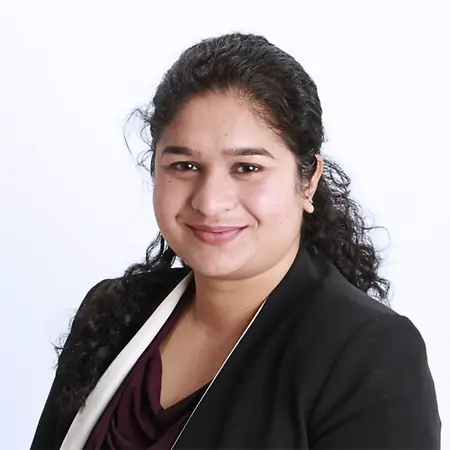
Influential Woman · Healthcare technology
Renuka Bisht, MIT AI
FAHM
Director of Product Management, Humana
Ballwin, St. Louis, MO 40202
Her Story
About Renuka
Healthcare is one of the most complex systems humans have ever built, yet every day millions of people are expected to navigate it with confidence. Renuka Bisht has spent the last 16 years working to change that.
As Director of Product Management at Humana, Renuka leads enterprise product strategy across enrollment modernization, member data, and Medicare and Medicaid platforms that serve millions of members. She doesn't just build products—she leads large-scale transformation, aligns organizations around a shared vision, and develops teams that turn complex challenges into simple, human-centered experiences.
Her passion extends beyond her role. Frustrated by how difficult it remains for people to understand their health insurance, she founded Decoding Health, building two consumer AI applications—Decode My EOB and Prior Auth Coach—to help everyday people better understand their healthcare and advocate for themselves.
Renuka's journey began far from where she is today. As an immigrant and woman of color, she often found herself as the only person in the room who shared her background or perspective. She didn't have a professional network or a predefined roadmap. What she did have was a deep curiosity, a relentless work ethic, and the conviction that different perspectives make better products and stronger organizations.
Her career across Accenture, Anthem, Express Scripts, Cigna, and Humana was intentional. Each role expanded her ability to solve increasingly complex problems—from member experiences and enterprise platforms to AI-powered healthcare solutions. Along the way, she discovered that leadership isn't about having all the answers. It's about creating clarity, building trust, developing people, and bringing diverse teams together around a common purpose.
She holds executive education from Stanford, Cornell, and MIT, and spends her weekends teaching and mentoring children in the St. Louis community. At home and at work, she lives by the same values: work hard, lead with integrity, and treat people with kindness.
The thread connecting everything Renuka builds is simple: helping people navigate complexity with confidence. Whether she's modernizing enterprise healthcare systems, mentoring future leaders, or creating AI tools for consumers, her mission remains the same—to make healthcare more understandable, more accessible, and ultimately more human.
Renuka believes the next generation of healthcare leaders won't simply adopt new technology. They'll reimagine how technology serves people. That's the future she's committed to building.
Her Interview
Ten minutes with Renuka
01What do you attribute your success to?
I came to the United States with a degree, a suitcase, and no professional network. What I did have was a willingness to learn, work hard, and never wait for permission to grow.
I've approached every role as an opportunity to solve meaningful problems—experimenting, learning from failure, and continuously improving. That same mindset led me to build two AI products outside my day job because I saw problems that weren't being solved for everyday people.
Over time, I realized my greatest strength wasn't simply building products—it was building trust. Whether I'm leading enterprise modernization efforts that serve millions of members or launching new AI solutions, I've learned that lasting influence comes from combining technical excellence with the ability to bring people together around a shared vision.
Looking back, I don't attribute my success to talent alone. I attribute it to curiosity, resilience, and a commitment to leaving every team, product, and organization stronger than I found it.
02What’s the best career advice you’ve ever received?
My leader gave me advice that reframed how I see everything:
“Technical expertise earns credibility. Leadership earns followership.”
It sounds simple, but it fundamentally changed how I think about leadership. I've seen incredibly talented people struggle because they couldn't build alignment. In contrast, others had an extraordinary impact because they inspired confidence, communicated clearly, and brought people together around a common goal.
As my responsibilities grew, I realized my job was no longer to have the best ideas—it was to create the environment where the best ideas could emerge. Today, I spend far more time aligning leaders, developing teams, and connecting strategy to execution than writing requirements. That's where real transformation happens.
03What advice would you give to young women entering your industry?
I know what it feels like to be the only one in the room. As a woman of color and an immigrant, I've navigated not only gender barriers but cultural ones as well—learning when to speak up, how to be heard, and how to stay true to myself in environments that weren't always designed with people like me in mind.
Some moments can make you question whether you belong. Sometimes conversations revolve around sports teams, movies, or shared experiences you didn't grow up with. It's easy to mistake feeling different from not fitting in.
But here's what I've learned: "feeling different isn't a weakness—it's an advantage." Innovation rarely comes from people who have all had
the same experiences. It comes from people who see the world through a different lens. So my advice is this: build deep technical expertise, because credibility matters. But invest just as much in developing your voice, your judgment, and your confidence. Don't spend your energy trying to fit someone else's definition of leadership. The most impactful leaders aren't remembered for blending in—they're remembered for bringing a perspective that changed the conversation.
Trust that your background, your experiences, and your way of thinking are assets, not obstacles. You earned your seat at the table. Now use it to ask better questions, challenge assumptions, and create opportunities for others.
"The industry doesn't need more people who fit the mold. It needs leaders who are willing to reshape it."
04What are the biggest challenges or opportunities in your field right now?
Healthcare has a translation problem.
The average person receives an Explanation of Benefits document after a medical visit and genuinely cannot tell if they owe money, were billed correctly, or should fight the decision. They navigate prior authorization denials alone, without understanding why they were denied or what their rights are. They manage chronic conditions while decoding terminology that even educated professionals find confusing.
This isn't a literacy problem. It's a design problem. The system was built by insiders, for insiders.
The opportunity right now — with AI — is to finally close that gap at scale. To put plain language tools directly in the hands of the people who need them most. Not someday. Now.
That's what drives the work I do at Humana every day — an organization that is actively transforming how members experience enrollment, data, and health plan navigation. And it's what pushed me to go further, founding Decoding Health and building two consumer apps — Decode My EOB and Prior Auth Coach — because I couldn't keep seeing the problem and not try to solve it for everyday people too.
The technology exists. The data exists. What's been missing is the will to use it for members, not just operations. That's the opportunity I'm most excited about — and the one I'm already building toward. The organizations that lead the next decade of healthcare won't be the ones that adopt AI first. They'll be the ones who use AI to redesign experiences around people instead of processes. The technology is already here. The opportunity is in the leadership required to reimagine how healthcare works—and that's the future I'm excited to help build.
05What values are most important to you in your work and personal life?
Simplicity. Integrity. Kindness. Those are the values that guide every decision I make.
I have a deep intolerance for unnecessary complexity. Not the complexity that's inherent in hard problems — that I respect. But the kind that's performed. The jargon that exists to impress rather than inform. The systems built to look sophisticated rather than to serve people. If you cannot explain what you built to someone outside your field, you don't fully understand it yourself. Simplicity isn't the absence of intelligence. It's the proof of it.
Integrity is what I model for my children every single day. Work hard. Be kind. Be smart — but be a good human being first. Those aren't soft values. They are the foundation on which everything else is built.
Kindness is often misunderstood as being nice. To me, kindness means respecting people enough to be honest, investing in their growth, and creating an environment where they can do their best work. The best leaders I've worked with challenged me while making me feel supported. That's the kind of leader I strive to be. In healthcare, where our work ultimately affects people's lives, leading with both compassion and accountability isn't optional—it's essential.
Join Influential Women and start making an impact. Register now.