An exploration of how human capability, access to resources, and opportunity intersect in workplace learning and development. This article examines why availability of resources is not enough and how intentional systems, support, and pathways are essential to unlocking organizational potential.
“
During the first day of my Educational Technology program, one of my professors shared a quote that has stayed with me ever since, "The purpose of education is peace." Over time, I've found so much meaning in those words, and I've embedded that belief into the way I approach my work.
Sadiya Strong, M.Ed · In Her Own Words
Her Story
About Sadiya
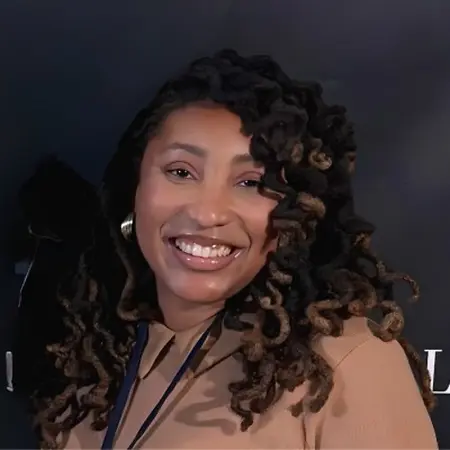
Sadiya Strong is a Senior Employee Learning Experience Specialist whose career sits at the intersection of education, talent development, and organizational strategy. For roughly six and a half years, she has worked in the education/ learning and development field, and she currently serves as the sole Employee Learning Experience partner supporting a hybrid campus of more than 1,000 employees across two North Carolina distribution facilities. In this capacity, she consults with business leaders to uncover skill and capability gaps, then builds and delivers training solutions—ranging from instructor-led sessions to blended and digital learning journeys—that are grounded equally in employee growth and measurable business outcomes. Sadiya's path into corporate learning began in the classroom. Through Teach For America, she taught first and sixth grade, an experience that sharpened her ability to help learners connect with new concepts and shaped the empathetic, people-first approach she still brings to her facilitation today. She holds a bachelor's degree in psychology and a master's degree in educational/instructional technology from North Carolina Central University, where she is now completing an MBA in data analytics, expected in December 2027. Outside her corporate role, she has spent several years working as a birth doula, an experience that has further strengthened her coaching and advocacy skills in both personal and professional settings. Recognized during her academic career with Dean's List honors and, earlier, with a Rookie Teacher of the Year award from Guilford County Schools, Sadiya remains active in professional communities including the National Black MBA Association and the National Society of Leadership and Success. Looking ahead, she is working toward a director-level position overseeing learning and development, continuing to build workplaces where employees and organizations can grow together through thoughtful, human-centered learning design.
Her Interview
Ten minutes with Sadiya
01What do you attribute your success to?
I attribute much of my success to my family, especially my siblings. Being a big sister has always pushed me to learn, grow, and pursue more, not only for myself, but so I can share what I learn with them. I often say that without my siblings, I may not have pushed myself in the same way. I wanted them to have an example of what was possible right in front of them.
As I’ve grown, I’ve realized that success means more to me when it creates access for someone else. Every lesson I learn, room I enter, and opportunity I receive gives me something I can bring back and share. My siblings have been a constant reminder that sometimes the most powerful thing you can do for someone is show them that another path is possible, and then help them understand how to get there.
02What’s the best career advice you’ve ever received?
The best career advice I’ve ever received was, “There’s no such thing as being humble in corporate America.”
That doesn’t mean you shouldn’t lead with humility. It means you have to be willing to take up space and advocate for yourself. There are no stickers for keeping your head down, doing great work, and hoping someone eventually notices. Visibility matters.
I’ve learned to keep track of my accomplishments, understand the impact of my work, speak about my contributions with confidence, and make my career aspirations known. You can be collaborative, gracious, and grounded while still making sure your work is seen.
If you want to grow in your career, don’t assume people know what you’ve accomplished or where you want to go. Do great work, document the impact, and learn how to tell the story of it.
03What advice would you give to young women entering your industry?
Your creativity and passion will take you far, but don’t underestimate the importance of understanding the business. Learn how the organization works, what matters to its leaders, what challenges people are trying to solve, and how your work contributes to those priorities. Business acumen will help you turn great ideas into solutions that create real impact.
I would also tell young women to build meaningful relationships and learn who to talk to. So much of this work happens through partnership, trust, and influence.
And finally, if there isn’t a seat at the table for you, don’t be afraid to create your own. Bring the idea forward. Start the conversation. Build something you believe needs to exist. People will eventually join you.
Stay creative, learn the business, build strong relationships, and never be afraid to create the space you’re looking for.
04What are the biggest challenges or opportunities in your field right now?
One of the biggest challenges and opportunities in Learning & Development right now is artificial intelligence. AI isn’t going away, and I believe the conversation has to shift from whether we should use it to how we can use it effectively and responsibly.
For L&D professionals, that challenge exists on two levels. We have to understand how AI can make our own work more efficient, whether that’s supporting content development, analyzing data, personalizing learning, or streamlining processes. But we’re also being looked to as learning leaders to help other functions build the knowledge and confidence to incorporate AI into their work.
That creates an incredible opportunity for our field. L&D can help bridge the gap between simply giving employees access to AI tools and actually building the capability to use them well. Technology may change how we work, but people still need the knowledge, confidence, and support to change with it.
05What values are most important to you in your work and personal life?
Creativity and autonomy are two of the values that matter most to me, both personally and professionally.
One of the things I love most about my career is having the freedom to bring forward creative solutions and turn ideas into experiences. There is something incredibly rewarding about watching people become immersed in a learning experience.
Autonomy is equally important to me because it gives me the freedom to be both a teacher and a student in my own life. I never want to stop being curious, exploring new ideas, or challenging what I already know. The more I learn, the more I have to give to others.
Throughout my life and career, I’ve found many ways to teach and a thousand ways to learn. I hope to always have the creativity to do both.
Her Content Hub
Articles by Sadiya
Human Capability, Access & Opportunity
Bridging the gap between talent and opportunity through intentional access and development in the workplace.
Human Capability, Access & Opportunity
Talent may be everywhere, but access to development is not.
I believe in the human capacity to learn.
It is a simple belief, but one that has shaped my career as an educator and Learning & Development professional. Given the right environment, people can learn new skills, challenge old ways of thinking, build confidence, and develop capabilities they did not previously possess.
But over time, I have realized that capability is only part of the equation.
People cannot take advantage of resources they do not know exist. They cannot pursue career paths they have never been exposed to. They cannot easily navigate systems that no one has ever explained to them. And even the most capable person can struggle to grow when time, information, resources, organizational barriers, or a lack of support limit access.
That has led me to think about development through three interconnected ideas:
Human Capability. Access. Opportunity.
We Are All Capable of Learning
I grew up in Oxford, North Carolina, a small town of roughly 8,000 people. I was a first-generation college student on both sides of my family.
Education was expected of me. I was expected to learn, do well in school, and graduate. But college was a choice, and when I entered college, my understanding of its purpose was fairly straightforward: go to class, get good grades, earn a degree, and find a job.
I did not yet understand everything else education could give me.
College exposed me to people whose experiences were different from mine. I learned about professions I had never considered. I built relationships with people who would eventually enter entirely different industries. I became an educator. I pursued graduate education. Eventually, my career brought me into corporate America and Learning & Development.
Each experience expanded my understanding of what was possible.
And something else happened along the way: the people around me expanded, too.
My friends built careers across different professions and industries. We gained different experiences, networks, resources, and knowledge. What one person learned could now be shared with another.
Our individual access began to create collective access.
That experience taught me something I continue to carry into my work:
Sometimes the difference between where someone is and where they could be is simply exposure to what is possible.
Availability Is Not the Same as Access
This distinction matters tremendously in the workplace.
Organizations invest significant resources in learning platforms, leadership programs, tuition assistance, mentorship, career development, certifications, workshops, and other opportunities designed to help employees grow.
Then we say, "The resources are available."
But availability and access aren't necessarily the same.
An employee may technically have access to thousands of courses on a learning platform, but do they know which ones matter for the career they want?
Does a frontline employee have enough time and flexibility during the workday to develop?
Does a new professional understand how to find a mentor?
Does an employee know which skills are needed for the next role?
Does their manager have meaningful career conversations with them?
Has someone ever encouraged them to apply for the stretch assignment, leadership program, or position they assumed was beyond their reach?
And perhaps most importantly: Do they know what they do not know?
We often assume that people will seek out resources when they need them. But seeking requires awareness. It requires knowing what questions to ask, where to look, and sometimes believing that an opportunity was meant for you in the first place.
That is why access cannot simply mean, "We made it available."
Access also requires communication, exposure, support, time, relationships, and intentional pathways that help people move from where they are to where they have the potential to go.
This Conversation Is Not New
As a Black woman and educator, I am particularly interested in the Black intellectual tradition surrounding education, access, and self-determination.
Carter G. Woodson challenged generations to think critically about education and the systems that shape what people are taught to believe about themselves and their possibilities. W. E. B. Du Bois wrote extensively about education, advancement, and the development of Black communities. bell hooks later wrote about education as a practice capable of creating freedom and transformation.
Their work emerged from different periods and perspectives, but each invites us to consider a question that remains relevant:
What becomes possible when people gain access to knowledge—and what potential remains unrealized when they do not?
That question extends beyond schools and universities.
It belongs in our workplaces, too.
When organizations discuss talent, succession, leadership pipelines, mobility, and workforce capability, we should also examine who understands how to navigate those systems.
Who receives developmental feedback?
Who is encouraged to pursue leadership?
Who receives stretch assignments?
Who has a mentor?
Who has a sponsor advocating for them in rooms they have not yet entered?
Who knows the unwritten rules?
And who has tremendous capability but has never been shown the pathway to the next opportunity?
These are human questions, but they are also business questions.
Capability Without Access Is Untapped Potential
For Learning & Development leaders, our responsibility cannot end with creating great training.
The workshop matters. The learning platform matters. The leadership program matters.
But the larger question is whether those investments are actually building the capabilities the organization and its people need.
That requires us to think beyond attendance and completion.
If organizations want adaptable, innovative, high-performing workforces, we have to create environments where people can continuously build capability—and where access to development is more than theoretical.
Managers play an important role in that ecosystem. Leaders do, too. So do organizational systems, communications, talent practices, and the learning function itself.
When those pieces work together, learning becomes more than an event.
It becomes infrastructure for opportunity.
And when they do not, organizations can spend significant amounts of money developing resources while overlooking capable people who never meaningfully access them.
Talent can exist everywhere in an organization while opportunity remains concentrated in only a few places.
That is not only a missed development opportunity. It is unrealized organizational potential.
Knowledge Gave Me Choices
On the first day of my Educational Technology graduate program, one of my professors shared a quote:
"The purpose of education is peace."
I have carried those words with me ever since.
As my career has evolved, so has my understanding of what they mean.
Education has created peace in my own life because knowledge gave me choices.
Every new environment exposed me to something I did not previously know. Every relationship expanded my perspective. Every educational experience gave me another tool for understanding the world and navigating my place within it.
Knowledge did not guarantee an easy path.
It gave me a greater understanding of the paths available.
And there is peace in that.
There is peace in finally understanding something that once confused you. There is peace in knowing what question to ask. There is peace in discovering that an opportunity exists. There is peace in developing the confidence to pursue something that once felt inaccessible.
That is one of the reasons I remain so passionate about Learning & Development.
At its best, this work is not simply about creating courses or delivering workshops.
It is about helping people discover what they are capable of and creating the conditions that allow that capability to become opportunity.
As business leaders, educators, managers, and learning professionals, perhaps one of the most important questions we can ask is not simply:
What learning have we made available?
But instead:
Who has access to it, who knows what is possible because of it, and what are we doing to help them turn that knowledge into opportunity?
Because human capability is everywhere.
Our responsibility is to make sure opportunity has a pathway to find it.
Join Influential Women and start making an impact. Register now.