
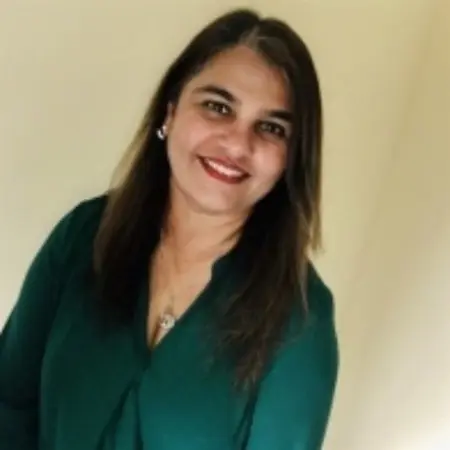
Her Story
About Shahnaz
Shahnaz Makhani is a doctorate-prepared nurse specializing in leadership and education. She began her nursing career in 1988 at the bedside in clinical nursing in Pakistan, spending her first 12 years there as a clinical nurse educator and clinical nurse manager, including opening a tele-unit. After migrating, she restarted at the bedside but quickly advanced to team leader, clinical manager in the critical care ICU, and clinical nurse educator. Her passion for helping others grow led her into nursing education and academic leadership, where she served as Assistant and Associate Professor, associate dean of faculty, associate Dean of Academic Affairs, and department head for the postgraduate program of the Master's and Nurse Practitioners Program. She currently works as an associate professor, teaching undergraduate and graduate nursing students in both online and in-person formats, including pre-licensure students, master's-prepared nurses focusing on evidence-based practice, and mentoring doctoral students on proposals and dissertations. She is a trained CCNE-accredited site evaluator. Outside her teaching, she volunteers with the Shia Ismaili Center foundation for health and education initiatives. She has volunteered and prepared curriculum for ICU nurses in Pakistan and helped them with their site accreditation.

Her Interview
Ten minutes with Shahnaz
01What do you attribute your success to?
My true influence is about creating opportunities for others, sharing what you have learned, and leaving the people stronger and more confident than you have met them. Position is not simply what I accomplish.
02What’s the best career advice you’ve ever received?
One of the most valuable lessons I've learned throughout my career is that you should never stop learning, and you should never be afraid to step outside your comfort zone. Sometimes, we wait until we feel completely ready before pursuing a new opportunity, but growth often begins when we are willing to take that next step, even when we don't have all the answers.
Success is not just about how far you advance professionally; it's about how many people you help along the way. I've learned that investing in others, sharing your knowledge, and helping people recognize their potential are just as important as achieving your own goals.
03What advice would you give to young women entering your industry?
I would tell women not to underestimate the value of their experience. Every chapter- the successes, the difficult moments, the setbacks, and even the things that didn't go as planned can prepare you for something greater.
Don't be afraid to reinvent yourself. Don't wait until you feel completely ready. Use your voice, continue learning, and when you have an opportunity to open a door, remember to hold it open for someone else.
At the end of the day, your title may change, your position may change, and your career may take unexpected turns. But the people you helped, the lives you touched, and the confidence you helped build—that is your real legacy.
04What are the biggest challenges or opportunities in your field right now?
One of our biggest challenges is preparing enough competent, confident nurses to meet the growing and increasingly complex needs of our healthcare system. It's not just about graduating more nurses; it's about ensuring that graduates have the critical thinking, clinical judgment, communication skills, and compassion needed to provide safe, high-quality patient care.
Another challenge is that healthcare is changing rapidly, and nursing education must evolve with it. As educators, we need to bridge the gap between classroom learning and real-world clinical practice while helping students develop resilience, adaptability, and confidence. I see tremendous opportunities, particularly with technology, simulation, and artificial intelligence. These tools can enhance learning, provide students with additional opportunities to practice clinical decision-making, and help educators identify where students need additional support. However, technology must complement, not replace, the human connection, ethical responsibility, and clinical judgment that are at the heart of nursing.
I also believe we have an important opportunity to invest in faculty development and mentorship. Supporting nursing educators is essential because when we strengthen our educators, we strengthen the next generation of nurses.
05What values are most important to you in your work and personal life?
The values most important to me are integrity, compassion, respect, and lifelong learning, both professionally and personally. I believe in treating people with kindness, leading with honesty and accountability, and using my knowledge and experience to empower others and make a positive difference in their lives.
Join Influential Women and start making an impact. Register now.