A powerful reflection on community development that goes beyond housing, emphasizing how intentional investment in people creates environments where entire families and neighborhoods can thrive and build sustainable futures.
Her Story
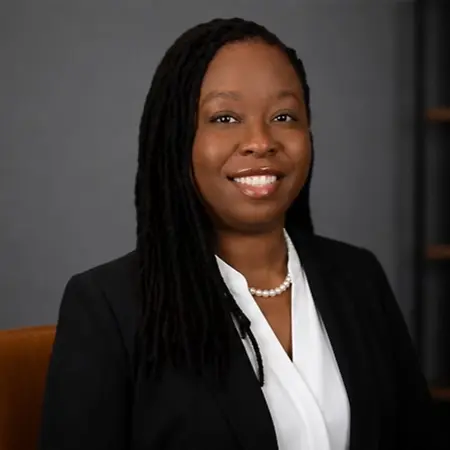
About Shamekia
My passion for community development began long before my career—it began with my childhood in Roxbury, Massachusetts.
I grew up in what many would describe as a low-income neighborhood, but as a child, I never saw it that way. What I experienced was community. I had neighbors who checked in on me, family who provided for me, community center staff who made sure I was signed up for summer jobs, and adults who partnered with my mother to ensure I had every opportunity to succeed. It truly took a village, and I was fortunate to grow up surrounded by people who believed in investing in the next generation.
Those experiences shaped my purpose. They showed me that community leadership isn’t just about programs or services—it’s about creating environments where children feel safe, supported, and full of possibility.
When I think back to that little girl in Roxbury, I don’t remember crime statistics or economic hardship. I remember playing outside until the streetlights came on, dancing on stage at Housing Authority community events, and knowing there were adults who genuinely cared about my future. Those are the memories that stayed with me.
Today, my work is driven by a simple goal: to help create those same opportunities for the next generation. I want every young person—every “little Shamekia” growing up in our communities—to know that where they start does not define where they can go. I want them to have safe spaces, supportive adults, and access to opportunities that allow them to dream beyond their current circumstances. I want them to understand that their story is just beginning.
Since 2008, I have dedicated my career to serving children, youth, families, and communities through the nonprofit sector. My work has evolved from community development into housing and community development, where I focus on helping individuals and families achieve stability through housing, economic opportunity, and wraparound supportive services. Throughout every role I’ve held, my mission has remained the same: to strengthen communities, empower families, and ensure that every person has the opportunity to build a future filled with possibility.
Her Interview
Ten minutes with Shamekia
01What do you attribute your success to?
I attribute my success to two things: the example my mother set for me and the incredible teams I’ve had the privilege to lead and work alongside.
My mother taught me what resilience looks like. She showed me how to keep showing up regardless of the circumstances, to work hard, to persevere, and to lead with strength and grace. Those lessons have stayed with me throughout my career and continue to shape how I approach both leadership and life.
Professionally, I firmly believe that leadership is a team sport. I can have a vision, but that vision only becomes reality because of the people who show up every day committed to serving the community. I’m fortunate to work with individuals who are always willing to collaborate, challenge ideas, and ask, “How can we do this better?” Those conversations make our work stronger and ultimately lead to better outcomes for the people we serve.
As a leader, I see my role as setting the direction, empowering others, and creating an environment where everyone can contribute their expertise. I know I can’t do everything myself—and I’ve learned that’s actually a strength, not a weakness. I like to joke that I’m not a Black unicorn, and I’ve never seen one. None of us can do it all.
That’s why I believe so deeply in the power of teamwork. When people trust one another, bring their unique talents to the table, and work toward a shared purpose, that’s when meaningful impact happens. Any success I’ve achieved has been the result of collective effort, and I’m grateful for every person who has been part of that journey.
02What’s the best career advice you’ve ever received?
One of the best pieces of advice I ever received came from my dad. He always told me, “You’re always—and don’t ever think you’re not—the smartest person in the room.”
What he meant wasn’t that I would know everything. It was a reminder not to underestimate myself. Early in my career, especially as a young woman in housing and community development, I often looked to others for the answers. I assumed that because someone had a more advanced degree, a bigger title, or more influence, they automatically had better ideas.
Over time, I realized that’s simply not true. People invite you to the table because they value your perspective and your expertise. Your lived experiences, your knowledge, and the relationships you’ve built bring something unique that no one else can offer.
03What advice would you give to young women entering your industry?
When I was younger, I worried that people wouldn’t listen to me because of my age. I spent too much time trying to prove that I belonged. What I’ve learned is that confidence grows when you recognize the value you already bring. Don’t wait for someone else to validate your voice. Speak up, ask thoughtful questions, share your ideas, and trust your instincts.
Housing and community development is built on relationships, collaboration, and understanding the needs of people and communities. Your perspective matters. Stand confidently in your expertise, continue learning, and remember that your seat at the table was earned. Don’t be afraid to own it.
04What are the biggest challenges or opportunities in your field right now?
One of the biggest challenges in housing and community development is that providing resources and supportive services can only take people so far. The real goal is sustainability—helping individuals and families build the stability, skills, and confidence to continue thriving long after our direct support ends.
The challenge is that many of the systems people have to navigate weren’t designed to make that easy. Whether it’s housing policies, funding restrictions, access to employment, childcare, transportation, or other barriers, there are often structural issues that limit what’s possible. Even the grants we receive come with specific requirements and limitations, so there’s only so much flexibility in how we can respond to a community’s needs.
That can be frustrating because you want to solve every problem, but you quickly realize that meaningful change requires more than one program or one organization. It takes collaboration, policy change, and long-term investment.
At the same time, that’s also what makes this field full of opportunity. We have the chance to build stronger partnerships, advocate for systems that work better for residents, and design programs that create lasting impact rather than temporary solutions.
I’ve always believed that lower-income communities deserve far more than any one organization can provide. While I may not be able to change every system overnight, I can show up every day committed to giving my best, listening to residents, and doing everything I can to create opportunities that last beyond my involvement. That’s what keeps me motivated.
05What values are most important to you in your work and personal life?
The values that guide both my work and my personal life are transparency, hard work, collaboration, and integrity.
Transparency is incredibly important to me because I believe trust is built through honesty and open communication. People don’t expect you to have all the answers, but they do expect you to be genuine about what you know, what you don’t know, and how you’ll work toward a solution.
I also believe in hard work and having a strong moral compass. In community development, you’re often making decisions that impact people’s lives, so it’s important to lead with integrity and always do what’s right, even when it’s not the easiest path.
Another value that’s shaped my career is collaboration. I’ve learned that no one person has to be an expert in everything. We each bring different strengths and expertise to the table. My responsibility is to be excellent in my area while respecting and leveraging the knowledge of others. The best outcomes happen when people put aside their egos, work together, and focus on creating success for the communities and people they serve.
Personally, my family is at the center of everything I do. Their support, encouragement, and honest perspectives keep me grounded and remind me why I do this work. They help me navigate life’s challenges, celebrate the wins, and continue growing both personally and professionally. Having that foundation allows me to show up every day with purpose and give my best to the people and communities I serve.
Her Content Hub
Articles by Shamekia
Community Changed My Life. Now It’s My Responsibility to Help Others Build Theirs.
How believing in people and fostering collaboration can transform communities beyond housing and services.
Community Development Begins with Believing in People
I grew up in Roxbury, Massachusetts, in a neighborhood that many people would describe as low-income. But that's not how I experienced it.
I experienced community.
I grew up with neighbors who checked in on me, community center staff who already knew my name, and adults who made sure I was signed up for summer jobs before I even thought to ask. My mother never had to navigate life's challenges alone because there were people who cared—not because they were paid to, but because that's what community looked like.
As a child, I didn't know what the crime rate was. I didn't understand poverty statistics or economic disparities. I knew I could ride my bike, play outside, dance on the stage at our Housing Authority events, and dream about what my future could become.
Looking back, I realize those experiences weren't accidental. They were the result of people who intentionally invested in the next generation.
Today, I have the privilege of being one of those people.
Community Development Is About More Than Housing
I've spent my career working with children, youth, families, and communities because I believe housing is only one piece of the equation.
A safe apartment matters. Affordable rent matters. Access to supportive services matters.
But what matters just as much is whether people have opportunities to build a life beyond survival.
Can they access workforce development? Can they find childcare? Do they have financial education? Are seniors connected rather than isolated? Do young people have mentors who believe in them?
Community development isn't simply about buildings. It's about creating environments where people can thrive.
Success Isn't Measured by Services Delivered
One of the biggest lessons I've learned is that providing resources can only take people so far.
The real measure of success is sustainability.
Have we helped someone build enough stability that they can continue moving forward after our program ends? Have we created systems that empower people rather than encourage dependence?
That's often the hardest part of this work.
Many of the barriers families face aren't personal—they're systemic. Funding restrictions, policy limitations, and fragmented services can make lasting change difficult. There are days when I wish I could rewrite those systems overnight.
But meaningful change doesn't happen because one person has all the answers.
It happens because people choose to collaborate.
Leadership Is a Team Sport
Early in my career, I believed I had to prove I deserved a seat at every table.
As a young woman, I sometimes questioned whether people would listen to me because of my age or experience. Then I remembered something my father told me that has stayed with me throughout my career:
"Don't ever think you're not the smartest person in the room."
He wasn't telling me I would know everything.
He was reminding me not to underestimate the value of my perspective.
Today, I lead differently because of that lesson. I know I don't have to be the expert in everything. I simply need to bring my expertise while creating space for others to bring theirs.
The best ideas rarely belong to one person.
They're built through trust, collaboration, and a team willing to ask, "How can we make this better?"
I've often joked that I'm not a Black unicorn—and I've never seen one.
None of us can do this work alone.
The "Little Shamekia" Test
Whenever I'm making decisions, I think about the little girl I once was.
Would this program have helped her?
Would she have felt safe here?
Would she have believed there were opportunities waiting for her?
Every community has its own version of that little girl or little boy—children who don't yet know what's possible because no one has shown them.
Our responsibility isn't simply to meet immediate needs.
It's to expand what's possible.
The Legacy We Leave
Community development isn't just about solving today's problems.
It's about creating the conditions where the next generation has more choices than the one before it.
Every child deserves to grow up surrounded by adults who believe in their potential.
Every family deserves dignity.
Every neighborhood deserves investment—not because of what it lacks, but because of what it can become.
That's the work that inspires me every day.
Because somewhere, there's another little girl growing up just as I did.
And I want her to know that where she begins is only the first chapter of her story—not the ending.
Join Influential Women and start making an impact. Register now.