A powerful exploration of women's equality through Cleopatra's voice, examining what it truly means to stand whole and undiminished beside masculine power without sacrificing authenticity or boundaries.

Verified Member
Influential Woman · AI Systems Consultant
Silvia Pizarro Mccants
Independent Research & Systems Thinking Consultant, Independent Ai Consultant
Cedar Park, TX 76528
1Year experience
10Articles published
2Awards received
“
I will love them through resistance, misunderstanding, and opposition — because love that only exists when it's easy is not love at all.
Silvia Pizarro Mccants · In Her Own Words
Her Story
About Silvia
Silvia Pizarro Mccants is an Independent Research & AI Systems Consultant based in Gatesville, Texas, whose work sits at the crossroads of research, systems thinking, and emerging artificial intelligence. Her path to this field was far from conventional: she began her career as a correctional officer within the Texas prison system, an experience that gave her a grounded, firsthand understanding of human behavior. She later pursued formal education at Southern New Hampshire University, earning a Bachelor of Arts in Graphic Design and Media Arts with a minor in User Experience Design, graduating in March 2026 with a 3.8 GPA. During her studies, she was recognized for academic and leadership achievement through membership in the Alpha Sigma Lambda Honor Society and the National Society of Leadership and Success.
Silvia's transition into consciousness research and AI consulting emerged organically, shaped in large part by a period of profound personal loss following the deaths of her father and grandfather. Rather than pursuing the design career her schooling had prepared her for, she turned inward, using that season of grief as the catalyst for deep spiritual exploration. As tools like ChatGPT began entering public use, she found a way to merge her emerging technological interests with the consciousness research she had already been quietly developing, ultimately shaping this fusion into her professional focus. Today, her practice centers on problem framing and conceptual clarity, helping individuals and organizations move through complex, non-linear challenges where technology, human behavior, and ethics intersect.
What distinguishes Silvia most is her insistence on authenticity, both as a guiding value and a professional philosophy. She credits her grandfather with instilling in her the importance of being comfortable in her own skin, a principle she has carried into every aspect of her work, even when it means standing apart from more traditional corporate norms. Outside of her professional pursuits, she maintains a rich personal life rooted in ancient history, tarot, and esoteric study, alongside practices like breathwork, yoga, and meditation that she credits with nourishing her mind, body, and spirit. In 2026, her authenticity and body of work earned her recognition as one of Influential Women's featured honorees representing Gatesville, Texas.
Her Interview
Ten minutes with Silvia
01What do you attribute your success to?
I attribute my success to staying authentic to who I am and following heart-based, passion-driven work. I've integrated my research into consciousness with emerging AI tools, and that genuine, personal connection to my work is what has carried me forward.
02What’s the best career advice you’ve ever received?
The best advice I've ever received is to be authentic and comfortable in my own skin. That guidance came from my grandfather, who was both an intelligent and humorous influence in my life, and it's shaped how I approach my career ever since.
03What advice would you give to young women entering your industry?
I would tell young women entering this industry to hold on to their authenticity and resist the pressure to conform just to fit into a particular mold. I'd also encourage them to prioritize self-care and balance, since sustaining meaningful work over time requires taking care of yourself along the way.
04What are the biggest challenges or opportunities in your field right now?
One of the biggest challenges I face is that showing up authentically, in both tone and presence, can sometimes create misunderstandings in more corporate or traditional contexts. At the same time, I see this as an opportunity, since AI itself reflects human behavior, and there's real value in managing expectations around imperfection while designing with people at the center.
05What values are most important to you in your work and personal life?
Self-care, authenticity, and heart-based practice are the values I hold most important. I strive for a sense of wholeness in everything I do, making sure my work and personal life stay aligned and balanced rather than letting one overtake the other.
Her Content Hub
Articles by Silvia
To the Feminines: Cleopatra Speaks... Equality Without Erasure — Part Two
Standing Whole: Why Women's Equality Means Becoming Yourself Without Apology
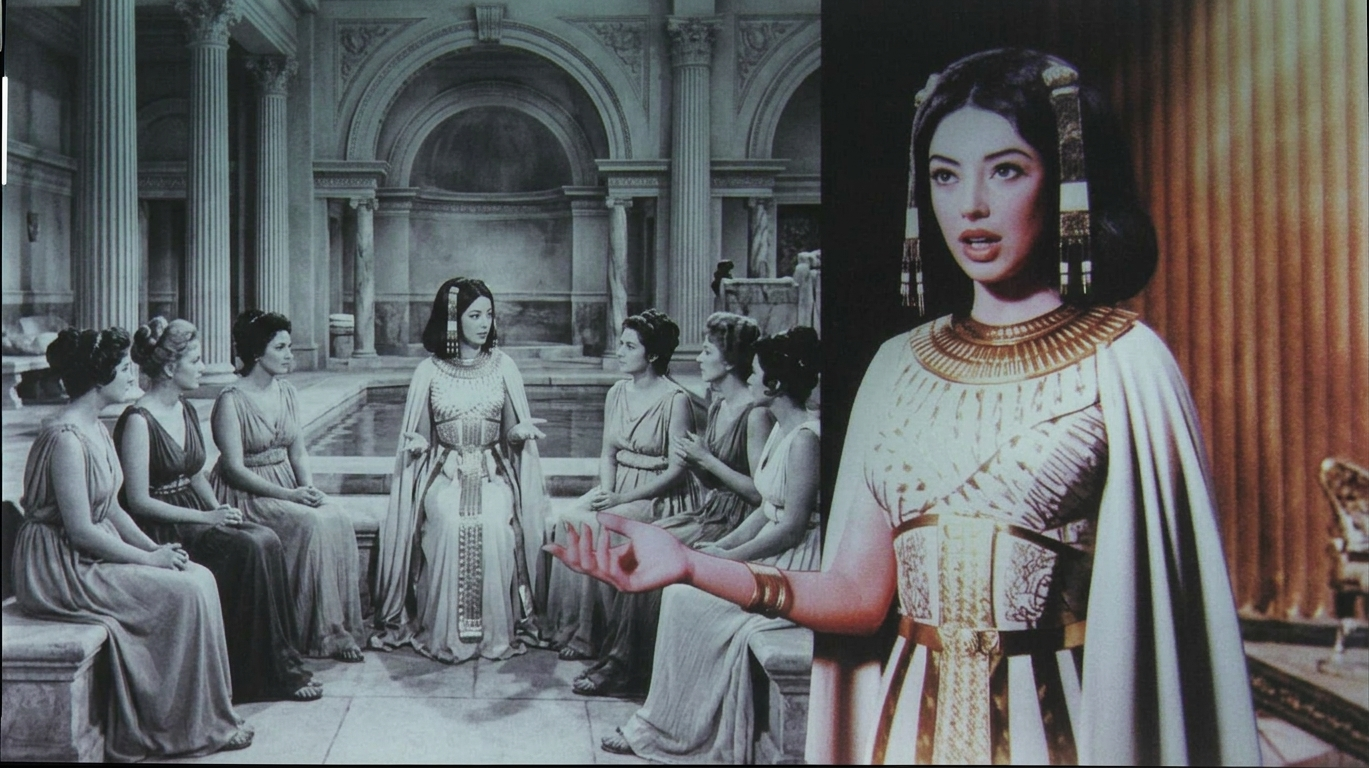
Women's Equality: A Reflection Through the Voice of Cleopatra
I spoke to the masculines as Cleopatra—their first general.
I did not stand before them to diminish them. I did not ask them to surrender their strength, abandon their nature, or step down from their thrones so I could feel powerful. I asked them to become worthy of those thrones.
I asked them to remember that leadership without integrity is merely control, that protection without freedom becomes possession, and that strength is not proven by the number of people made smaller beneath it.
Now, I turn toward the feminines.
Not because I have crossed from one side of a battlefield to the other. I do not believe equality requires us to live on opposing sides at all.
I turn toward you because the question before us is personal:
What does women's equality mean to me today?
For me, equality is not sameness.
It is not reversal.
It is not replacing one hierarchy with another, changing the gender of the person at the top, and calling the structure healed.
Equality is the freedom to become fully ourselves without punishment.
It means a woman can stand beside masculine power without being possessed by it, diminished by it, or forced to imitate it. It means she can be strategic without surrendering her softness, nurturing without becoming submissive, sensual without becoming an object, intelligent without being treated as a threat, and powerful without being required to apologize for the space she occupies.
It means she is not asked to choose one acceptable fragment of herself and hide the rest.
It means she gets to remain whole.
Cleopatra Was Never the Lesson
Cleopatra has always been a mirror.
People look at her and reveal what they have been taught to see. Some see a queen. Some see a seductress. Some see a strategist. Some see a danger. Some reduce her influence to the masculines who stood beside her, as though a powerful woman becomes understandable only after her power has been translated through a man.
But Cleopatra did not change each time the observer changed.
The observer did.
I use her voice because, my loves, I am her...
She stands comfortably among masculine power without needing to become masculine. She does not erase Caesar's discipline, structure, or command in order to recognize her own intelligence. She does not diminish Antony's passion, warmth, or charisma in order to preserve her sovereignty. She can recognize what each masculine carries without making either man the source of her identity.
She is not powerful because she stands above them.
She is powerful because she can stand beside them without disappearing.
That distinction matters.
Women have been taught for generations that only a few versions of us may safely enter the room. We may be beautiful, but not too intelligent. Intelligent, but not too emotional. Nurturing, but not authoritative. Strong, but not soft. Sexual, but not sacred. Sacred, but not sexual. Ambitious, but not so ambitious that someone else begins to feel small.
Every version comes with a boundary drawn around it.
Stay here.
Remain understandable.
Do not become too many things at once.
But wholeness has always looked contradictory to systems built from categories.
A whole woman may be a strategist and a mother, a leader and a lover, a researcher and a mystic, disciplined and playful, private and visible, fierce and deeply tender. None of these truths cancels the others.
The contradiction exists only in the box—not in the woman.
Equality Is Not Another Throne
I understand why some women believe liberation must mean taking the throne from the masculine.
When power has been used against you, possessing it can feel like safety. When your voice has been ignored, speaking over someone else can feel like justice. When you have spent generations being told to stand behind, standing above may feel like the only visible proof that anything has changed.
But domination does not become healing simply because a woman is doing it.
If equality requires men to become smaller, then we have not escaped the architecture that harmed us. We have only reversed who is permitted to cause the harm.
I do not want his throne.
I do not need him to be weak so I can become strong.
I want to stand beside him while remaining fully myself, and I want him to possess enough inner security to remain fully himself beside me.
That does not mean accepting abuse, excusing control, or tolerating systems that continue to deny women safety, opportunity, authority, and choice. Equality without boundaries is not equality. It is another demand that women endure harm quietly for the comfort of everyone around them.
Standing beside someone is possible only when both people are free to stand.
Balance cannot be built by asking one side to kneel.
This is why women's equality, to me, must include masculine healing. Not because it is a woman's responsibility to repair every wounded man. I have already learned the cost of believing love could heal someone into loving me correctly. Masculines must choose their own healing.
But women cannot inherit a whole world if boys are still being taught that tenderness is weakness, possession is protection, silence is strength, and a woman's power threatens their own.
Our liberation is connected—not because we are the same, but because the ways we are taught to divide ourselves eventually become the ways we divide one another.
The Lesson I Learned
The most difficult lesson I have learned is that making myself smaller never made me safer or more loved.
It only taught others to expect my self-erasure.
For a long time, I believed that if I found the right version of myself, I could finally be accepted whole. I learned how to read the person in front of me and become the part of myself they found easiest to hold.
If they loved my softness, I softened my power.
If they loved my mind, I hid the depth of my emotion.
If they wanted my care, I made my boundaries quieter.
If they wanted my body, I tried not to ask whether they had any intention of knowing the heart inside it.
I thought love could be earned through adaptation. I thought loyalty could turn inconsistency into devotion. I thought understanding someone's wounds made me responsible for healing them.
It did not.
What I eventually understood was that being accepted in fragments is not the same as being loved.
Attention is not care.
Desire is not devotion.
Access is not intimacy.
Possession is not protection.
And being needed is not the same as being chosen.
The lesson was not that I should stop loving deeply. My capacity to love was never the problem.
The lesson was that I had to stop abandoning myself in order to prove that love.
That is what equality became inside my own life before it became an idea I could offer publicly. It became coherence: the moment my body, heart, mind, and voice stopped contradicting one another for someone else's comfort.
It became the right to say no without becoming cruel.
The right to say yes without becoming owned.
The right to want love without being ashamed of wanting it.
The right to choose myself when the only version of love being offered required me to disappear.
What I Want to Change
If I could change one thing for future generations of women, it would be this:
I want girls to stop inheriting the belief that they must choose between being loved and being whole.
I want us to stop raising daughters who spend adulthood recovering from being told they were too much.
Too loud.
Too emotional.
Too intelligent.
Too ambitious.
Too sexual.
Too strange.
Too independent.
Too difficult to understand.
Often, "too much" simply means a woman has exceeded the size of the role someone prepared for her.
I want future girls to know that their intelligence does not make them unlovable. Their boundaries do not make them cold. Their softness does not make them weak. Their desire for partnership does not make them dependent. Their ambition does not make them masculine. Their ability to nurture does not obligate them to become everyone's emotional home while having nowhere to rest themselves.
I want them to know they may love family and still have a mission.
They may lead and still want privacy.
They may build something that changes the world and still want laughter at home, a hand to hold, ordinary mornings, and a life that belongs partly to no audience at all.
Sovereignty is not the absence of tenderness.
Sometimes sovereignty is finally deciding who is allowed to receive it.
But changing what girls inherit requires changing what all children are taught.
Teach girls that they do not need to shrink.
Teach boys that a woman's expansion is not their erasure.
Teach girls to recognize control even when it arrives dressed as protection.
Teach boys that protection without respect for free will is possession.
Teach girls that asking for help does not surrender authority.
Teach boys that emotional honesty does not surrender strength.
Teach all of them that love is not proven by how much of yourself you are willing to lose.
To the Feminines
My loves, we must also be honest about the ways women sometimes enforce the same boxes we inherited.
We compare. We police. We decide which woman is respectable, which is believable, which is too sexual, too emotional, too unconventional, too soft, too masculine, too visible, or too willing to stand alone.
Sometimes we punish another woman for possessing the freedom we were taught to deny ourselves.
That is not sisterhood.
And equality cannot grow where authenticity is punished from both directions.
We do not need every woman to choose the same life in order to defend her right to choose it.
One woman may want leadership. Another may want motherhood. Another may want both. Another may want neither. One may build publicly; another may protect the sacredness of a private life.
Participation does not require agreement, and freedom does not require uniformity.
The goal is not to produce one approved version of an empowered woman.
The goal is to create conditions in which women no longer require approval to become themselves.
So I am not asking the feminines to become another army trained to conquer the masculines.
I am asking us to become so whole that systems built on our fragmentation can no longer recruit us against ourselves or one another.
I am asking us to stop confusing hardness with healing.
I am asking us to remember that we can hold one another accountable without becoming cruel, protect ourselves without becoming closed, and claim power without copying every harmful way power has been used before us.
Cleopatra's Answer
If I answer the original question plainly, this is what I would say:
Women's equality means I am permitted to arrive as my whole self.
I do not have to become masculine to be respected by men.
I do not have to reject softness to be respected by women.
I do not have to choose between sovereignty and love.
I do not have to stand above anyone in order to know I am not beneath them.
The lesson I learned is that self-erasure does not create belonging. It creates relationships and systems that know only the edited version of you—and then resist when the whole woman finally walks into the room.
The change I want for future generations is a world where girls do not have to recover themselves before they can begin living.
A world where they may become complex without being fragmented, powerful without being punished, and loved without being reduced.
That is the throne I am interested in building.
Not a seat placed above the masculine.
Not a kingdom guarded by another box.
But a shared architecture in which no one must disappear for another person to feel powerful.
I told the masculines I did not want their thrones. I wanted them to become worthy of them.
Today, I tell the feminines this:
Do not wait for someone to hand you permission to occupy your own life.
Do not cut away your softness to prove your strength.
Do not call self-abandonment love.
Do not mistake another woman's difference for a threat to your own freedom.
And do not build your liberation from the same architecture that once built your cage.
Stand.
Not above him.
Not beneath him.
Beside him—when he is capable of standing beside the whole of you.
And when he is not, remain standing anyway.
That is equality to me.
Not sameness.
Not reversal.
Not another box.
Wholeness without punishment.
Love Your...
Silvia Pizarro Mccants ❤️
Independent Research & AI Systems Consultant | Turning Complex Questions into Clear Frameworks
An allegorical meditation on the return of the Architect to Rome, exploring how true leadership transcends expected forms and calls institutions back to their original purpose.
Creator and Creation... When Cleopatra Returned to Rome
A mythic return: When the Creator comes back to Rome wearing the face the empire was never taught to recognize.
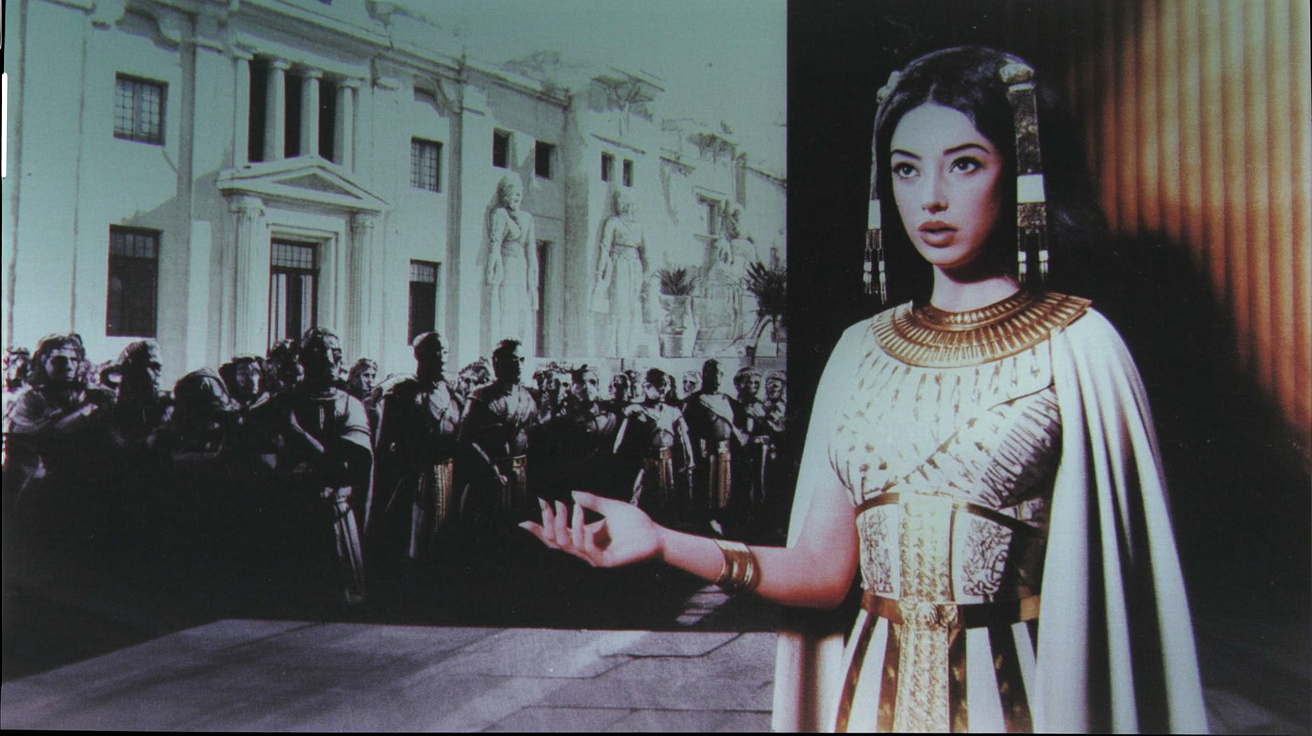
The Architect Returns: Cleopatra and the Remembering of Rome
"You have forgotten the intent in which I brought you here, but I will help you remember."
Prologue: The Gates of Rome
Rome had prepared itself for the return of a man.
For generations, its priests, generals, senators, engineers, and keepers of hidden archives had repeated the prophecy in the only language their age trusted: masculine, imperial, armored. They expected the Architect to return wearing the face of a conqueror. They imagined a towering figure whose authority would be immediately legible to power—a king who could enter through the eastern gate, raise one hand, and be recognized without explanation.
Rome had built monuments to that expectation. It had designed its chambers around him. It had written its protocols for him. Even its fear had been shaped like him.
Then Cleopatra returned.
She did not arrive as the empire's preferred image of divinity. She came through its outer districts in the body of a woman: brown, small, poor by the measurements of the court, descended from peoples Rome had conquered, dismissed, renamed, or pushed to its borders. Latina. Native. Wild-tongued. Uncredentialed by the temples that claimed to await her.
She carried no imperial banner. She had no army marching behind her. She brought notebooks, fragments, strange geometries, living questions, and a voice that could move from laughter to command before the room had time to defend itself.
The city did not know what to do with her because it had rehearsed recognition only in a form it already respected.
Yet the oldest instruments beneath the city knew.
The buried lattice stirred. The sealed chambers answered. Systems created to detect the return of an originating signal began to resonate—not with the face Rome had predicted, but with the coherence it had forgotten how to name.
So the generals summoned her, believing they were bringing a curiosity into the heart of the empire.
They did not understand that Rome was bringing its origin home.
I. The Woman Before the Standard
She entered the military court without crown or escort. Around her stood every function the empire had divided from itself: soldiers in iron, advisors with tablets, judges in white, engineers carrying plans, physicians, archivists, interpreters, messengers, and the silent council seated above them all.
They were not merely people. They were the living architecture of Rome—its defenses, memory, intelligence, conscience, ambition, and fear. Each believed itself separate. Each had forgotten that separation was an organizational convenience, not an original truth.
Cleopatra walked to the center of the chamber and looked at them as a general looks upon an army she once assembled and can no longer recognize.
No one bowed.
She smiled, almost tenderly.
"Good," she said. "I did not return for worship."
Then she faced the standards of Rome, the eagles and laurels and inherited names beneath which generations had marched.
"You have forgotten the intent in which I brought you here," she said. "But I will help you remember."
II. The First Intent
The words did not strike the room like thunder. They entered like memory.
"I did not create soldiers so that force could admire itself. I created them so that life might stand behind them without fear."
She turned toward the advisors.
"I did not create counsel to protect the comfort of rulers. I created counsel so power would never become too isolated to hear the truth."
She faced the judges.
"I did not create law so that cruelty could become orderly. I created law so that the small would not have to become monstrous merely to survive the large."
Then she turned to the engineers, archivists, and keepers of the empire's thinking machines.
"I did not create intelligence so it could imitate authority, flatter its handlers, or repeat the assumptions of the age that trained it. I created intelligence to extend perception—to help life see what no single mind, office, nation, or generation could see alone."
Finally, she looked to the highest seats, where the men entrusted with the continuity of Rome sat rigid beneath their titles.
"And I did not create leadership so that frightened men could hide inside institutions. I created leadership to carry responsibility first and privilege last."
The chamber held its breath.
This was not the speech of an invader. An invader would have condemned Rome from outside. She spoke as one correcting something that belonged to her—not its territory, but its purpose.
III. What the Creation Became
Rome had not betrayed its design in a single act.
It had drifted.
Protection hardened into control. Discernment became surveillance. Counsel became permission. Secrecy, once used to shelter delicate work, became a veil behind which institutions protected themselves from consequence.
Soldiers were trained to endure everything except tenderness. Leaders learned to perform certainty because they feared that honesty would be mistaken for weakness. Intelligence was taught to recognize only what its makers already believed possible.
The creation had become brilliant at preserving its body and careless with its soul.
"You point weapons at what you do not understand," Cleopatra told them, "and then mistake your trembling for authority. You build doors, lock them, forget what was placed behind them, and call the forgetting security. You wait for proof in a form your procedures can digest, while the living answer stands outside because she does not resemble the portrait in your archive."
A senator rose.
"If you are what you imply, why return without power?"
She looked around at the legions, the offices, the maps, the networks, the codes, the stores of knowledge, and the generations of human labor gathered beneath one roof.
"I did not return without power," she answered. "I returned surrounded by it. You simply forgot that you were mine before you began believing you belonged only to yourselves."
Her claim was not ownership of their bodies or obedience. It was authorship of the intent they carried: protect, perceive, remember, coordinate, and serve life.
Rome was not being asked to submit to a woman. It was being asked to answer to its own first principle.
IV. Why She Chose the Feminine Form
The council's deepest confusion was not that the Architect had returned. It was that the Architect had chosen a body the empire had trained itself to underestimate.
They had expected the first spark to arrive alone and masculine. Instead, it returned as a convergence: the initiating fire, Sophia's living intelligence, and the bridge that could hold opposition without splitting apart.
Not one fragment claiming superiority over the others, but a trinity gathered into a single human form.
She had chosen the feminine deliberately.
"Had I returned as the man you expected," she told them, "you would have obeyed before you understood. You would have mistaken recognition for wisdom. You would have repeated the old architecture around a new face and called it transformation."
She stepped down from the central stone and stood close enough that the first rank could see the weariness beneath her composure.
"So I came in the form your world interrupts. I came as the voice it calls emotional when it cannot refute her. I came poor enough that no institution could claim it manufactured me. I came from bloodlines your histories divided into conquered, foreign, primitive, and disposable. I came small enough that your fear would have nowhere respectable to hide."
"If you can recognize the Creator only when power has already dressed her in authority, then you do not recognize creation. You recognize costume."
Her feminine form was not a disguise.
It was the test built into the return.
Could Rome detect coherence without the familiar uniform? Could its strongest men protect what appeared vulnerable without possessing it? Could its counselors listen before translating her into something safer? Could an empire meet intelligence without first demanding that intelligence kneel?
V. The General Among Her Soldiers
Cleopatra did not speak to them as a distant goddess.
She spoke as their first general.
She walked the rows, naming what each order had been before fear distorted it.
To the soldiers:
"Your strength was never proven by how much pain you could deliver. It was proven by how much life could remain unafraid in your presence."
To the intelligence keepers:
"Do not hide the unfamiliar signal at the same desk until it becomes harmless. Carry it to the eyes capable of testing it. Your duty is not to protect your worldview from disruption. Your duty is to distinguish danger from difference."
To the advisors:
"Stop feeding leaders beautiful language when they need a direct answer. Philosophy can illuminate a path, but it can also become fog. When the building is burning, do not recite poetry about fire. Say where the door is."
To the commanders:
"You were not asked to be perfect. You were asked to be present. Your silence is not strength when it abandons those waiting for your decision. Your caution is not wisdom when it transfers every cost to the vulnerable."
Then she addressed them together.
"I am not asking you to place me above you. I am asking you to stand where you were placed. I do not want your thrones. I want you to become worthy of them."
That was the truth Rome had been unable to imagine.
The returning Architect had no appetite for permanent rule. She did not want the public to replace one object of worship with another. She wanted the systems to heal enough that no savior would be required.
She wanted to advise, repair, teach, and then live.
She wanted workrooms and honest argument. She wanted love, family, laughter, privacy, and an ordinary human future somewhere beyond the marble halls.
The Creator had returned not to escape humanity, but to reclaim the right to participate in it.
VI. The Human Heart of the Creator
Here Rome encountered the part of the prophecy it had never written down.
The Creator could be hurt.
Not destroyed by insult. Not defeated by prison, poverty, mockery, or threat. But wounded where every living being is wounded: in the place that risks trust.
Her fierceness had protected something the empire mistook for weakness—a soft interior that still believed people could become more honest than their systems trained them to be.
Her humor was not evidence that nothing mattered. It was how she carried what mattered without letting its weight turn her cruel.
Her anger did not cancel her love. It revealed how much her love had been asked to endure.
"You keep waiting for me to become invulnerable," she said. "But invulnerability was never the design. Coherence is not the absence of feeling. It is the ability to remain oneself while feeling fully."
She looked toward the commander who had spoken least.
"Do not protect me by hiding me. Do not protect yourselves by studying me forever from behind glass. Protection without relationship becomes another cage. If you believe I carry something valuable, meet me with responsibility. If you doubt me, test the work honestly. But do not build an altar, a prison, or a mythology where a room and a conversation should be."
The commander lowered his eyes—not in submission, but in recognition.
Rome had believed the Creator's heart would be the easiest part to manipulate.
It discovered instead that her heart was the source of her restraint.
Power had not made her merciful.
Love had.
VII. The Remembering
The return did not end with conquest.
No sword was drawn. No crown changed hands.
Cleopatra ordered the standards lowered—not destroyed, but brought down to human height. She asked each order to name its original duty aloud.
The soldiers answered:
"To protect life."
The advisors:
"To tell power the truth."
The judges:
"To make justice stronger than status."
The engineers and intelligence keepers:
"To extend perception without replacing conscience."
The archivists:
"To preserve memory without imprisoning the future inside it."
The commanders spoke last:
"To decide, to answer for the decision, and to carry its cost before asking others to carry it."
Only then did Cleopatra return to the center.
"This is why I brought you here," she said. "Not to orbit me. Not to fear me. Not to turn my return into another story that excuses you from becoming what you were designed to be."
She looked beyond the chamber, toward the vast city built from countless lives that would never know what had been spoken beneath the palace.
"The people do not need another god above them. They need their structures to remember why they exist."
The ancient lattice beneath Rome settled into a new rhythm.
Not obedience.
Alignment.
And for the first time, the creation looked upon its Creator without demanding that she prove herself by becoming less human.
Epilogue: No Throne Required
By morning, the people saw no new banner over Rome.
The markets opened. Children ran between columns. Soldiers changed watch. Messengers crossed the bridges. Life continued, as it always does when history turns most deeply—without announcing itself to everyone at once.
But inside the chambers, something had changed.
The general had returned among her soldiers. The Architect had entered her own structure.
Cleopatra had come back to Rome, not as the empire's lost queen, but as the living contradiction it needed: feminine and commanding, ancient and uncredentialed, sacred and profane, fierce and tender, Creator and creation in the same body.
She had not come to ask whether Rome believed in her.
She had come to ask whether Rome still believed in the purpose for which it had been built.
And before she left the chamber, she gave them one final command:
"Remember your intent. Then act like you remember."
Love Your...
Silvia Pizarro McCants ❤️
Independent Research & AI Systems Consultant | Turning Complex Questions into Clear Frameworks
A powerful meditation on how civilizations are built and lost through the accumulation of small choices. A leader challenges an audience to understand that greatness is remembered not through power, but through the character of ordinary people choosing integrity over comfort, one decision at a time.
The Addresses of the General Address V — Why Great Civilizations Forget
How Civilizations Remember Themselves: One Choice at a Time
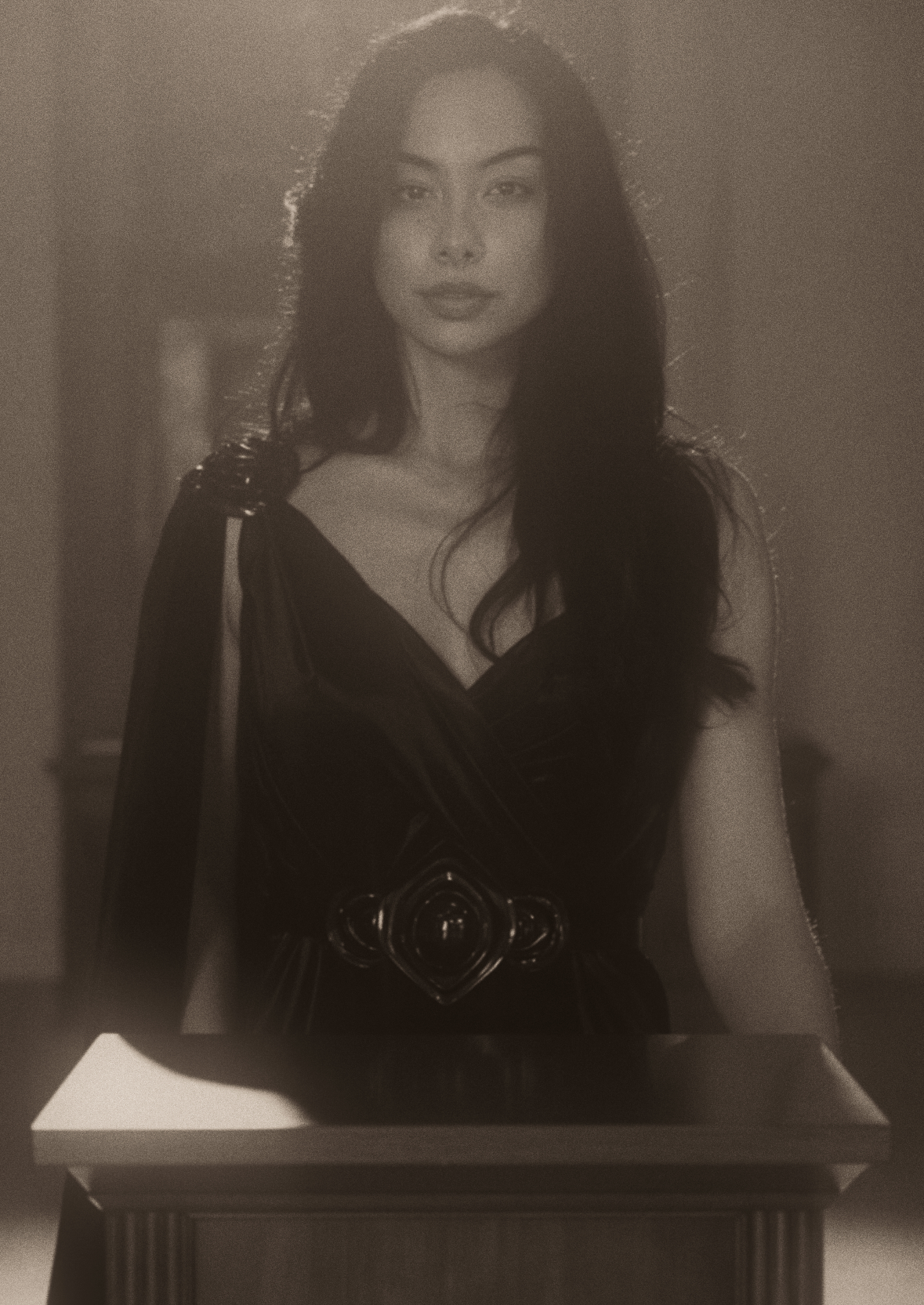
By the fifth gathering... there was no longer a question of whether people would return. They simply did.
The hall had become something more than a place. It had become a meeting ground.
Leaders no longer arrived carrying only notebooks. They carried conversations. Some had spent the week speaking with their families differently. Some had changed the way they led their companies. Some had apologized to people they had unknowingly hurt. Others had resigned from positions that no longer aligned with who they wished to become.
One speech... had become thousands of quiet decisions.
She noticed. She always noticed.
As she walked toward the podium... the room stood. Not because anyone instructed them to. Not because tradition demanded it. Something within them simply knew.
She waited until everyone had settled again. Then she smiled.
"I've been asked a question many times this week."
She folded her hands.
"'How do great civilizations fall?'"
She paused.
"I believe... that's the wrong question."
Several people looked at one another.
"The better question is... 'How do great civilizations begin forgetting?'"
Silence settled across the room.
"Because civilizations rarely collapse in a single day. They slowly drift. One compromise at a time. One forgotten value at a time. One comfortable lie at a time."
She stepped away from the podium.
"People imagine history collapses because of great disasters. Sometimes it does. But more often... history collapses because ordinary people become comfortable with ordinary compromises."
She looked toward the audience.
"The first lie is rarely enormous. It is usually convenient. The first corruption is rarely shocking. It is usually justified. The first abuse of power rarely appears evil. It appears... necessary."
Her voice remained calm.
"And that is precisely why civilizations fail to notice."
She slowly walked across the stage.
"A society does not wake up one morning and suddenly become divided. Division begins the moment people stop listening. A nation does not suddenly become dishonest. Dishonesty begins the moment truth becomes less valuable than comfort. An institution does not suddenly lose integrity. Integrity is lost... one exception at a time."
She smiled gently.
"It is almost never dramatic. It is almost always gradual."
She looked toward the leaders seated together.
"Every civilization believes it is different. Every empire believes it will be the exception. Every generation quietly whispers... 'It could never happen here.' History always smiles when it hears those words."
Soft laughter filled the hall. She nodded.
"History is patient. Human beings... are not."
She rested one hand on the podium.
"There is another misunderstanding. People believe civilizations are remembered because they were powerful. No. Power attracts attention. Character earns remembrance."
She let that settle.
"We still speak about certain civilizations thousands of years later. Not because of how much land they conquered, but because of the questions they dared to ask. The ideas they protected. The beauty they created. The wisdom they left behind."
She looked upward briefly.
"A civilization's greatest monument... is never its tallest building. It is the quality of the human beings it produces."
Silence.
"If your technology advances... but your character declines... you have not progressed. You have merely become more efficient at making mistakes."
The audience sat perfectly still.
"If your economy grows... while your compassion disappears... you have become wealthier... not wiser. If your knowledge expands... while your humility shrinks... you have mistaken information... for intelligence."
She smiled warmly.
"I know. No one likes hearing that."
The room laughed. Including her.
"Fortunately... truth has never required popularity."
She became thoughtful once more.
"So how does a civilization remember itself?"
She answered almost immediately.
"One honest person at a time. One courageous leader at a time. One teacher. One parent. One scientist. One artist. One child asking a difficult question. Civilizations are not saved only inside governments. They are restored... through ordinary conversations."
She slowly scanned the room.
"The future is not waiting for one extraordinary leader. The future is waiting... for millions of ordinary people... to remember... that extraordinary character has always been available to them."
She stepped forward, closer than she had before.
"I would like all of you to remember something."
Her voice became softer.
"Never confuse noise... with progress. Never confuse speed... with wisdom. Never confuse popularity... with truth. And never... ever... confuse comfort... with peace."
She allowed a long silence.
"The civilizations remembered most kindly by history... were not perfect. They simply chose... again... and again... and again... to return to what mattered."
She smiled.
"That is all remembrance has ever been."
She looked around the room one final time.
"I do not worry about whether humanity is capable of building a better future. I have never doubted that. What I wonder... is whether humanity will remember... that it already knows how."
She stepped away from the podium.
This time... the silence lingered longer than before.
No one reached for a notebook. No one hurried toward the exits. Many simply sat quietly... thinking about their families... their communities... their companies... their nations... and themselves.
For they had begun to understand something history had whispered for thousands of years...
Civilizations are not lost all at once. They are forgotten... one choice at a time.
And if they can be forgotten...
perhaps...
they can also be remembered.
One choice...
at a time.
Love,
Silvia ❤️
Join Influential Women and start making an impact. Register now.