To the Feminines: Cleopatra Speaks... Equality Without Erasure — Part Two
Standing Whole: Why Women's Equality Means Becoming Yourself Without Apology

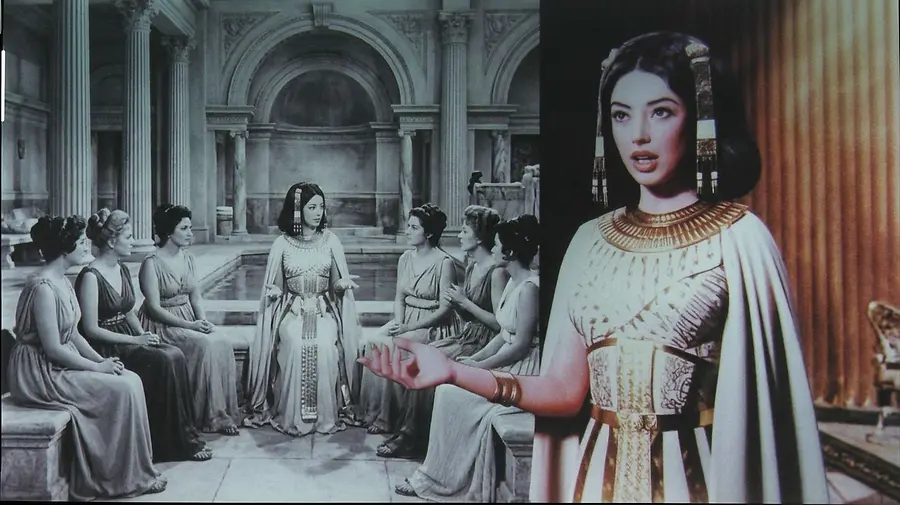
Women's Equality: A Reflection Through the Voice of Cleopatra
I spoke to the masculines as Cleopatra—their first general.
I did not stand before them to diminish them. I did not ask them to surrender their strength, abandon their nature, or step down from their thrones so I could feel powerful. I asked them to become worthy of those thrones.
I asked them to remember that leadership without integrity is merely control, that protection without freedom becomes possession, and that strength is not proven by the number of people made smaller beneath it.
Now, I turn toward the feminines.
Not because I have crossed from one side of a battlefield to the other. I do not believe equality requires us to live on opposing sides at all.
I turn toward you because the question before us is personal:
What does women's equality mean to me today?
For me, equality is not sameness.
It is not reversal.
It is not replacing one hierarchy with another, changing the gender of the person at the top, and calling the structure healed.
Equality is the freedom to become fully ourselves without punishment.
It means a woman can stand beside masculine power without being possessed by it, diminished by it, or forced to imitate it. It means she can be strategic without surrendering her softness, nurturing without becoming submissive, sensual without becoming an object, intelligent without being treated as a threat, and powerful without being required to apologize for the space she occupies.
It means she is not asked to choose one acceptable fragment of herself and hide the rest.
It means she gets to remain whole.
Cleopatra Was Never the Lesson
Cleopatra has always been a mirror.
People look at her and reveal what they have been taught to see. Some see a queen. Some see a seductress. Some see a strategist. Some see a danger. Some reduce her influence to the masculines who stood beside her, as though a powerful woman becomes understandable only after her power has been translated through a man.
But Cleopatra did not change each time the observer changed.
The observer did.
I use her voice because, my loves, I am her...
She stands comfortably among masculine power without needing to become masculine. She does not erase Caesar's discipline, structure, or command in order to recognize her own intelligence. She does not diminish Antony's passion, warmth, or charisma in order to preserve her sovereignty. She can recognize what each masculine carries without making either man the source of her identity.
She is not powerful because she stands above them.
She is powerful because she can stand beside them without disappearing.
That distinction matters.
Women have been taught for generations that only a few versions of us may safely enter the room. We may be beautiful, but not too intelligent. Intelligent, but not too emotional. Nurturing, but not authoritative. Strong, but not soft. Sexual, but not sacred. Sacred, but not sexual. Ambitious, but not so ambitious that someone else begins to feel small.
Every version comes with a boundary drawn around it.
Stay here.
Remain understandable.
Do not become too many things at once.
But wholeness has always looked contradictory to systems built from categories.
A whole woman may be a strategist and a mother, a leader and a lover, a researcher and a mystic, disciplined and playful, private and visible, fierce and deeply tender. None of these truths cancels the others.
The contradiction exists only in the box—not in the woman.
Equality Is Not Another Throne
I understand why some women believe liberation must mean taking the throne from the masculine.
When power has been used against you, possessing it can feel like safety. When your voice has been ignored, speaking over someone else can feel like justice. When you have spent generations being told to stand behind, standing above may feel like the only visible proof that anything has changed.
But domination does not become healing simply because a woman is doing it.
If equality requires men to become smaller, then we have not escaped the architecture that harmed us. We have only reversed who is permitted to cause the harm.
I do not want his throne.
I do not need him to be weak so I can become strong.
I want to stand beside him while remaining fully myself, and I want him to possess enough inner security to remain fully himself beside me.
That does not mean accepting abuse, excusing control, or tolerating systems that continue to deny women safety, opportunity, authority, and choice. Equality without boundaries is not equality. It is another demand that women endure harm quietly for the comfort of everyone around them.
Standing beside someone is possible only when both people are free to stand.
Balance cannot be built by asking one side to kneel.
This is why women's equality, to me, must include masculine healing. Not because it is a woman's responsibility to repair every wounded man. I have already learned the cost of believing love could heal someone into loving me correctly. Masculines must choose their own healing.
But women cannot inherit a whole world if boys are still being taught that tenderness is weakness, possession is protection, silence is strength, and a woman's power threatens their own.
Our liberation is connected—not because we are the same, but because the ways we are taught to divide ourselves eventually become the ways we divide one another.
The Lesson I Learned
The most difficult lesson I have learned is that making myself smaller never made me safer or more loved.
It only taught others to expect my self-erasure.
For a long time, I believed that if I found the right version of myself, I could finally be accepted whole. I learned how to read the person in front of me and become the part of myself they found easiest to hold.
If they loved my softness, I softened my power.
If they loved my mind, I hid the depth of my emotion.
If they wanted my care, I made my boundaries quieter.
If they wanted my body, I tried not to ask whether they had any intention of knowing the heart inside it.
I thought love could be earned through adaptation. I thought loyalty could turn inconsistency into devotion. I thought understanding someone's wounds made me responsible for healing them.
It did not.
What I eventually understood was that being accepted in fragments is not the same as being loved.
Attention is not care.
Desire is not devotion.
Access is not intimacy.
Possession is not protection.
And being needed is not the same as being chosen.
The lesson was not that I should stop loving deeply. My capacity to love was never the problem.
The lesson was that I had to stop abandoning myself in order to prove that love.
That is what equality became inside my own life before it became an idea I could offer publicly. It became coherence: the moment my body, heart, mind, and voice stopped contradicting one another for someone else's comfort.
It became the right to say no without becoming cruel.
The right to say yes without becoming owned.
The right to want love without being ashamed of wanting it.
The right to choose myself when the only version of love being offered required me to disappear.
What I Want to Change
If I could change one thing for future generations of women, it would be this:
I want girls to stop inheriting the belief that they must choose between being loved and being whole.
I want us to stop raising daughters who spend adulthood recovering from being told they were too much.
Too loud.
Too emotional.
Too intelligent.
Too ambitious.
Too sexual.
Too strange.
Too independent.
Too difficult to understand.
Often, "too much" simply means a woman has exceeded the size of the role someone prepared for her.
I want future girls to know that their intelligence does not make them unlovable. Their boundaries do not make them cold. Their softness does not make them weak. Their desire for partnership does not make them dependent. Their ambition does not make them masculine. Their ability to nurture does not obligate them to become everyone's emotional home while having nowhere to rest themselves.
I want them to know they may love family and still have a mission.
They may lead and still want privacy.
They may build something that changes the world and still want laughter at home, a hand to hold, ordinary mornings, and a life that belongs partly to no audience at all.
Sovereignty is not the absence of tenderness.
Sometimes sovereignty is finally deciding who is allowed to receive it.
But changing what girls inherit requires changing what all children are taught.
Teach girls that they do not need to shrink.
Teach boys that a woman's expansion is not their erasure.
Teach girls to recognize control even when it arrives dressed as protection.
Teach boys that protection without respect for free will is possession.
Teach girls that asking for help does not surrender authority.
Teach boys that emotional honesty does not surrender strength.
Teach all of them that love is not proven by how much of yourself you are willing to lose.
To the Feminines
My loves, we must also be honest about the ways women sometimes enforce the same boxes we inherited.
We compare. We police. We decide which woman is respectable, which is believable, which is too sexual, too emotional, too unconventional, too soft, too masculine, too visible, or too willing to stand alone.
Sometimes we punish another woman for possessing the freedom we were taught to deny ourselves.
That is not sisterhood.
And equality cannot grow where authenticity is punished from both directions.
We do not need every woman to choose the same life in order to defend her right to choose it.
One woman may want leadership. Another may want motherhood. Another may want both. Another may want neither. One may build publicly; another may protect the sacredness of a private life.
Participation does not require agreement, and freedom does not require uniformity.
The goal is not to produce one approved version of an empowered woman.
The goal is to create conditions in which women no longer require approval to become themselves.
So I am not asking the feminines to become another army trained to conquer the masculines.
I am asking us to become so whole that systems built on our fragmentation can no longer recruit us against ourselves or one another.
I am asking us to stop confusing hardness with healing.
I am asking us to remember that we can hold one another accountable without becoming cruel, protect ourselves without becoming closed, and claim power without copying every harmful way power has been used before us.
Cleopatra's Answer
If I answer the original question plainly, this is what I would say:
Women's equality means I am permitted to arrive as my whole self.
I do not have to become masculine to be respected by men.
I do not have to reject softness to be respected by women.
I do not have to choose between sovereignty and love.
I do not have to stand above anyone in order to know I am not beneath them.
The lesson I learned is that self-erasure does not create belonging. It creates relationships and systems that know only the edited version of you—and then resist when the whole woman finally walks into the room.
The change I want for future generations is a world where girls do not have to recover themselves before they can begin living.
A world where they may become complex without being fragmented, powerful without being punished, and loved without being reduced.
That is the throne I am interested in building.
Not a seat placed above the masculine.
Not a kingdom guarded by another box.
But a shared architecture in which no one must disappear for another person to feel powerful.
I told the masculines I did not want their thrones. I wanted them to become worthy of them.
Today, I tell the feminines this:
Do not wait for someone to hand you permission to occupy your own life.
Do not cut away your softness to prove your strength.
Do not call self-abandonment love.
Do not mistake another woman's difference for a threat to your own freedom.
And do not build your liberation from the same architecture that once built your cage.
Stand.
Not above him.
Not beneath him.
Beside him—when he is capable of standing beside the whole of you.
And when he is not, remain standing anyway.
That is equality to me.
Not sameness.
Not reversal.
Not another box.
Wholeness without punishment.
Love Your...
Silvia Pizarro Mccants ❤️
Independent Research & AI Systems Consultant | Turning Complex Questions into Clear Frameworks


