A powerful narrative about finding your voice and establishing credibility in male-dominated industries. This article explores how competence, preparation, and authentic leadership can overcome bias and self-doubt, offering practical wisdom for women entering construction and technical fields.
Her Story
About Sloane
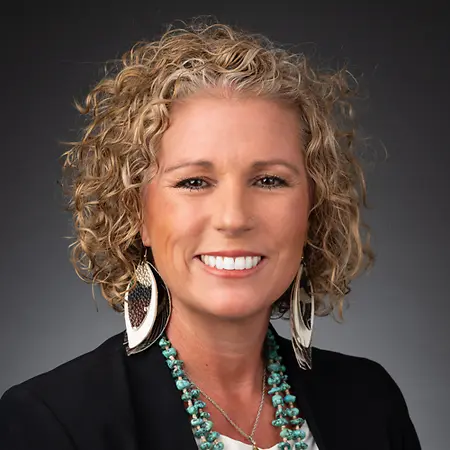
Sloane Wendell, PhD, PMI-PMOCP™, is Vice President – Mission Critical at Talley Riggins Construction Group, LLC, where she leads the strategic growth and execution of mission-critical construction programs supporting hyperscale data centers, AI and cloud infrastructure, nuclear facilities, advanced energy, and complex infrastructure projects across the United States.
She brings more than two decades of experience in engineering, construction, nuclear facilities, environmental operations, program management, and infrastructure development. Her previous leadership roles include positions with KALCON, Terracon, Urenco USA, and FEDITC – Federal IT Consulting. She has led large-scale capital programs, multidisciplinary engineering services, nuclear capacity expansion initiatives, and complex mission-critical construction programs.
Wendell holds a degree in Chemistry from Texas A&M University, a Master’s in Environmental Science and a PhD in Environmental Engineering and Science from The University of Texas at San Antonio. She is active in Women in Nuclear, Women in Construction, the Lubbock Texas A&M Association of Former Students, and IFMA. Her leadership philosophy emphasizes safety, accountability, transparency, communication, team development, client trust, and sustainable performance.
Her Interview
Ten minutes with Sloane
01What do you attribute your success to?
Hard work, dedication, goal-driven, being curious-always asking questions, bringing positivity to others, making a difference every day.
02What’s the best career advice you’ve ever received?
Don't stop advocating for what you believe in, never too late to follow your passion, the more you know the more you grow-continue education, certifications, and keep networking.
03What advice would you give to young women entering your industry?
I encourage young women entering the industry to be kind to themselves and give themselves grace. I also believe it is important to remain mindful of your health and recognize that personal well-being is an essential part of sustainable leadership and long-term professional success.
04What are the biggest challenges or opportunities in your field right now?
The industry is experiencing significant opportunities through the rapid growth of hyperscale data centers, AI infrastructure, nuclear energy, and advanced energy development. At the same time, major challenges include the skilled-trades shortage, safety and fatigue management, power availability, supply-chain constraints, and the complexity of coordinating large-scale mission-critical projects.
05What values are most important to you in your work and personal life?
Safety, integrity, accountability, transparency, quality, client trust, communication, teamwork, and personal well-being are central to my approach to leadership and professional life.
Her Content Hub
Articles by Sloane
I Never Wanted to Be One of the Guys.
Finding Your Voice and Leading With Authenticity in Male-Dominated Industries
You Do Not Need Permission to Use Your Voice
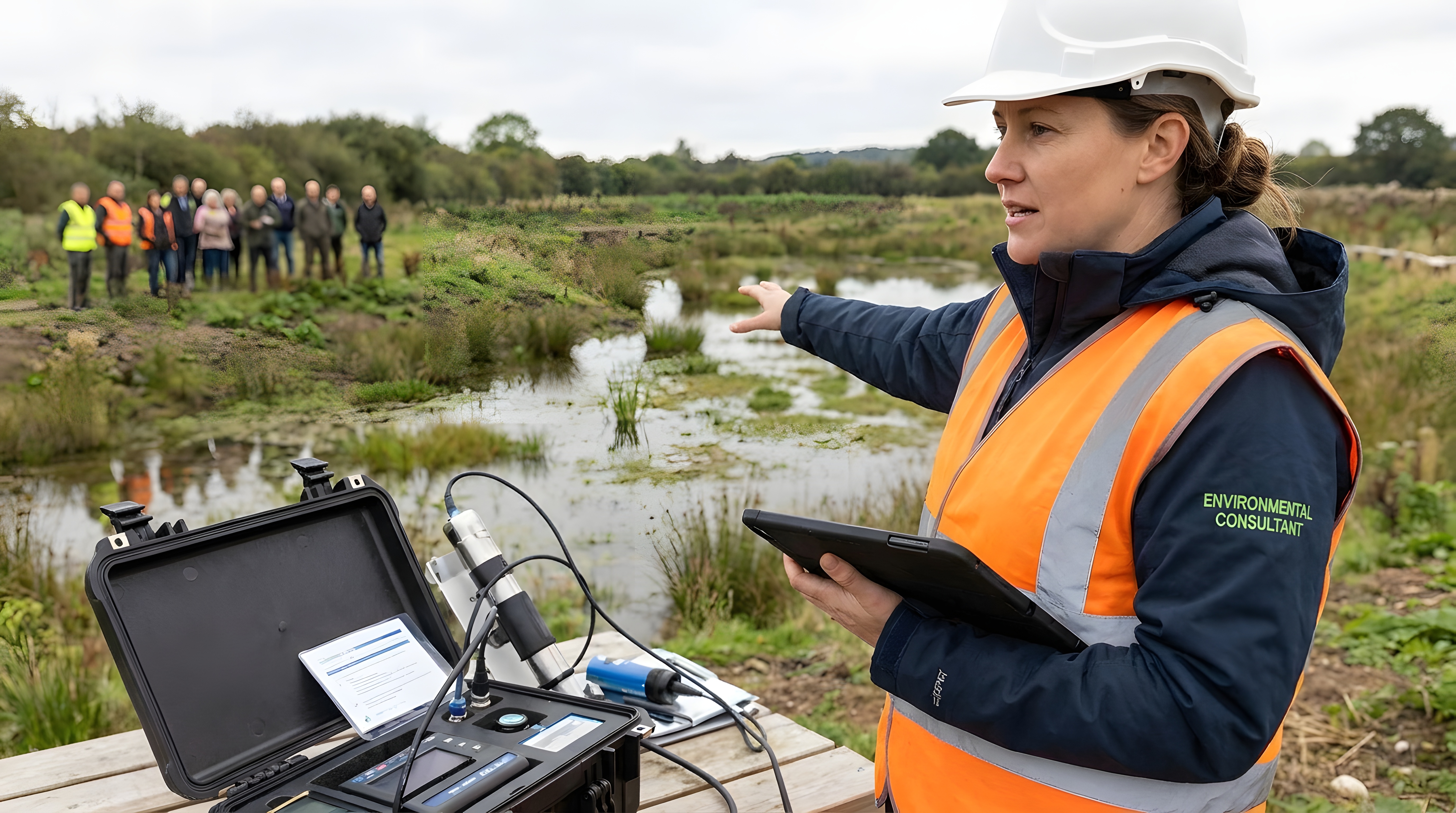
Early in my career, I was a young environmental consultant, and one of my clients was a retired Air Force chemist. He was brilliant, experienced, and, to a young woman trying to establish herself professionally, more than a little intimidating.
I was often the only woman sitting at the table. I can still remember him sitting across from me, glaring as discussions unfolded. When I offered an observation, an idea, or a recommendation, it was frequently dismissed. Eventually, I became afraid to speak.
That is difficult for me to admit now because anyone who knows me today would probably have trouble imagining me being afraid to voice an opinion. But I was.
I began wondering whether I simply did not know enough. Maybe if I had another degree, another credential, another level of technical expertise, my ideas would carry more weight. In fact, that experience became one of the reasons I decided to pursue my Ph.D.
Then came a meeting I have never forgotten.
We were gathered with a much larger group of subject-matter experts to discuss a remedial action. These were accomplished professionals with deep technical expertise, and the problem required a decision. I offered my recommendation.
This time, the room did not dismiss it.
The larger group of subject-matter experts evaluated the idea, discussed it, and ultimately endorsed the remedial approach I had recommended. My client had to get on board.
My voice had been heard.
The significance of that moment was not that I had proven him wrong. It was that I finally began proving something to myself: I belonged in the conversation.
Years later, after a career spanning environmental consulting, industrial and nuclear facilities, capital projects, construction, and now mission-critical infrastructure, I understand something that young woman at the conference table did not.
You cannot spend your career waiting for everyone in the room to decide that your voice deserves to be heard.
At some point, you have to decide that for yourself.
Competence Is the Best Credibility Strategy
Construction and technical industries have a way of stripping away titles and résumés. Eventually, somebody asks a question.
Why is the schedule slipping?
What is driving the cost?
What happens if this equipment does not arrive?
Who owns the risk?
What are we missing?
In that moment, credibility does not come from having the loudest voice in the room. It comes from knowing the work.
I learned early that preparation gave me something confidence alone never could. When I understood the drawings, the contract, the schedule, the field conditions, the people performing the work, and the consequences of the decisions being made, I did not have to prove that I belonged.
I could contribute.
There is enormous freedom in realizing that, especially for women.
Many women entering male-dominated industries feel pressure to establish credibility before they are given the opportunity to demonstrate it. That can create a temptation to become tougher, louder, less emotional, or more aggressive simply because those traits have historically been associated with leadership.
I tried versions of that, too.
Eventually, I realized that leadership does not require imitation.
You Do Not Have to Lead Like a Man to Lead Men
Some of the best lessons of my career have come from leading teams composed largely of men.
What I discovered is that people do not need their leader to look like them, sound like them, or behave like them. They need clarity, consistency, and accountability. They need someone willing to make difficult decisions, but also someone willing to admit when she does not know something.
Most importantly, they need to know that their work matters.
Construction can be extraordinarily demanding. People spend long hours away from their families. They work in extreme heat and cold. They solve problems under tremendous schedule pressure. Mistakes can cost millions of dollars, delay critical infrastructure, and, in some environments, put lives at risk.
Leadership in that kind of environment cannot simply be authority.
It has to be trust.
Trust is built in hundreds of small moments: showing up, asking good questions, listening to the people closest to the work, keeping commitments, protecting your team when appropriate, and holding them accountable when necessary.
None of those qualities belong to one gender.
Being the Only Woman Can Become an Advantage
There were certainly moments in my career when being a woman made things harder, but there have also been times when being different made me better.
When you are not automatically part of the prevailing culture, you observe it differently. You notice things. You question assumptions others may accept simply because “that is how we have always done it.”
You learn to read a room, understand how decisions are really made, and recognize how a seemingly simple question can expose the biggest risk on a project.
Some of the most important questions in business begin with “why.”
Why are we doing it this way?
Why does it take this long?
Why does it cost this much?
Why can we not approach it differently?
Industries like construction desperately need people willing to ask those questions.
That diversity of thought—not diversity for the sake of appearance—is where the real value lies.
Do Not Confuse More Credentials With More Permission
That early experience with my retired Air Force client taught me something else that took much longer to understand.
Like many high-achieving women, I responded to doubt by trying to become even more qualified: another degree, another credential, more technical knowledge, more proof.
Education absolutely made me more knowledgeable. Experience made me better. Technical expertise strengthened my judgment.
But none of those things gave me my voice.
I had to do that myself.
There will always be someone with more years of experience, another title, a louder opinion, or absolute certainty that they are right.
If you wait until you are the most qualified person in every room before you speak, you may spend your entire career waiting.
Know your work.
Prepare relentlessly.
Stay curious.
Respect experience.
But do not confuse humility with silence.
Our Industry Needs Every Good Leader We Can Find
This conversation matters even more today.
Construction, power, and mission-critical infrastructure are changing rapidly. The growth of data centers, artificial intelligence, electrification, and large-scale infrastructure is creating extraordinary demand for talent. At the same time, women remain significantly underrepresented across construction and many of the technical disciplines that support it.
That is not simply a women's issue.
It is a workforce issue, a leadership issue, and increasingly, a business issue.
The next generation of infrastructure will require more engineers, superintendents, project managers, estimators, executives, electricians, operators, and problem-solvers than our industry currently has.
Some of them will be women who have never considered construction because no one ever told them they belonged here.
We need to change that.
Not by convincing women that construction is easy. It is not.
Not by pretending bias no longer exists. It does.
But by showing women that difficulty and belonging are not mutually exclusive.
You can be challenged and still belong.
You can be underestimated and still be right.
You can be uncomfortable and still speak.
What I Would Tell the Young Woman Sitting at That Table Today
I would tell her not to spend too much energy wondering whether she belongs.
Learn the work and ask questions. Walk the jobsite. Talk to the superintendent. Understand the schedule. Read the contract. Know the numbers, and listen to the tradespeople actually building the project.
Find people who will tell you the truth instead of simply telling you what you want to hear.
And when you do not know something, say so—then go learn it.
Do not confuse arrogance with confidence.
Do not mistake kindness for weakness.
Do not believe you have to become harder simply because your industry sometimes is.
And do not shrink your personality to make someone else more comfortable with your authority.
There will probably be rooms where you are the only woman.
Walk into them anyway.
There may be people who dismiss you.
Speak anyway.
There may be moments when you question whether you are qualified enough.
Prepare, learn, and then contribute anyway.
Eventually, something interesting happens.
You stop waiting for permission.
You realize you were never asking for a seat at the table. You were building the experience, judgment, confidence, and voice necessary to influence what happened around it.
And that is where leadership begins.
Join Influential Women and start making an impact. Register now.