
A reflective piece exploring the hidden cost of constant achievement and usefulness, challenging high-achieving women to question whether their worth depends on productivity and inviting them to discover their value beyond capability.
Her Story
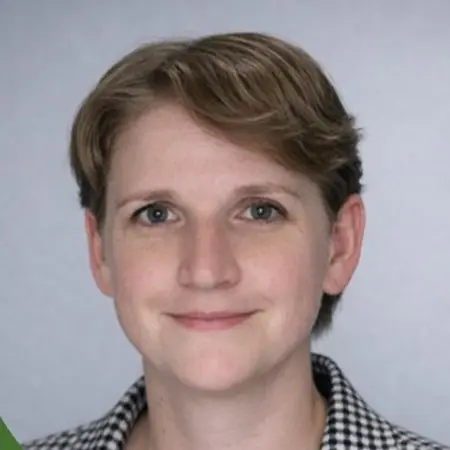
About Stacy
Stacy McClenahan is a healthcare technology leader with more than 20 years of experience in enterprise imaging, clinical systems, PACS, and program leadership. She began her career at a radiology front desk at 19, showed an early talent for technology and problem-solving, and moved into systems administration and then across complex healthcare environments. She has managed PACS systems that handle more than 10 million imaging exams a year and has led work in clinical applications, system integrations, and infrastructure. Her ability to connect clinicians and technical teams has been a defining strength of her career.
At Providence, Stacy serves as Principal Engineering Program Manager, leading a multimillion-dollar technical program across engineering, finance, facilities, and networking. Her work includes building governance and risk frameworks, setting performance metrics, advising senior executives, and improving operational efficiency. Previously at Philips, she managed enterprise imaging operations and served as technical advisor to large healthcare organizations. At Kaiser Permanente and Nicholas Noyes Memorial Hospital, she administered PACS, EMR, and radiology systems, led DICOM and HL7 integrations, trained clinical staff, and optimized workflows. Her results include a 55% reduction in patient-impacting issues and 99.9% system uptime in prior roles.
Stacy holds a Bachelor of Science in Health Information Management from Western Governors University and an Associate of Arts in Information Technology from the University of Phoenix. She is a Project Management Professional (PMP) and a member of ABII, AHIMA, and PMI, and she is retaking the Certified Imaging Informatics Professional (CIIP) exam.
Stacy leads with curiosity, empathy, and a commitment to building teams that can succeed without her. She believes healthcare technology is ultimately about people. She is passionate about patient safety, sustainable problem-solving, and helping women entering healthcare IT ask questions, keep learning, and make their voices heard.
Her Interview
Ten minutes with Stacy
01What do you attribute your success to?
My dad taught me that everything is connected. The land, the people, the systems we build, and the choices we make all depend on each other, and no relationship is one-way. That’s how I was raised to see the world, and it’s how I approach my work. When a problem comes up, I try to see the whole picture first: who it touches, what it affects down the line, and what it will cost to fix it properly. Problems rarely live in one place, so I don’t treat them that way. I look for the relationships that hold a system together and work to keep them healthy, because I’ve learned that systems that depend on one person to keep them running eventually fail. I’d rather build something that lasts, where everyone involved has a stake in it and can carry it forward without me.
02What’s the best career advice you’ve ever received?
A manager told me in my early twenties that I was a terrible people leader. I was an efficient individual contributor, but I didn’t let people fail. I just did the work myself. He said people learn by failing and being coached through it. That hit hard, and it changed how I lead. I had to learn where healthy independence ends and codependence begins, because an effective leader lets people struggle, then stays close enough to help them get back up.
03What advice would you give to young women entering your industry?
Ask questions, even the ones you think are silly. Make eye contact and treat people as people. Doctors aren’t more important than anyone else in the room. Stay curious, don’t assume a title means someone knows better, and say so when something doesn’t feel right. Treat everyone, from the physician to the nurse, as a peer. We’re all in this together.
04What are the biggest challenges or opportunities in your field right now?
Clinical informatics faces a consistent challenge: the gap between clinical and technical teams. Clinicians who have spent years in surgery, cardiology, or orthopedics should not have to understand what engineering can build, and engineers should not have to understand the clinical work. The feedback that passes between them is often too vague to act on, and the two sides end up talking past each other. That gap is where I do my best work.
A related problem is knowing where data reconciliation stops being a data problem and becomes a privacy problem. Metadata is captured at the point of care by licensed clinicians, such as radiologic technologists and phlebotomists. Once that data moves into a warehouse, who is responsible for it? And if it needs correcting, should a licensed clinician be the one to correct it? I’ve written about these questions in my coursework, and I think they need answers before the data is trusted for anything else.
05What values are most important to you in your work and personal life?
Curiosity and empathy matter most to me, in my work and in my life. I can teach almost any technical skill, but I can’t teach someone to be curious or to care about the person across the table. I try to ask good questions and understand the problem before I start proposing solutions. I put myself in other people’s shoes, even when that means understanding a frustrated physician, and I listen to how someone feels, not only to what they say. Without those, you can’t be an effective translator between people who speak different languages.
Her Content Hub
Articles by Stacy
The Agreement Under Our Competence
Redefining your worth beyond usefulness and learning that being wanted means more than being needed.

We are good at everything. We read the whole brief, spot the question nobody else saw coming, and fix the thing before anyone notices it was broken. People call us reliable and strategic, the one you can count on. We earned that.
But underneath the praise is an old agreement most of us never signed on purpose: If I am useful enough, I won’t be sent away.
It shows up in over-preparation. We build the deck, the backup deck, and the appendix for the question we’re afraid of. We rehearse the hard conversation in the shower. We call it excellence, and sometimes it is. Often, it’s about leaving nothing to point at.
It shows up in the yes. The extra project, the late call, the favor that quietly becomes a job. Each yes feels like proof we belong. Each one also teaches the people around us that our time is unlimited and our needs can wait.
And it shows up in the exhaustion right after a win. The promotion lands, the number moves, the room applauds, and we still feel on call. The agreement never said what happens once we are finally enough. It only said to keep going.
Here is what I’m learning: Being useful is not the same as being wanted. Being needed is not the same as being safe. Nobody is going to send us away for resting, for saying no, or for being a little less impressive on a Tuesday. The people worth keeping will stay.
We don’t have to become less capable. We have to stop treating capability as a ticket we must keep renewing.
So try one small test this week. Say no to something you would normally do. Leave one thing unprepared on purpose. Then notice who stays.
To every high-achieving woman who has wondered whether she’d still be loved if she stopped being useful: I’ve been asking that question too. Let’s find out together.
Join Influential Women and start making an impact. Register now.