
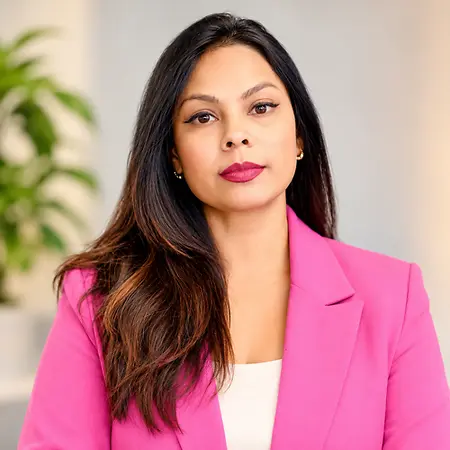
A powerful reflection on identity, resilience and reinvention after a life-altering medical crisis. Exploring how women can redefine success beyond achievement and embrace transformation with compassion and courage.
Her Story
About Sudipta
Sudipta Chakraborty is a healthcare technology and business transformation leader, currently Director of Customer Success at PrimeVital, a health technology startup. With more than 20 years of experience across healthcare, financial services, information technology, and global payments, she brings deep expertise in product and program management, data governance, process improvement, and organizational transformation. Her career includes the World Health Organization in Beijing, where she managed health infrastructure and program administration, including aging policy analysis and universal health coverage financing analysis for maternal and child health. Earlier in her career, a grant proposal she wrote helped secure over $1 million in funding for sustainable agriculture in drought-prone central India.
She holds an MBA in Finance from Xavier’s Institute of Management and a Master’s in Information Technology from Manipal Academy of Higher Education, and is a certified Lean Six Sigma Black Belt and Product Manager from The Product School. Sudipta turns technical and business knowledge into practical solutions that improve efficiency, strengthen data quality, and support better service delivery.
A public speaker and thought leader, Sudipta has been invited to speak at platforms including The Expat Woman’s Women in Tech event, the Stanford monthly leadership meeting, and Project Management World, among many others. She also leads the Lean In Circle East Bay Chapter, which supports and empowers immigrant women to grow professionally, helping them build confidence, connections, and careers in a new country.
A committed patient advocate, she serves as a Patient & Family Partner Advisor with Stanford Health Care’s Tri-Valley Patient & Family Advisory Council, working alongside clinicians and leadership to strengthen patient-centered care, safety, and experience. Her mission is shaped by her own survival of septic shock and a coma, followed by a prolonged hospitalization and disability. It led her to sepsis awareness work, including contributions to the Stanford Sepsis Committee and the development of a QR code-based symptom checker. She is a former board member of Culinary Angels, which supports people facing serious health challenges through nutritious meal programs.
Sudipta has been honored with a Certificate of Special Congressional Recognition (2018) for her service to the East Bay community and advancement of women, and the Monali Jain Foundation award for social entrepreneurship and women empowerment (2019). Having restarted her career multiple times across countries and industries, she is defined by resilience, adaptability, and the confidence to take on challenges beyond her comfort zone.
She is passionate about healthcare, artificial intelligence, digital health, and human-centered innovation, and is exploring agentic AI, research agents, and digital twins to speed practical technology applications. Through leadership, public speaking, patient advocacy, and a book about her experiences in the works, Sudipta empowers women, improves healthcare outcomes, and encourages others to recognize their potential and never undersell their value.
Her Interview
Ten minutes with Sudipta
01What do you attribute your success to?
I attribute my success to three things: resilience, community, and a willingness to start over.
First, resilience. I have restarted my career several times, across countries and industries, from grant writing in rural India to the World Health Organization in Beijing to healthcare and technology in the United States. Surviving septic shock and a coma, followed by a long hospitalization and a disability, taught me that setbacks do not decide who you are. What you do next does.
Second, community. I did not get here alone. Mentors, colleagues, and the women in my Lean In Circle East Bay Chapter opened doors and gave me confidence when I needed it. Now I try to do the same for immigrant women who are rebuilding their careers in a new country. Whatever recognition I have received, including from a Member of Congress and the Monali Jain Foundation, belongs to the people who walked alongside me.
Third, a willingness to take on challenges beyond my comfort zone. I said yes to roles I did not feel fully ready for, and I kept learning. Success, for me, is not a straight line. It is staying curious, building real connections, and never undervaluing what you bring to the table Each experience has taught me to remain positive, keep learning, and believe in my ability to overcome challenges. I am proud of how I have continually rebuilt my professional identity and used those experiences to grow both personally and professionally.
02What’s the best career advice you’ve ever received?
The best career advice I’ve received came from my mentor, Nandita Bakshi, the former CEO of Bank of the West. She reminded me that it is easy to get caught up in climbing the corporate ladder, but a career is about the journey, not just the destination. She told me that one of the most important things is to be happy and fulfilled in your work.
That stayed with me because I have restarted my career several times, across countries and industries, and each time I could have chased the next title. Instead, I asked whether the work was meaningful and whether I was growing. That is what led me from grant writing in India to the World Health Organization in Beijing, and then to patient advocacy at Stanford and my work empowering immigrant women through Lean In Circle East Bay Chapter.
Fulfillment is not a luxury. When you love the work, you do it better, and you have more to give the people around you. I share that advice with every woman I mentor.
03What advice would you give to young women entering your industry?
My advice to young women entering healthcare and technology comes down to five things.
First, learn the language of data and money. Budgets, metrics, and clear plans earn you a seat at the table, and they keep you there. Early in my career, a grant proposal I wrote helped secure over a million dollars for a project in rural India. Nobody asked about my age. They asked whether the plan worked.
Second, stay close to the people you serve. In healthcare, that means patients. My work with the Patient and Family Advisory Council at Stanford Health Care Tri-Valley reminds me that technology only matters if it makes someone’s care safer and easier.
Third, find mentors and become one. Mentors like Nandita Bakshi taught me that a career is about the journey, not just the destination, and that being fulfilled in your work matters most. Then pass it on.
Fourth, be visible. Share your work, speak up, and put your name on your ideas before you feel ready. Visibility is how other women learn what is possible.
Finally, do not be afraid to restart. I have rebuilt my career across countries and industries, and every restart made me stronger. A winding path is not a weak one. Never undersell your value.
04What are the biggest challenges or opportunities in your field right now?
For me, the biggest challenge is rejection and the fear of failure. When you bring a new solution to healthcare providers, you hear a lot of ‘no,’ or no answer at all. In the beginning, that was hard to take personally.
But it has also been my biggest opportunity. Every ‘no’ taught me something. Sitting down with providers, clinicians, and staff, I learned how healthcare really works day to day: how stretched their time is, how much paperwork and administrative work they carry, and how hard it is to adopt something new when patients are waiting. I would not have learned that from a desk. I learned it by showing up and listening.
That is why I see rejection as research. It shows me what providers actually need, not what I assumed they needed, and it helps me build more practical solutions.
The wider opportunity in our field is bringing technology, including AI and digital health, together with human-centered care, so that clinicians spend less time on administrative tasks and more time with patients. The people who will lead that change are the ones who listen first and keep learning, even after a ‘no.’
05What values are most important to you in your work and personal life?
I choose to live with integrity, purpose, compassion, and courage.
I take responsibility for my life, honor my worth, and continually evolve.
I use my knowledge, experience, and voice to make a meaningful difference.
I nurture relationships through love, appreciation, and understanding, without abandoning myself.
I choose authenticity over approval, growth over stagnation, and inner peace over unnecessary conflict.
I want to leave people, relationships, and systems better than I found them.
Her Content Hub
Articles by Sudipta
I Have Rebuilt Myself More Than Once. And Each Time, I Met a Different Version of Me
Downloading Version 2.0
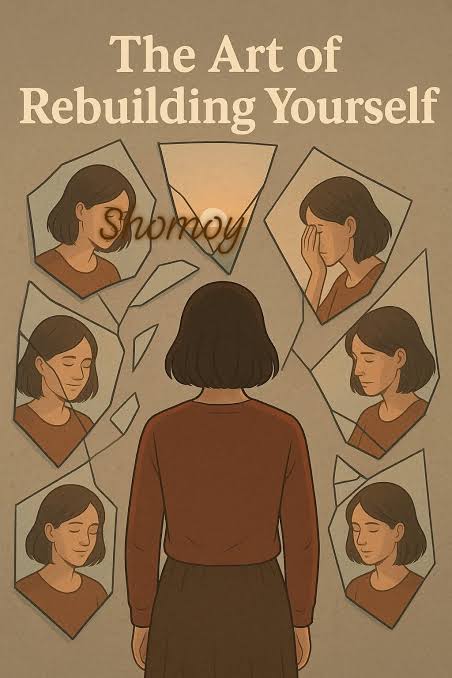
There are moments in life when everything you have worked so hard to build suddenly feels unfamiliar. Not necessarily because you failed, but because life had a different plan.
For years, I defined myself through the things I had accomplished. I was a technology leader, a project management professional, an entrepreneur and a woman who loved creating experiences, dancing, photography and exploring the world. I had built a career, pursued ambitions, created opportunities and taken pride in being someone who could make things happen.
Like many women, particularly women of color navigating professional and personal expectations, I learned to be adaptable, ambitious and resilient. I learned to carry responsibilities, prove my capabilities and keep moving forward.
But I never imagined that one day I would have to rebuild almost every aspect of my life.
In March 2024, a surgical procedure led to a life-threatening medical crisis. What followed was an experience that fundamentally changed my relationship with my body, my identity, my ambitions and my understanding of what it means to live.
The woman who once approached life with boundless energy suddenly had to relearn the simplest things. My physical recovery was only one part of the journey. The emotional and psychological rebuilding was an entirely different challenge.
I had to confront a question I had never seriously considered before:
Who am I when I can no longer do the things that once defined me?
When the identity you built no longer fits
We often celebrate women for their achievements. Their titles, businesses, leadership positions, professional milestones and ability to balance multiple responsibilities become markers of success.
But how often do we talk about what happens when those markers disappear?
For women of color, professional identity can carry additional dimensions. We may find ourselves navigating expectations around competence, cultural identity, belonging and representation while building careers in environments where our experiences are not always understood.
I have come to appreciate that professional credibility and personal identity are two very different things.
A title can change. A career can pause. A business can end. Circumstances can take away the routine and independence we once considered permanent.
But our worth should never be measured by how productive we are or how much we accomplish.
I had to learn that lesson personally.
Rebuilding my physical health required discipline and patience. Rebuilding my confidence required compassion. Rediscovering my identity required accepting that I did not have to become the exact person I had been before.
And perhaps that was one of the most important lessons of my life: I was allowed to evolve.
The invisible burden of always being strong
There is something deeply complicated about being perceived as a strong woman.
People admire your ability to manage challenges. They appreciate your determination. They assume you will figure things out.
Sometimes, without realizing it, we begin believing that asking for help is a weakness.
I have experienced the difference between appearing strong and actually feeling strong.
There were moments when progress was painfully slow. Moments when I had to accept limitations. Moments when the future looked very different from the one I had imagined.
I learned that resilience is not about pretending that everything is fine.
It is about acknowledging that something is difficult and choosing to take the next step anyway.
It is also about allowing yourself to rest, to receive support and to recognize that vulnerability does not diminish your strength.
We need to change the way we celebrate resilient women. Instead of simply applauding how much they can endure, perhaps we should create environments where they do not have to endure so much in the first place.
Rebuilding is not going backward
One of the most difficult misconceptions about starting over is that it somehow means losing progress.
I no longer see it that way.
My journey back into professional life has involved rediscovering my place in technology and healthcare, exploring new opportunities, and finding ways to bring my professional experience together with my lived experience as a patient.
My relationship with healthcare changed profoundly. What I once understood primarily through professional and technological perspectives, I began understanding through the eyes of someone who had experienced the vulnerability of being a patient.
Today, patient advocacy and healthcare improvement have become deeply meaningful parts of my journey.
I believe technology should make healthcare more accessible, human and responsive. I believe patients deserve to be heard. I believe innovation must consider the people it is intended to serve, including those whose voices are often underrepresented.
These are not just professional interests anymore. They are connected to something I have lived.
Perhaps this is what reinvention really means: bringing everything you have learned into the next chapter, even when that chapter looks nothing like the one you originally planned.
What rebuilding has taught me
- I have learned that identity is not static.
- I have learned that ambition can coexist with vulnerability.
- I have learned that asking for help does not make me less capable.
- I have learned that my body deserves compassion, not criticism.
- I have learned that there is a difference between being valued for what you do and being valued for who you are.
- And most importantly, I have learned to be grateful without romanticizing hardship.
I would never suggest that suffering is necessary for growth or that every difficult experience has a hidden gift waiting to be discovered. Some experiences are simply painful, unfair and life-altering.
But we do have the ability to decide what we carry forward from them.
I carry forward greater empathy, a deeper appreciation for life, a stronger sense of purpose and a desire to contribute to something bigger than my own achievements.
I am grateful for the woman who built her career, the woman who pursued her dreams, the woman who struggled, and the woman who found the courage to begin again.
They are all part of me.
A question for every woman who has had to start again
How many of us are still measuring ourselves against a version of who we used to be?
The woman we were before motherhood. Before a career setback. Before illness. Before migration. Before a relationship changed. Before an unexpected responsibility or a life event shifted everything.
What if we stopped trying to return to that version of ourselves?
What if we allowed ourselves to become someone new?
I no longer believe that success is simply about climbing higher, achieving more or proving that we can overcome everything life places in our path.
Sometimes success is finding your voice again. Sometimes it is reclaiming your confidence. Sometimes it is having the courage to imagine a future you never planned for.
I have rebuilt myself more than once. I am no longer afraid of beginning again. Because every time I rebuild, I bring with me a little more wisdom, a little more compassion and a much deeper understanding of who I am.
And perhaps that is the greatest achievement of all.
I am not the woman I was before. I am not trying to be. I am grateful for the woman I am becoming.
Join Influential Women and start making an impact. Register now.