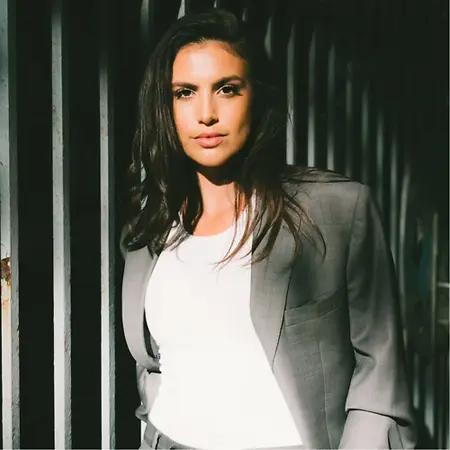
Her Story
About Summer
I started my career as an opera singer after studying musical theater and classical voice at the Boston Conservatory, where I trained my whole life. Once I got out of school, I began auditioning, but I realized that I was much more attracted to the other side of the performance. Being on stage was great, but I had a lot more fun and felt much more interested in running the lighting board, coordinating the timing, making sure the stage looks good, making sure the rigging was accurate. That's what got me into the field initially in my late teens, around 19 or 20 years old. For the past 7 years, I've been doing live event production. I've been the director of audio-visual sales for 2 years now with Casa Cipriani, New York, where my main goals were coordinating pricing, dealing with clients and producing very high-profile private events. I would call myself a producer, essentially - I'm the person that gathers all the details for the production, gets you your best crew, prices it out for you, and makes sure it goes perfectly. My job is to take all the communication from my clients and ensure that all of the details get handled - how many feet from the stage, how high is the rigging, what kind of lights, how we're programming the lights. I take all of that information from the client, tell them to not worry about it, and I worry about it. I spend my time directing the crew and ensuring that we're staying on budget, we're staying on time, and all of the milestones get hit. One of my most notable achievements was producing the Chopard press preview last fall - the Chopard High Jewelry Ice Cube collection in September. I produced that on my own and was fully responsible for the production timelines, booking the talent, making sure the food showed up on time, working with the executives of the brand to make sure we were delivering the aesthetic they needed for the collection, and working with the AV team to make sure all the cues and the music went well. I'm actually leaving to pursue a different role now, in a different field.
Her Interview
Ten minutes with Summer
01What do you attribute your success to?
I would say a couple different things, but one of them is knowing what failure feels like. Once you know that feeling, it drives you to want to succeed, kind of in any way possible. But also, my ability to reset very quickly. As I'm sure you can imagine, in a live production, maybe 5 minutes before doors, an audio track stops working, or a light goes out, and you just have to be the calmest person in the room, ready to fix the problem immediately. I think that my ability to do that is actually what's made me successful in what I do. I let the client freak out, and then I just focus on fixing it immediately. It's like a rat race until the doors open and the lights go on, but once the event happens and it goes smoothly and you put out the little fires along the way, it's the biggest sigh of relief afterwards.
02What’s the best career advice you’ve ever received?
The worst thing anybody will tell you is no. It's very simple. I think especially going out and getting your own clients to produce for, which is essentially what I'm doing now, the worst thing that somebody will say to you is no, we're not looking. So you might as well just go and throw yourself into it and try.
03What advice would you give to young women entering your industry?
This obviously is a male-dominated industry, and it's changing rapidly, but I would say, be curious. Ask questions. Know how to do multiple different things on set. I think the reason that I learned as much as I did, and I was able to come into the role that I'm in, was mostly because I sat with the cameraman and I asked him questions about the camera, or I sat with the stage hand and I asked him questions about the stage. Be curious, and also take nothing personally. These events and these advancement processes, they get very intense, sometimes they get very stressful, there's a lot of money at stake, and I think remaining, again, the calmest person in the room, not taking anything personal, being ready to deliver, is probably the best piece of advice I would give.
04What are the biggest challenges or opportunities in your field right now?
I would say one of them is that production is a people-driven field - live event production really depends on the people you have there making it happen. I think that sometimes there's a disconnect between large companies and skilled engineers, where a skilled engineer will show up and say they require X amount of money per hour, and the company's like, we should do it for less. Me being the production professional is like, you do it for less, maybe that person is not going to know how to fix your audio 5 minutes before the doors open. But you pay a bit more for this very skilled professional, and you won't have to think about a thing. So I would say there's a bit of a value trade-off happening with people right now in production. And then I would also say technology is advancing at an insane rate, and keeping up with that, and also keeping up with that cost-wise - I think we all feel very lucky that AI and other very high-level LED walls and things are coming out, but at the same rate, it's almost like clients and companies can't keep up with the demand of how expensive these things might be, of how unique they might be. I think we're at a place where clients are trying to catch up to everything that's changing.
05What values are most important to you in your work and personal life?
I would say fulfilling promises - doing what you say you're going to do. I'm very close with my family, and I do work in a very relationship-driven field, so keeping your word is essentially what drives the success of a production, and also, for me, what drives the success in my family. We all make agreements and fulfill the obligations that we have for each other. So I would say that's a very important value to me.
Join Influential Women and start making an impact. Register now.