
A powerful career story about climbing from test engineer to leading Quality Intelligence in banking, revealing how mentorship, resilience, and lifting others transforms individual success into industry change.
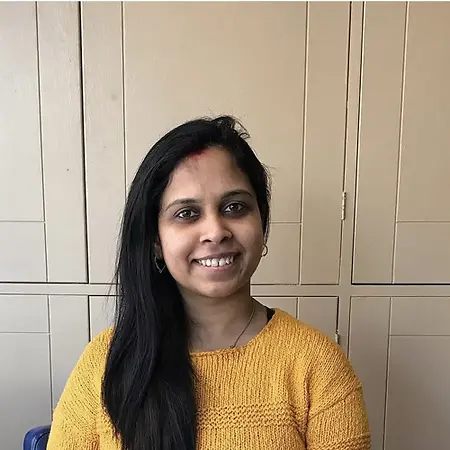
Influential Woman · IT
Tanu Shri
Leading banking and financial services portfolio from Quality Intelligence practice, Zensar Technologies
Maple Shade, NJ
15Years experience
1Article published
Her Story
About Tanu
TanuShri is a leader in the IT industry with 15 years of experience, currently based in New Jersey where she leads the banking and financial services portfolio from the Quality Intelligence practice at an MNC. In this role, she collaborates with CXOs and sales teams to guide clients on leveraging AI for their testing processes, transitioning from traditional methods to intelligent, adaptive approaches through shift-left strategies that help mitigate defects, compliance risks, fraud, and production issues. TanuShri began her career after earning a bachelor's degree in chemical engineering and gained deep expertise working on banking accounts such as Capital One, TD Bank, and Citibank, which informed her transition two years ago into direct client-facing work focused on solving real banking challenges. She holds Scrum Master and Product Owner certifications from Scrum Alliance, Tosca certifications, and multiple AI certifications from Anthropic, Google, and Microsoft. TanuShri is also a member of Women in Tech and has mentored junior team members while drawing guidance from her own early mentor in the field.
Her Interview
Ten minutes with Tanu
01What advice would you give to young women entering your industry?
Be fearless in what you think and putting that thought on the table. Don't work for credits. Work whatever you feel like the best. Nobody taught me this, but I'm learning the hard way.
Her Content Hub
Articles by Tanu
Lift as You Climb: What I Learned Growing From Tester to Leader, and Why I Hold the Door Open
From test engineer to quality leader: one woman's journey lifting others as she climbs.

When I started my career in 2011, I didn't have a five-year plan. I had a degree, a first job as a test engineer, and a quiet determination to be good at what I did.
I didn't know I was standing at the bottom of a ladder. I only knew the next rung: learn this tool, finish this project, earn this person's trust. It's only now, looking back across more than 15 years and three countries, that I can see the climb for what it was.
And I can see something else, too. I never climbed alone. At every turn, someone made room for me. Today, the most meaningful part of my work isn't how far I've come. It's how many women I can help climb after me.
The Climb
My first years were hands-on: writing test cases, finding defects, and learning how software really breaks. It wasn't glamorous work, but it taught me to notice details others missed and to ask, "What could go wrong?" before anyone else did.
Then banking found me. [Add the moment: the first banking project you joined and what struck you about it.] I realized that behind every screen was something deeply human: someone's salary arriving on time, a family's mortgage, a small business making payroll. A defect in banking isn't just a bug. It's a broken promise to a real person. That sense of responsibility pulled me in, and it has never let go.
From there, the rungs came one at a time. I moved from testing into managing teams, and from managing projects into leading large programs across India, the United Kingdom, and the United States. Each move asked me to grow in a new way: to lead people older and more experienced than me, to adapt to new cultures, and to explain technical risk to business leaders in plain language.
Today, I lead a Quality Intelligence practice for banking and financial services, helping institutions use AI to release technology with trust and confidence. The young test engineer I once was wouldn't have imagined it.
What Nobody Told Me About Growing
Looking back, a few lessons stand out. I wish someone had told me these earlier.
Good work doesn't speak for itself. For years, I believed that if I delivered, I'd be noticed. Sometimes I was. Often, I wasn't. I had to learn to share my results, ask for the role I wanted, and say, "I led this" instead of "we did this."
You won't feel ready, and that's fine. Every big step I took, I took before I felt fully prepared. [Add a moment when you said yes before you felt ready.] Confidence came after the leap, not before it.
Being the outsider is a strength. Moving across countries, I was often the newest person, the only woman, or the only one with a different accent in the room. It forced me to listen harder, adapt faster, and build trust deliberately. Those became my greatest leadership skills.
Keep learning, especially when it's uncomfortable. Technology keeps reinventing itself. Today, it's AI. The women who learn early don't just keep up; they get to shape what comes next.
Lift as You Climb
No one climbs alone. Somewhere along the way, someone saw potential in me before I fully saw it myself. [Add your mentor or sponsor: who they were and the door they opened for you.] They didn't just advise me. They put my name forward in rooms I wasn't in yet. That's the difference between mentorship and sponsorship, and it changed my career.
I made a promise to myself to do the same. Here's what lifting others looks like for me in practice:
- Say their name in the room. When an opportunity comes up, I recommend the women on my teams by name, even when they haven't asked.
- Give the stretch assignment. I hand women the visible, challenging work, and then I back them up.
- Make the unwritten rules written. Many career rules are never spoken aloud. I explain how promotions, pre-sales, and client trust actually work.
- Share the credit loudly. When my team succeeds, I make sure leaders know exactly who did the work.
- Be available. A 20-minute conversation can change someone's next five years. I keep my door and my calendar open.
Lifting others doesn't slow your own climb. In my experience, it's what makes the climb worth it, and it builds teams that are stronger, more loyal, and more creative.
To the Woman on the First Rung
If you're early in your career, maybe the only woman on your team, maybe unsure where the ladder leads, here's what I want you to know:
Your curiosity is an asset. Your questions are valid. Your voice belongs in the room, even when it shakes. Take the stretch role. Ask for the promotion. Find someone who will say your name when you're not there.
And when you reach the next rung, look down. Someone is standing where you once stood. Reach back, offer your hand, and lift.
That's how we change an industry: not one woman at the top, but many of us, climbing together.
Join Influential Women and start making an impact. Register now.