
A powerful manifesto challenging toxic humility culture, celebrating authentic self-worth, and empowering readers to embrace their accomplishments without shame or apology.
Her Story
About Taylormarie
TaylorMarie Capasso is the Founder of Anchored Hearts Coaching, a coaching practice based in Caldwell, Texas, dedicated to helping individuals navigate personal growth, relationships, wellness, and life transitions. With approximately 10 years of experience spanning healthcare, behavioral health, rehabilitation, and life coaching, she brings a compassionate, practical, and real-world perspective to her work. Her professional background includes serving as a certified hemodialysis technician, rehabilitation specialist, and life coach, giving her valuable experience supporting individuals through challenging and vulnerable circumstances.
Through Anchored Hearts Coaching, TaylorMarie works with children, teens, adults, parents, couples, and individuals, including neurodivergent clients and people managing chronic health conditions. Her areas of focus include confidence and wellness, behavioral and mental wellness, relationships, family dynamics, ADHD support, and life transitions. She takes a personalized, judgment-free approach, using active listening, motivational interviewing, trauma-informed care, and practical strategies to help clients identify barriers, strengthen coping skills, establish healthier routines, and make meaningful progress toward their goals.
TaylorMarie has pursued foundational studies in psychology and medical terminology through college-level coursework during high school and continued her education through four years of study at Bryan Stratton College and Erie Community College. She earned her Certified Professional Life Coach credential through Transformation Academy and remains committed to ongoing professional development. In addition to her coaching practice, she is currently authoring a book designed to share practical resources and insights drawn from her professional experiences. Through her work, TaylorMarie strives to empower people to recognize their strengths, build confidence, and create lasting, positive change in their lives.
Her Interview
Ten minutes with Taylormarie
01What do you attribute your success to?
I attribute my success to a combination of perseverance, empathy, professional experience, and the willingness to turn challenging experiences into opportunities to help others. After spending seven years in behavioral health supporting neurodivergent children and teens, I drew on both my professional expertise and personal experiences to establish Anchored Hearts Coaching, creating a supportive space where clients of all ages can feel seen, heard, and empowered. Over the past two years, I have built more than 5,000 coaching hours while continuing to expand my knowledge and develop resources, including a specialized course for postpartum women and an interactive book featuring practical workshops. Most importantly, I believe success comes from trusting yourself, embracing each season of life, and having the courage to pursue your vision even when others may not understand it. I encourage others to take the next step, build their dreams one decision at a time, and recognize that their current circumstances do not define the possibilities ahead.
02What’s the best career advice you’ve ever received?
Always be open for feedback. Keep educating yourself, and read, and keep learning. Your knowledge and experience is your power. Conquer that voice in your head that is telling you that you are not capable or qualified, because if you do not take that risk, you are going to be living with the thoughts of "what if," "what could have been?" "Why did I hold myself back?" No matter the doubt or fear - know your self-worth, know that you are capable and you can achieve it by learning every step of the way. Do not take failure as a loss but a stepping stone and learning achievement. You got this!
03What advice would you give to young women entering your industry?
My advice to young women entering this industry is to never confuse the season you are in with who you are. Your current circumstances do not define your potential, and your present chapter is not your final one. Do not wait for permission or for others to validate your vision. Have the courage to take the leap, even if you can only move forward one decision at a time, and trust yourself throughout the process. Believe in your abilities, embrace growth, and remember that you have the power to create a future that reflects your goals and purpose.
04What are the biggest challenges or opportunities in your field right now?
As a coach, you are a full time marketer as well, constant promoting yourself on social media and all kinds of platforms out there. Finding good leads that are a good fit for you and them. But another big challenge I have seen recently in my private practice is that people mistaken coaching for therapy.
Coaching and therapy can look similar from the outside because both involve meaningful conversations, active listening, goal-setting, reflection, and helping someone create positive change. That overlap is exactly why people sometimes assume that a life coach is essentially providing therapy.
But coaching and therapy are not the same profession, and they do not have the same scope of practice.
Therapy is a clinical mental health service provided by a qualified, licensed mental health professional. Therapy can involve assessment, diagnosis, and treatment of mental health conditions, trauma, and other psychological concerns.
Coaching is generally non-clinical and future-focused. A coach helps a client identify goals, explore options, develop strategies, build accountability, strengthen skills, and move toward desired personal or professional outcomes.
The distinction becomes especially important when a client presents with concerns that require clinical care.
A coach should not diagnose a mental-health disorder, provide psychotherapy, treat a psychiatric condition, conduct a clinical assessment, or represent coaching as a substitute for mental-health treatment. Those activities may fall outside a coach's training, credentials, and legal scope of practice, depending on the jurisdiction and circumstances.
That does not mean coaches cannot work with people who have mental-health diagnoses. A person receiving therapy may also choose to work with a coach on appropriate goals such as routines, accountability, confidence, career development, relationships, organization, or personal growth. The key is staying within the coach's actual competence and clearly separating coaching from clinical treatment.
A responsible coach also needs to recognize when referral is the appropriate intervention.
If someone is experiencing a mental-health crisis, suicidal thoughts, psychosis, severe impairment, abuse, or symptoms requiring clinical evaluation, the coach should not attempt to become the person's therapist. The appropriate response is to follow the coach's ethical and emergency protocols and connect the person with qualified professional or emergency support.
Ultimately, knowing what is outside your scope is just as important as knowing what is inside it.
Being a good coach isn't about trying to solve every problem a client brings through the coaching relationship. It is about knowing your boundaries, practicing ethically, recognizing your limitations, and making the client's wellbeing the priority.
Coaching doesn't have to be therapy to be powerful.
Coaching has its own value and staying within its scope protects both the client and the coach.
05What values are most important to you in your work and personal life?
I believe that my coaching values has a lot to do with why my family is so successful. Why my husband and I have such a great relationship and its petty but it has been 5 going on 6 years together and we are still in that honeymoon stage it's ridiculous lol, and my children have so much trust in us, that they are able to communicate with us and express feelings and emotions properly. They believe in themselves and want to achieve great things and be independent and have goals and work hard. Ya, I would have to say my work has a positive impact on my personal life.
Her Content Hub
Articles by Taylormarie
Fuck Being Humble
Reclaiming Your Worth: Why True Confidence Means Refusing to Shrink Yourself
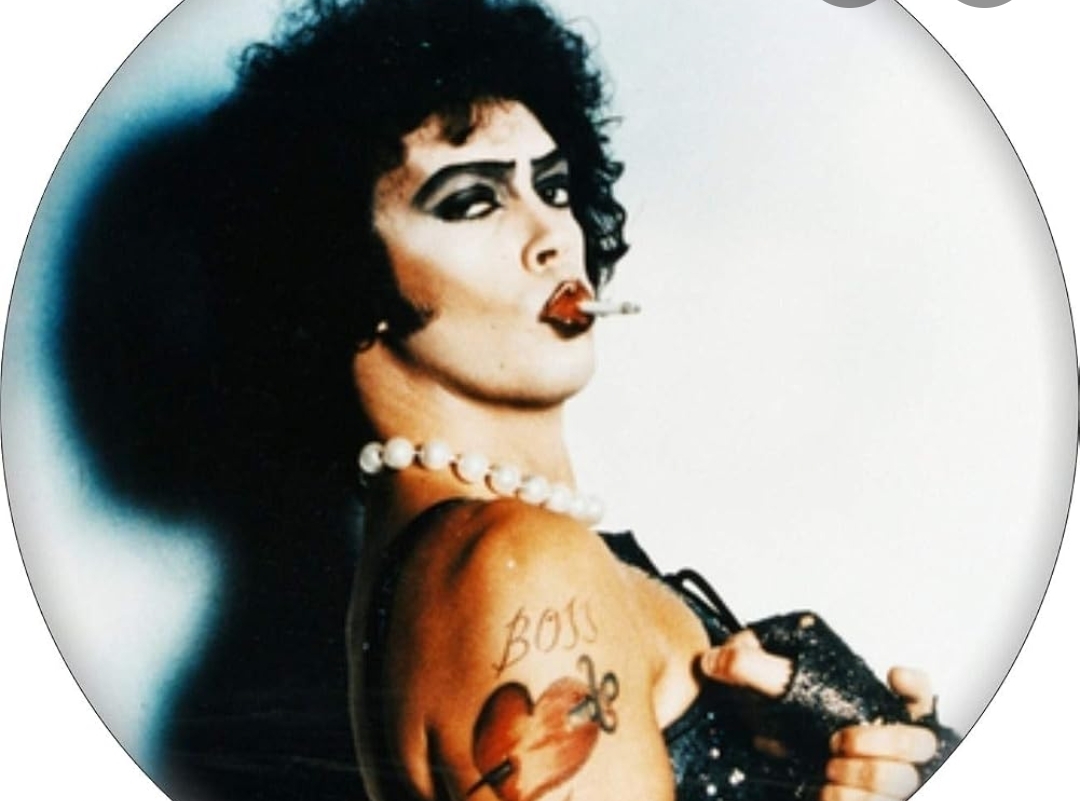
Fuck Being Humble When Humility Requires You to Hide Who You Are
Let's talk about something nobody wants to say out loud:
Fuck being humble when humility requires you to hide who you are.
For years, we're taught to downplay ourselves.
"Don't brag."
"Don't talk about your accomplishments."
"Don't think you're better than anyone."
"Stay humble."
And somewhere along the way, we confused humility with self-erasure.
You can be humble and still be proud. You can celebrate yourself without putting someone else down. You can know your worth without believing you're worth more than everyone around you.
And you can finally say:
"I worked my ass off to become the person I am, and I'm damn proud of it."
Because nobody else lived through your sleepless nights. Nobody else fought every battle you fought. Nobody else picked you up when you were falling apart. Nobody else knows how many times you wanted to quit but kept going anyway.
So why are you still apologizing for being proud of yourself?
Stop Making Yourself Smaller
Some of us have spent years dimming our light because we were afraid someone else might feel insecure standing next to us. We make our accomplishments sound smaller. We dismiss compliments. We say, "Oh, it wasn't that big of a deal." We hide our dreams because we don't want people to think we're full of ourselves.
Enough.
Your success isn't an insult to someone else's journey. Your confidence isn't arrogance. Your ambition isn't selfish. Your healing doesn't make you better than anyone else. It simply means you decided you were worth fighting for.
Be Proud of the Woman You Had to Become
- Maybe you survived something nobody knows about.
- Maybe you rebuilt yourself after losing everything.
- Maybe you became a parent and completely lost yourself before finding your way back.
- Maybe you walked away from people who were destroying you.
- Maybe you're building a business from nothing.
- Maybe you're starting over at an age when everyone told you that you should have it all figured out.
- Maybe you're finally becoming the person you've always wanted to be.
Own that shit.
You don't need permission to celebrate yourself. You don't need everyone to understand your journey. And you definitely don't need to shrink yourself so somebody else can feel bigger.
There Is a Difference Between Arrogance and Confidence
Arrogance says:
"I'm better than you."
Confidence says:
"I know what I'm capable of."
Arrogance needs an audience. Confidence doesn't. Arrogance looks down. Confidence lifts others up.
So don't confuse being proud with being conceited. There is nothing wrong with looking in the mirror and saying:
"Damn. I've come a long way."
Because you have.
Stop Waiting for Someone Else to Validate You
You don't need a standing ovation. You don't need everyone to clap. You don't need your family to understand. You don't need your friends to approve. And you don't need strangers on the internet to tell you that you're enough.
You get to decide that.
Celebrate the little wins. Celebrate the big wins. Celebrate the version of yourself who finally got out of bed after a terrible season. Celebrate the person who kept going. Celebrate the person who is still becoming.
Because sometimes your biggest accomplishment isn't what you built.
It's who you became while building it.
So Here's Your Permission Slip
- Take up space.
- Speak your truth.
- Share your accomplishments.
- Wear the damn outfit.
- Apply for the job.
- Start the business.
- Write the book.
- Post the picture.
- Tell people what you're good at.
- Accept the compliment without explaining it away.
And when someone asks you who you are and what you bring to the table—
Don't apologize. Tell them. Loudly. Proudly. Unapologetically.
Because humility should never require you to disappear.
Fuck being humble if being humble means hiding your light.
You didn't come this far to become invisible.
You came this far to become YOU.
And that deserves to be celebrated.
Discover what it truly means to be unbothered—the hard-won state of emotional regulation and self-trust that allows women to remain steady, powerful, and grounded regardless of external validation or others' opinions.
The Unbothered Woman: Why She's Powerful
The quiet power of a woman who stopped needing other people's approval to feel okay about herself.

There's a woman we all recognize, even if we can't quite name what she does differently. She's not cold. She's not checked out. She just doesn't seem to need your approval to feel okay. Someone talks over her, and she doesn't chase the last word. Plans fall apart, and she pivots instead of spiraling. Someone tries to provoke a reaction, and there isn't one to take.
We call her "unbothered," and we say it like it's effortless. It isn't. It's one of the hardest-won states a woman can reach.
Unbothered Doesn't Mean She Doesn't Care
This is the part people misread first. The unbothered woman isn't numb, and she isn't pretending. She still feels things: disappointment, frustration, hurt. The difference is that her sense of self doesn't rise or fall based on other people's opinions, moods, or reactions. She's decoupled her worth from the outcome.
That decoupling is the actual power. Most of what drains women—the overthinking, the people-pleasing, the rehearsed comebacks at 2 a.m.—comes from a nervous system still trying to manage what other people think. The unbothered woman has quietly stopped running that program. Not because she stopped caring about people, but because she stopped needing their validation to know who she is.
Why She Reads as Powerful
Power, at its root, is about where control lives. Someone who can be destabilized by a comment, a slight, or a cold shoulder has handed a piece of their internal state to whoever's in the room. The unbothered woman keeps that control in her own hands. She responds instead of reacts. She can sit in silence without needing to fill it. She can be disliked without it becoming a crisis.
That's not indifference; it's regulation. And regulation is one of the rarest, most magnetic qualities a person can have because it's contagious. People feel calmer around her. Rooms settle when she's steady in them.
How She Gets There (It's Not a Personality, It's Practice)
Nobody is born unbothered. It's built, usually the hard way, through some combination of:
- Getting disappointed by people's opinions enough times to stop outsourcing her worth to them.
- Learning to sit with discomfort instead of immediately fixing, explaining, or defending.
- Developing enough self-trust that criticism becomes information instead of injury.
- Grieving the fantasy that everyone will eventually understand her and being okay anyway.
It's less "I don't care" and more "I've done the work to no longer need this to go a certain way."
The Real Shift
Becoming unbothered isn't about armor. It's about roots. A woman who's spent time on her own healing, who knows her own patterns, her own worth, and her own capacity doesn't need to brace for impact anymore because there's a steadier foundation under her.
That's why she's powerful. Not because nothing touches her, but because she's built a self solid enough that most things don't have to.
Join Influential Women and start making an impact. Register now.