The Turning Point That Changed Her Relationship With Fear
Stories of women who began seeing fear as part of growth instead of a barrier.



Stories of women who began seeing fear as part of growth instead of a barrier.
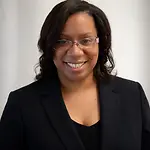
The moment my relationship with fear truly changed was when I found out I had blood clots in 2021. That situation forced me to face the reality that my life could end at any moment, and fear could have easily consumed me—but instead, I turned to Jehovah God in a deeper, more personal way than ever before. Through prayer and relying on scriptures like Isaiah 41:10, I found a calm and reassurance that carried me through one of the most uncertain times in my life. From that point on, I stopped letting fear paralyze me and started moving forward despite it in all areas of my life (personal and professional), trusting that God would strengthen and support me no matter what I faced.
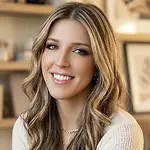
Every big move I've made has come with some level of fear: the unknown, the what ifs, and questioning whether it was the right decision. But, I moved forward anyway. The turning point for me was a time when I let that fear keep me standing still. I felt stagnant, and that was a bigger wake up call than the fear itself. Looking back, I realized that facing the fear, even when it feels messy and uncertain, is more powerful than staying in one place and wondering what could have been. That shift changed how I approach challenges. I don't wait for fear to go away. I make the decision to move forward and trust that I'll figure it out along the way.
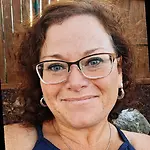
For most of my life, I treated fear the way I treated a difficult patient on a twelve hour shift: I managed it, I documented it, and I tried not to make direct eye contact. I was raised in a high control religion that had very specific ideas about what women were allowed to feel, want, say, and fear. The message, spoken and unspoken, was consistent: your instincts are dangerous. Your body is not trustworthy. And fear? Fear was not information. Fear was punishment for straying too far from the approved path. I left that religion at eighteen. I walked out with the clothes I was wearing and one stubborn, half formed belief: that I was allowed to exist on my own terms. That was courage. That was real. But here is the thing nobody warned me about. You can leave a place without leaving the fear it installed in you. That part is remarkably good at forwarding its own mail. The turning point came in a hospital break room, at 2 a.m., when a patient asked me, "You keep looking at the door. Are you afraid to be in here with me, or afraid to walk out?" I realized I had been living in the doorway of my own life, afraid to stay fully present and afraid to walk into something new. Through Internal Family Systems therapy, I stopped treating fear like an intruder and got curious about it instead. What I found was not a monster, but a very tired girl who had been standing guard for twenty five years, never told she was allowed to rest. I did not need to be braver or finally free of fear. I needed to thank it and let it know it no longer had to run the whole operation. What changed was not that the fear stopped showing up. What changed was that I started to recognize it faster. I started asking: Is this fear protecting me from something real, or is this the old recording playing again? Those are two very different questions. Learning to tell them apart has been, honestly, the work of my life. Fear is not the opposite of courage. It is the beginning of it. Every brave thing I have ever done happened while my hands were shaking. The question has never been will I stop being afraid? The question has always been will I move anyway?
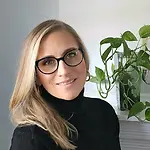
There wasn't a single, dramatic moment where fear disappeared. It was quieter than that, but more defining. For a long time, I believed that confidence came first. That clarity would arrive, fear would settle, and then I would step forward. But that moment never came. Instead, I found myself standing at the edge of something I knew mattered, building something that could support other women, create access, and shift the way we show up for each other. And I realized: If I waited to feel ready, I might never begin. But what truly shifted things wasn't just a decision I made on my own. It was a moment of encouragement from another woman. Simple, but powerful. She saw something in me I hadn't fully claimed yet. She spoke it out loud. And in doing so, she gave me something I didn't realize I was missing: I felt seen. I felt supported. And that changed everything. The turning point wasn't the absence of fear. It was the decision to move with it and the realization that I didn't have to do it alone. Starting Women 4 Mentors required stepping into uncertainty, into visibility, responsibility, and the weight of building something bigger than myself. There were questions I couldn't answer yet, outcomes I couldn't guarantee, and moments where it would have been easier to stay small. But I began anyway. What changed wasn't fear. It was my relationship to it. I stopped seeing fear as a signal to pause and started recognizing it as a sign that I was moving toward something meaningful. That the work mattered. That growth was happening. And more importantly, I realized that courage isn't something you wait for, it's something that can be sparked, sometimes by something as simple as another woman choosing to speak life into you. Now, when fear shows up, it doesn't stop me. It informs me. It asks: Is this important? Is this worth stepping into? And more often than not, the answer is yes. Because the work we're doing, creating opportunities for women to return to education, to be supported, to be seen, is bigger than fear. That's what reshaped my courage. Not the elimination of fear, but the understanding that it could walk beside me and that sometimes, all it takes is one voice, one moment, one connection… to help you rise.
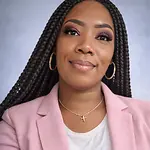
When I shifted FEAR out of my way, I gave myself grace, I became gentle and was reminded I am human! That was the moment I stopped demanding perfection from myself and discovered that strength comes from simply taking the next right step.
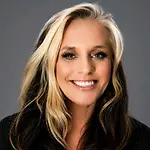
For a long time, I thought courage meant becoming fearless. I thought the people doing bold things somehow had less doubt, less anxiety, less uncertainty than everyone else. What I eventually realized is that most people who build something meaningful are terrified while they're doing it. The turning point for me came when I stopped waiting to feel "ready." There were periods in my life where fear controlled far more than I wanted to admit — fear of failure, fear of judgment, fear of not being enough, fear of starting over, fear of being misunderstood, fear of building something that nobody believed in yet. When you carry difficult experiences, survival teaches you to protect yourself. You learn to stay small, stay quiet, avoid risk, and avoid disappointment. But eventually I realized something dangerous about fear: if you obey it long enough, it slowly starts designing your entire life for you. That realization hit me hard. I began noticing how many dreams die not because people lack talent, but because they spend years waiting for permission, certainty, validation, or perfect timing. And the truth is, those things rarely arrive first. Movement comes first. Clarity comes later. AI and technology became part of that awakening for me because they represented possibility. Suddenly the barriers that used to stop people from creating, building, launching, or learning started collapsing. I realized that for the first time in history, ordinary people could turn ideas into reality faster than ever before. That realization forced me to confront my own fear directly. I had two choices: watch the future happen from the sidelines, or step into it before I felt fully prepared. I chose to step forward. Not perfectly. Not fearlessly. But honestly. There were nights I doubted myself completely. Times I questioned whether my ideas were too unconventional, too ambitious, or too different from what people expected. But every time I moved through fear instead of surrendering to it, I became stronger, more creative, and more certain of my purpose. The biggest shift was understanding that fear itself is not the enemy. Fear is often evidence that you are approaching growth. The real danger is allowing fear to convince you that your vision is smaller than it actually is. Once I understood that, courage stopped meaning "not being afraid." Courage became the decision to keep building anyway. That changed everything for me. Now when fear shows up, I no longer automatically see it as a stop sign. Sometimes it's simply proof that I'm stepping into a new level of my life, my creativity, or my purpose. And honestly, some of the best things that have happened to me started on the other side of moments that scared me the most. If there's one thing I hope people understand, it's this: You do not need complete certainty before you begin. You only need the willingness to take the next step before fear talks you out of becoming who you're meant to be.
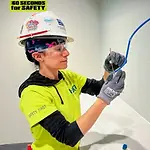
Change and a leadership role made me a little fearful, but knowing I'm where I am because I've pressed on and stayed consistent in my work ethic I can handle it. Continuing to learn and loving what you do makes a good example and better leadership and confidence turning fear into positive energy.

When my husband had a catastrophic accident and I was four months pregnant with my fourth child. I could have fallen apart but I knew my family needed me and I had to find my inner strength to be there for those who needed me.
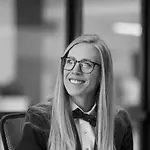
After being misdiagnosed twice with anxiety, I discovered my lung had collapsed. Following a life-flight to the hospital, a long stay and major surgery finding out I had Alpha-1 a rare genetic lung/liver disorder, I faced a daunting reality during my post operation appointment: they found on my imaging that my other lung had a bleb form that could cause my other lung to collapse at any moment. I chose to confront that fear head-on and scheduled to have my surgery on my 28th birthday, determined to live without the shadow of fears constantly wondering. I underwent a second surgery, packed my belongings, and moved to Florida. This decision marked the start of a new chapter in my life, and it has been the best choice I've ever made.

Fear stopped feeling like a warning sign and started feeling like proof that I was stepping into growth. The moment I chose to move forward despite uncertainty, I realized courage isn't the absence of fear. It's trusting yourself enough to keep going anyway.
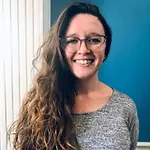
I am loyal to a fault and changing jobs is scary to me so when the time came to join Oasis Senior Advisors, I was on edge. I am a firm believer that everything happens for a reason and everything will work out but that does not mean I am not scared - scared of the financial change, scared of not connecting with clients or business partners, and so much more but I decided that fear would not be in control. I show up authentically every single day and lead with my heart and so far, everything has been working exactly how I hoped.
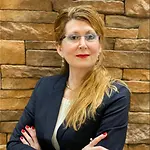
I began moving forward despite the fear of being incarcerated. In the summer of 2017 I had to file to the U.S. Supreme Court in Pennsylvania 406 WDA 2017 on the child support that never should have happened in the first place. I had to continuously answer motions from the opposition and worry over my appeal going through in the U.S. Supreme Court. Despite having a heart attack in 10-16-2017, I did win my appeal shortly after Christmas. It was a different ball game after that.

I used to think fear meant stop. Now I think fear often appears right before growth, change, or healing. Some of the most meaningful things in my life (including creating Sit With Me, my dog-centered meditation series on Substack) happened because I moved forward anyway.
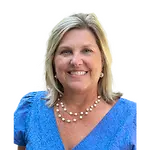
For 10 years I stayed in my marriage because I was afraid to leave. I was afraid to disappoint my parents. Afraid to disappoint my kids. Afraid I couldn't do it on my own. Then, I hit my limit and I was afraid of who I had become and afraid to stay. Taking the first step wasn't scary, it was empowering.
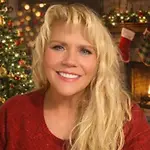
I was just diagnosed with stage 3 throat cancer 6 weeks ago, and up to that point, I would have said I was fearless, having beat stage 3 breast cancer in my 30s! Turns out, I had many fears…and I feel I was becoming stagnant, waiting for retirement. I decided this is not how I'm going out. It's gonna be on my terms, knowing all the things I wanted to do are done, and all the things I thought I couldn't, can! So I applied for that job I didn't think I'd be qualified for, because I am! I booked a cruise, I'm getting my body painted at Sturgis, and I'm going to go out my way! Not anytime soon, God willing, but when I do, I'm gonna have one hell of a story! And a legacy for my girls, and my granddaughters to aspire to! I'm doing it fearlessly, because we are enough on our own! Nothing can hold me back but myself, and I want to experience it all.
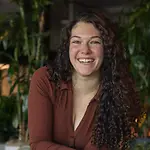
Fear lost its power over me when I realized the bigger risk was staying small because I doubted myself. Starting my company after a devastating layoff taught me that courage isn't the absence of fear, it's choosing to move forward anyway and discovering you were capable all along.
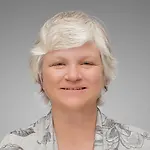
Fear often shows up right before meaningful change, and if you stay with it instead of retreating, you start building real strength. Growth happens when you keep choosing discomfort over comfort, again and again, until it becomes your new normal.

There was a moment when I realized fear was not a stop sign, it was a sign that I was growing. As a woman, educator, and entrepreneur, I learned that courage is not the absence of fear, but choosing to move forward with faith even when the path feels uncertain.
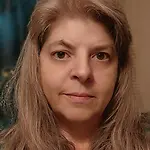
After years of working in jobs and with people that kept telling me that no matter how much I learned, cross trained, or how hard I worked, I would never amount to more. Management gave me conflicting reasons why I was turned down for promotions while my coworkers were confused as to why I was being passed up. I realized that I needed to branch out and apply to companies with the positions I wanted, despite being terrified of getting told that I wasn't qualified, or good enough. Now I have a position that allows me to show the skills I've learned, plus give me the opportunity to learn and grow within my role, and within the company.

Having courage is being scared but getting up in the saddle anyway! This applies to all areas of life.