Suze Orman Never Needed Permission
Ten consecutive New York Times bestsellers. Thirteen years on CNBC. Eight Gracie Awards. A venture-backed company she co-founded at sixty-nine. At seventy-four, the most recognized voice in personal finance is still saying the thing she has always said.
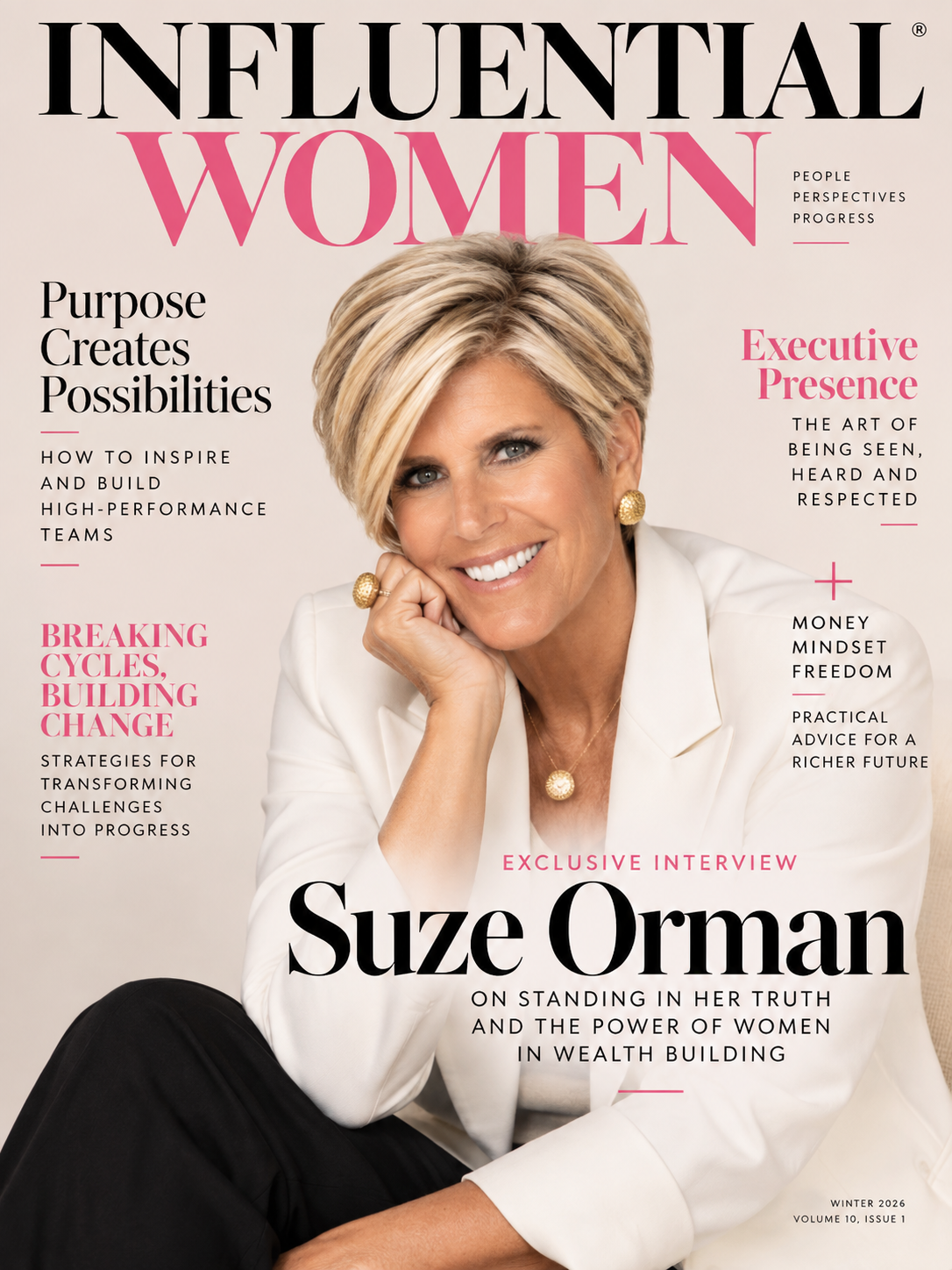
There is a version of the financial expert that the last forty years trained us to expect. He is on a trading floor. He is talking about yield curves. He is, almost without exception, he. Suze Orman built one of the most durable careers in American media by refusing that costume entirely, and she did it on a premise that plenty of people mistook for sentiment: that money cannot be separated from the person holding it.
The record built on that premise is not sentimental in the slightest. Ten consecutive New York Times bestsellers. Two Emmy Awards. Thirteen years hosting her own show on CNBC. Sixteen years as a contributing editor at O, The Oprah Magazine. Eight Gracie Awards, which recognize the best programming by and about women. Two appearances on the TIME 100, and a place on Forbes' ranking of the world's most powerful women. And the single most successful fundraising run in the history of PBS, which is the sort of number that ends a conversation about whether the approach works.
She has also been spoofed on Saturday Night Live four times, a credential she has been known to enjoy more than most of the others.
The second act nobody asked her to take
When the CNBC show ended, the conventional path was available and obvious. Speaking circuit. Legacy interviews. A comfortable move into elder-stateswoman status, where the work is mostly being introduced. She started a podcast instead.
Suze Orman's Women & Money, subtitled And Everyone Smart Enough To Listen, has now run past eight hundred episodes and pulls hundreds of thousands of downloads a month. The format is deliberately unglamorous. Listeners send in their actual situations, and she answers them, including the ones where the answer is no, and including the ones where the answer is that the problem is not really about money. Her recurring Suze School segments walk through market mechanics for an audience that was never invited into those rooms to begin with.
The subtitle is the entire thesis. She did not build a women's product and hope men would tolerate it. She built the best version of the thing, put women in the title, and noted in the same breath who was smart enough to show up.
She started a company at sixty-nine
In 2020, at an age when the expectation is to draw down rather than build, Orman co-founded SecureSave with Kathy Travis, her wife and business partner. The company went after the least glamorous problem in American finance: the emergency savings account. Not investing. Not retirement. The few thousand dollars that separate a car repair from a credit spiral.
SecureSave puts emergency savings inside the payroll system as an employer-matched benefit, so the money moves before a person has to summon the discipline to move it. In 2022 the company raised eleven million dollars in a round led by Truist Ventures, and partnered with Transamerica to offer the accounts as an employee benefit.
Orman has described the company as the most important work of her career. Coming from someone with ten bestsellers and an Emmy shelf, that ranking is worth sitting with. It is also consistent. Four decades of telling people that the fix is behavioral rather than mathematical leads fairly directly to building a product that changes the behavior by default.
Who she keeps showing up for
Orman serves as the official personal finance educator for the United States Army and Army Reserve. She is a longtime advocate for the National Domestic Violence Hotline. That second commitment connects straight back to the argument she has been making since the beginning: a woman without her own money is a woman without her own options.
She has never sold financial literacy as an aspirational lifestyle pursuit, the way it tends to get packaged now. She sells it as leverage, and she is unusually direct about what it is leverage against. It is the reason her audience trusts her through market cycles that have humbled better-credentialed people, and the reason the advice lands differently coming from her than from a man reading the same numbers off the same screen.
Still building
Her current work runs in the same direction it always has. An updated edition of her financial roadmap. A video series built around the question her audience asks before any other, which is some version of: am I doing this right? A scam protection program aimed at the fraud that targets older women first and hardest.
The through line across forty years is not a market call. Orman has been wrong about markets, as everyone who talks about markets for four decades eventually is. The through line is that she decided early who she was going to talk to, refused to apologize for it, and then outlasted nearly everyone who told her the audience was too small to be worth the trouble.
That audience is now most of the country. It turns out it was never too small. It was just never asked.
This profile is reported from the public record, including Suze Orman's published work and professional biography. Nothing in this article is presented as a quotation unless it appears in quotation marks with attribution.