Every Person Knows the Situation Differently
How understanding different perspectives transforms leadership and collaboration.

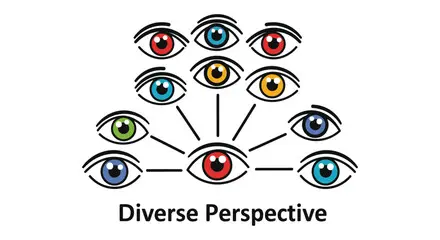
Every Person at the Table Knows the Student Differently
Recently, I was talking with a colleague after a community event about a situation that had been weighing on me. The details themselves are not important because the lesson had very little to do with the specific circumstances and everything to do with the conversation that followed.
Like many people who care deeply about their work, I can become invested in outcomes. When you spend enough time studying a problem, gathering information, listening to concerns, and trying to move something forward, it becomes easy to develop a very clear picture of what you believe should happen next. The challenge is that the more time you spend looking at a situation from your own perspective, the easier it becomes to forget that everyone else is viewing it from theirs.
During our conversation, my colleague reminded me of something that seemed simple on the surface:
Every person sitting at the table knows the student differently.
At first, I thought about it through the lens of advocacy because that is where much of my work takes place. Parents know their child in a way nobody else ever will. They see the late nights, the medical appointments, the frustrations, the victories, the anxiety, the growth, and all the moments that happen outside of school.
Teachers know the same student differently. A math teacher may describe a student as confident, engaged, and eager to participate, while an English teacher may describe that same student as overwhelmed, hesitant, and reluctant to complete written work. Neither teacher is necessarily wrong. They are observing the same student in different environments, under different expectations, and with different demands.
Service providers bring another perspective entirely. A speech-language pathologist may notice communication challenges that are not immediately visible in the classroom. A social worker may observe emotional regulation concerns that do not appear during academic instruction. An occupational therapist may recognize barriers related to sensory processing that others have never considered.
Administrators and district leaders often bring yet another perspective. Their understanding is frequently shaped by data, reports, observations, patterns, and information shared by staff who work directly with the student. Their perspective may not always be firsthand, but it is still part of the overall picture.
As I reflected on that conversation, I realized this was not simply an advocacy lesson. It was a leadership lesson.
A Leadership Lesson
One of the greatest challenges in leadership is recognizing that people often arrive at different conclusions for legitimate reasons. We tend to assume that if someone disagrees with us, they must be missing information, overlooking something important, or failing to understand the situation. Sometimes that is true. More often, however, people are making sense of the same situation based on different experiences, different responsibilities, and different access to information.
We frequently assume that because people are discussing the same issue, they are working from the same set of facts. In reality, they are often drawing conclusions from completely different observations and experiences.
The person closest to the work may notice details that never appear in a report. A supervisor may recognize patterns across multiple situations that others cannot see. An administrator may be balancing competing priorities that are invisible to those closest to the problem. Someone on the outside may ask questions that seem frustrating simply because they lack the context everyone else already possesses.
What becomes interesting is that none of those perspectives is necessarily wrong. They are simply incomplete.
Adaptive Leadership
That realization sits at the heart of adaptive leadership. Adaptive leadership requires us to move beyond the question of whether someone agrees with us and become curious about how they arrived at their conclusion in the first place. It requires cognitive flexibility—the ability to step outside our own framework long enough to consider that another person's perspective may make perfect sense based on what they know.
I think this is where many difficult conversations begin to unravel. Someone makes a statement based on what they know. Someone else disagrees based on what they know. Before long, both individuals are defending their conclusions rather than exploring the information that led them there.
Over the years, I have learned that disagreement is not always evidence of resistance, incompetence, or bad intentions. Sometimes it is simply evidence that people are standing in different places and, therefore, seeing different parts of the same picture.
That realization has changed the way I approach conflict. Instead of immediately deciding whether I agree with someone, I have become more interested in understanding how they arrived at their conclusion. What are they seeing that I am not seeing? What information do they have that I do not have? What experiences shaped the perspective they are bringing into the conversation?
Those questions have consistently taught me more than defending my own position ever has.
Understanding Should Come Before Judgment
One of the most valuable leadership lessons I have learned is that understanding should come before judgment. That does not mean every perspective is equally accurate, nor does it mean leaders should avoid making difficult decisions. It simply means that if we want to make good decisions, we first need to understand the information people are using to make theirs.
A question I find myself asking more often is:
"What are you observing that leads you to that conclusion?"
It is a simple question, but it often changes the entire conversation. People stop defending themselves and start explaining their thinking. New information emerges. Assumptions are challenged. Sometimes you discover they were seeing something you missed. Other times, they discover the same thing about you.
Either way, everyone leaves with a clearer understanding than they had before.
The best leaders I have worked with were rarely the quickest people in the room to form conclusions. They were the people who stayed curious long enough to understand how others were seeing the situation. They understood that leadership is not about getting everyone to share the same perspective. It is about bringing different perspectives together so decisions can be made with a fuller understanding of reality.
Because most of the time, the challenge is not that people are looking at different situations. The challenge is that they are looking at the same situation from different vantage points.