A practical guide to translating complex sensory processing concepts into actionable strategies parents and educators can implement during everyday routines and moments of crisis.

Verified Member
Influential Woman · Education
Michelle Velazquez, CNC, CNPC
Special Education Advocate, Educational Consultant and Certified Neurodiversity Coach, Michelle’s Special Education Advocacy
Oscoda, MI 48750
5Years experience
3Articles published
3Awards received
“
I stopped chasing someone else's definition of success. When I chose authenticity over approval and let my values lead, I found my purpose.
Michelle Velazquez, CNC, CNPC · In Her Own Words
Her Story
About Michelle
Michelle Velazquez, CNC, CNPC, is a Special Education Advocate, Educational Consultant, Master IEP Coach®, Certified Neurodiversity Coach, and Certified Neuropsychology Coach based in Oscoda, Michigan. Through Michelle’s Special Education Advocacy, she works with parents, educators, therapists, service providers, and school districts to strengthen educational planning, identify barriers, protect student and parent rights, and develop individualized approaches that improve access, participation, and meaningful progress for neurodivergent students.
Michelle’s expertise spans special education systems, Individualized Education Programs (IEPs), educational evaluations, accommodations, behavior and regulation supports, executive functioning, sensory processing, neurodiversity-informed practices, and non-clinical neuropsychology-informed educational support. Her work focuses particularly on autism, ADHD, cognitive and learning differences, and other neurodivergent needs, with an emphasis on understanding how a student’s cognitive, regulatory, sensory, communication, and executive functioning patterns affect educational access, participation, and performance.
Her approach is grounded in a neurodiversity-informed understanding of the whole student. Rather than viewing students primarily through academic performance, compliance, diagnosis, or challenging behavior, Michelle encourages families and educational teams to examine how neurological differences, environmental demands, communication, regulation, executive functioning, sensory processing, and individual learning and processing patterns may affect a student’s access and participation. The goal is not to lower expectations or explain away difficulty; it is to identify barriers, understand how the student functions across settings, and determine what supports may allow them to demonstrate their actual abilities more consistently.
Michelle’s neuropsychology-informed work helps individuals, families, and educational teams better understand how patterns involving executive functioning, attention, memory, processing, regulation, sensory experiences, and other areas of cognitive functioning may connect to everyday challenges across educational, home, community, and workplace settings. She helps clients make practical connections between existing evaluation findings, observed patterns, and everyday functioning; identify questions or gaps that warrant further exploration; and translate available information into practical strategies and supports. This work is non-clinical, does not include diagnosing, and does not replace psychological, neuropsychological, medical, or educational evaluation.
Her professional methodology incorporates regulation-based strategies and an understanding of executive functioning and sensory processing, including her Stimulation Profile System. This framework helps individuals, families, and educational teams identify patterns, environmental barriers, sensory needs, regulation challenges, and areas where additional support may improve access, participation, and functional performance. Michelle also provides professional development and consultation services for school districts, supporting educators and administrators in developing more consistent, informed, and student-centered special education practices.
Michelle’s perspective is shaped by both professional experience and lived experience as a former special education student and a parent of children with autism and cognitive impairment. She values collaborative, “round table” problem-solving among families, educators, service providers, and other professionals. Collaboration is pursued when appropriate, but it does not take priority over a student’s individual needs, educational access, meaningful progress, or the protection of student and parent rights. Her work is rooted in helping systems move beyond labeling behavior as defiance and instead ask: What is this student experiencing, what may be getting in the way, and what support could help?
Her Interview
Ten minutes with Michelle
01What do you attribute your success to?
I attribute much of my success to my mentor. He believed in me long before I believed in myself. There were moments when I felt overwhelmed, doubted my abilities, and questioned whether I could continue, and he consistently reminded me of what I was capable of. His guidance, encouragement, and willingness to challenge me to grow have had a tremendous impact on both my professional and personal journey. I truly do not know if I would be where I am today without that support.
I also attribute my success to my children. They are my inspiration and my motivation every single day. Watching them struggle, advocating for their needs, and ultimately seeing them succeed gave me a purpose much bigger than myself. They are the reason I started this journey, and their growth continues to remind me why this work matters.
02What’s the best career advice you’ve ever received?
The best career advice I have ever received came from my mentor. He reminded me that I do not need to carry the weight of everyone else's reactions. I cannot control what other people think, say, or do. What I can control is my preparation, my effort, my character, and how I respond when things do not go as planned.
He also taught me not to let mistakes define me. Every setback, every stumble, and every challenge is an opportunity to learn something new. Instead of asking, "Why did this happen?" he encouraged me to ask, "What can I learn from this?" That shift in perspective helped me stop fearing failure and start seeing it as part of growth.
03What advice would you give to young women entering your industry?
To young women entering this field, I would say this: do not underestimate yourself.
There will be times when you feel overwhelmed, unsure of yourself, or question whether you belong in the room. There will be people who underestimate you, and there will be moments when you underestimate yourself. Do not let those moments define what you are capable of achieving. Celebrate every win, no matter how small it may seem. Too often, we wait until we reach some major milestone before allowing ourselves to feel successful. Growth happens in the small victories, the lessons learned, and the moments when you choose to keep going.
Do not be afraid of failure. Every setback, challenge, and mistake has something valuable to teach you. Some of the most important lessons of my career came from moments that did not go as planned. Learn from them, adapt, and keep moving forward. Most importantly, stay connected to your purpose. When your work is rooted in passion, service, and a genuine desire to make a difference, it becomes easier to push through the difficult days. Success is not about being perfect or fearless. It is about believing in yourself enough to take the next step, learning from the journey, and recognizing that you are often capable of far more than you realize.
04What are the biggest challenges or opportunities in your field right now?
One of the biggest challenges—and greatest opportunities—in education right now is helping school teams move beyond simply recognizing autism and ADHD and toward truly understanding the students behind those labels.
Too often, students are viewed through the lens of behavior, compliance, or academic performance alone. The opportunity is to help educators, administrators, and support teams better understand how executive functioning, sensory processing, emotional regulation, communication differences, and learning styles influence a student's daily experience in school.
When we take the time to understand students from their lived perspectives, we create more effective supports, stronger relationships, and better outcomes. The goal is not to lower expectations, but to remove barriers so students can demonstrate what they are truly capable of achieving.
I believe some of the most meaningful progress in education happens when we stop asking, "What's wrong with this student?" and start asking, "What is this student experiencing, and how can we better support them?"
We should never underestimate these kids' full potential. They're capable of far more than we often realize.
05What values are most important to you in your work and personal life?
Perseverance, mentorship, and service are the values that guide both my work and my personal life. One of the greatest lessons I learned came from my Nana, who always told me that success is measured by how people benefit from your efforts and how you help others—not by personal gain. That perspective has stayed with me throughout my life and continues to shape the way I approach my work.
I believe growth happens when we continue moving forward, even when the path is difficult, and I am grateful for the people in my life who have challenged, encouraged, and believed in me along the way. Their guidance has taught me the importance of investing in others and helping them recognize their own potential.
I am deeply committed to helping children and families feel seen, supported, and empowered. Whether I am working with parents, service providers, or school teams, I strive to lead with compassion, integrity, and a genuine belief in the potential of every child.
Outside of my work, my family remains my greatest source of inspiration. I also enjoy gardening, sports, and hiking, which help me stay grounded, maintain balance, and appreciate the simple moments that often matter most.
Her Content Hub
Articles by Michelle
When Professional Behavior Expertise Meets Real Life
Making sensory expertise practical for families in real-world moments.

Our Expertise Has to Work at 6 P.M.
As professionals, we hear parents and clients raise concerns about sensory processing and regulation every day, whether that is within a medical setting, an educational classroom, or even in the parking lot at Target.
What families are not always able to gather from us are the simplest, most practical considerations that could strengthen the work we provide as occupational therapists, psychotherapists, holistic practitioners, neurodiversity professionals, or educational leaders. Our evaluations, reports, and summaries often contain complex clinical or educational language, sometimes including DSM-5 diagnostic criteria, detailed observations, assessment results, and recommendations. That information may be necessary, but necessary does not always mean usable.
As leaders and professionals, we have a responsibility to slow down and consider what our recommendations look like in the moments when a parent or child is actually experiencing a crisis.
Let's use Mrs. Ericka Moore as our parent. It is 6 p.m., dinner is on the table, and her three-year-old son, Andrew, has slid out of his chair for the fourth time. Or it is bath night, and what should take ten minutes has turned into a 30-minute negotiation over the temperature of the water. Or it is the ride home from a birthday party that was supposed to be fun, and Andrew, who was laughing an hour ago, is now sobbing because of the way his sock feels.
Mrs. Moore does not have our report open in front of her. She is not reviewing the diagnostic criteria, searching through clinical terminology, or rereading a page of generalized recommendations. She is trying to understand what changed, what Andrew's behavior is communicating, and what she can do next.
That is where our expertise has to meet her.
Moving Beyond the Five-Sense Explanation
Most families were taught that there are five senses: sight, sound, touch, taste, and smell. That explanation is tidy, easy to remember, and incomplete.
Seven sensory systems continuously provide information to the brain. The two systems most frequently left out of everyday conversations—vestibular and proprioceptive processing—are often closely connected to the behaviors families and educators find the most difficult to interpret.
When a child cannot remain seated, becomes dysregulated after an enjoyable activity, avoids ordinary routines, crashes into furniture, or appears to react intensely to a minor event, adults may describe the behavior as overreacting, noncompliance, attention-seeking, or poor emotional control. However, what appears disproportionate from the outside may be a nervous system attempting to process more input than it can comfortably manage.
Our responsibility is not merely to recognize that possibility. We must explain it in language that allows families and other members of the child's team to recognize it, too.
Visual Processing
Bright, busy, or flickering light can require significantly more neurological effort than it appears to require. Fluorescent lighting, crowded walls, movement throughout a classroom, and screens operating at full brightness all contribute to the visual information a child must continually filter.
It is not enough to write that a child is "sensitive to visual stimuli." Families and educators need to understand what that may look like during ordinary routines. A child may turn away from a task, cover their eyes, become irritable in a brightly lit store, or struggle to concentrate in a visually crowded space.
Usable guidance should give a family a realistic place to begin. We do not need to provide ten recommendations at once; one or two clearly explained adjustments may be more effective.
Try this: Dim, warm lighting in bedrooms and homework spots. Reduce visual clutter on walls near a desk or reading nook.
Auditory Processing
Most adults understand that loud sounds can be overwhelming, but the cumulative effect of layered sound is often missed. A television, a sibling talking, the dishwasher running, a dog barking, and a notification sounding may each be tolerable independently while becoming overwhelming when experienced together.
When we identify auditory sensitivity, we should also identify the environments and routines in which layered sound is most likely to interfere with participation. Instead of broadly recommending a "quiet environment," we can provide families and educators with a practical way to determine when reducing competing sounds may be most beneficial.
Try this: Select one or two high-demand periods—such as homework, dinner, transitions, or bedtime—and reduce competing sounds during those windows. During other times, explore noise-reducing or noise-canceling headphones, either over-the-ear or in-ear, based on the child's comfort and ability to use them safely.
The device should not become the entire recommendation. The larger goal is to recognize when the environment is demanding more auditory filtering than the child can sustain.
Tactile Processing
Clothing tags, seams, certain fabrics, grass, sand, grooming activities, and unexpected physical contact can create persistent discomfort for a child with tactile sensitivity. These experiences may appear small to an observer, but they consume a substantial amount of the child's regulatory capacity before the day has fully begun.
When a family reports repeated conflict around clothing, bathing, hair care, or physical affection, those concerns should be treated as information rather than dismissed as fussiness or avoidance. The essential leadership practice is believing the reported experience, even when the intensity of that experience is not visible to us.
Try this: Remove clothing tags, explore seamless clothing, provide choices during grooming routines, and give notice before physical touch. Do not underestimate how much a "small" clothing complaint may be a genuine, ongoing irritant rather than fussiness.
Olfactory Processing
Cleaning products, candles, perfumes, food preparation, and other everyday scents can be genuinely distressing for someone with heightened olfactory sensitivity. Because scent is experienced differently by each person, the child may be reacting to something that the adults in the environment barely notice.
A recommendation to "avoid strong smells" is unlikely to be useful unless we teach the family or educational team how to identify patterns. When does the reaction occur? What products, locations, foods, or people are present? Does the child avoid the space, report feeling sick, cover their nose, or become increasingly irritable?
Try this: Use unscented or lightly scented products in shared spaces, particularly in bedrooms, eating areas, classrooms, and other locations the child cannot easily leave. Track whether specific products, foods, people, or environments consistently precede discomfort.
Gustatory Processing
Taste cannot be separated from texture, temperature, smell, and the intensity of flavor. A child described as a "picky eater" may be managing genuine sensory input rather than attempting to control an adult or refuse cooperation.
Professionals must be cautious about reducing feeding concerns to behavior alone. Families need permission to observe preferences as meaningful data: Which textures are consistently accepted? Which temperatures are avoided? Does the child tolerate mixed textures? Is the difficulty connected to chewing, swallowing, smell, predictability, or another factor requiring further evaluation?
Try this: Offer variety without immediate pressure and pay attention to texture, temperature, smell, and presentation preferences as meaningful information—not simply a phase to push through. Keep a familiar option available while introducing unfamiliar foods gradually.
Feeding or swallowing concerns may require referral to a qualified occupational therapist, speech-language pathologist, dietitian, or medical provider. Strong leadership includes recognizing the boundaries of our own discipline and coordinating with the professional whose expertise is needed next.
Vestibular Processing
The vestibular system, located within the inner ear, contributes to movement, balance, and the brain's understanding of where the body is in space. Some children seek spinning, swinging, jumping, or rough play because movement provides organizing input. Others avoid playground equipment, become carsick easily, fear having their feet leave the ground, or become overwhelmed by fast and unpredictable movement.
It is not enough to tell a family that their child "needs more movement." We should help distinguish between movement that supports regulation and movement that increases dysregulation.
Try this: For a child who seeks vestibular input, build in planned movement opportunities—such as swinging, spinning, jumping, or trampoline time—before activities requiring sustained focus. For a child who avoids movement, begin with slow, predictable options such as rocking or gentle swaying rather than anything fast or unexpected.
Recommendations should remain individualized and, when needed, informed by an occupational therapy evaluation rather than applied as a universal sensory solution.
Proprioceptive Processing
The proprioceptive system receives information through the muscles and joints and contributes to body awareness, force, posture, and coordinated movement. Differences within this system may be observed when a child crashes into furniture, hugs with unexpected force, frequently stomps, chews on objects, or appears unaware of how much pressure they are using.
Activities commonly described as "heavy work" may provide organizing input for some children. However, simply handing a family a list of sensory activities is not the same as developing a meaningful plan.
Try this: Incorporate safe "heavy work," such as carrying groceries, pushing a laundry basket, completing animal walks, or participating in other pushing, pulling, and carrying activities. A weighted blanket may also be considered for downtime when it is appropriate for the child and used according to relevant safety guidance.
Families need to know why an activity is being suggested, what response they should observe, and how to determine whether it is regulating, overstimulating, ineffective, or unsafe. The activity itself is only one part of the recommendation. Interpretation and follow-through are what make it useful.
What an Article Cannot Fully Solve
These seven systems do not operate independently, and they will not present identically in any two children—or even in the same child on two different days. Sleep, hunger, illness, emotional demands, environmental changes, communication needs, and cumulative stress can all affect how much sensory input a nervous system can manage.
An adjustment that regulates one child may overwhelm another. A strategy that worked yesterday may not work today because the child's internal and environmental demands have changed.
This is why generalized recommendations must remain a starting point rather than being treated as a diagnosis or individualized plan. As professionals, we should resist the temptation to provide a list of sensory tools without first understanding the child's patterns, environments, responses, and functional needs.
Interdisciplinary collaboration matters here. Occupational therapists, psychotherapists, educators, medical professionals, neurodiversity coaches, and other practitioners may each hold a different piece of the child's story. Leadership requires us to bring those perspectives together, remain within our professional scope, and ensure that the family is not left alone to translate competing terminology and disconnected recommendations.
The measure of our expertise is not how complex our report sounds. It is whether Mrs. Moore can recognize what may be happening when Andrew slides from his chair, resists the bath, or begins sobbing over his sock—and whether she leaves our care with a clear, realistic, and individualized direction for what to do next.
Our expertise has to extend beyond the evaluation room, classroom, or office.
It has to work at 6 p.m.
Explore how neurodivergent professionals can leverage their unique cognitive strengths in the workplace by understanding themselves and creating inclusive environments that value different ways of thinking.
Professionalism and Neurodiversity Can Coexist
Redefining Professional Excellence Beyond Conformity
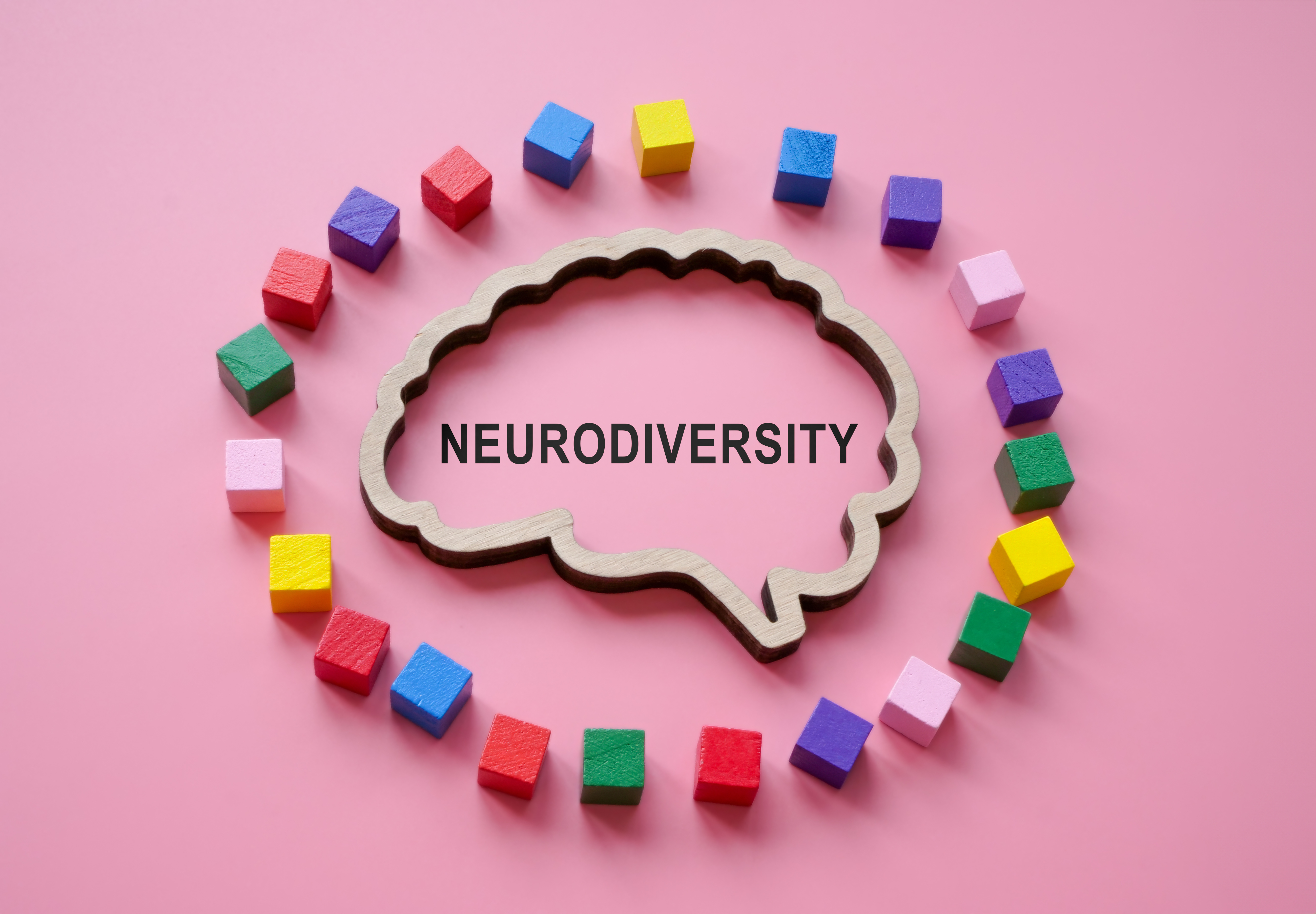
Understanding Neurodiversity in Professional Spaces
Over the last several years, conversations about neurodiversity have become more common in schools, workplaces, and leadership circles. While the term is often used, it is not always clearly explained.
Simply put, neurodiversity recognizes that human brains do not all process information, learn, communicate, regulate emotions, or solve problems in the same way. Neurodivergent individuals include people with ADHD, autism, sensory processing differences, dyslexia, anxiety disorders, and other neurological or cognitive differences. These differences are not character flaws or indicators of intelligence. They are simply variations in how people experience and interact with the world around them.
As someone who is neurodivergent myself, I have spent a great deal of time thinking about what that means in professional spaces.
For a long time, I believed professionalism meant minimizing the parts of myself that felt different.
Like many neurodivergent adults, I became very good at compensating. I developed systems, routines, reminders, calendars, and backup plans for my backup plans. From the outside, most people probably would not have noticed how much effort went into keeping everything organized and moving forward.
What they saw was someone who could lead meetings, manage projects, advocate effectively, and handle complex situations. What they did not see was the amount of energy being spent trying to make my brain operate the way I thought it was supposed to operate.
As I became more involved in leadership development, I started noticing something interesting. Many conversations around leadership focused on understanding how other people think, communicate, and respond to challenges. We talk about adaptive leadership, emotional intelligence, communication styles, and cognitive flexibility. We discuss the importance of recognizing that people approach the same problem from different perspectives based on their experiences and the information available to them.
What I rarely heard people discuss was applying that same curiosity inward.
At some point, I realized I had spent years trying to adapt my behavior to fit professional expectations without spending nearly as much time understanding how my own brain actually worked. Instead of asking how to leverage my strengths, I was asking how to hide my differences. Instead of recognizing the value of thinking differently, I was often measuring myself against standards that were designed around how someone else processed information.
The irony is that many of the qualities that helped me become effective in my work were connected to the very things I had spent years trying to manage as a teenager and into adulthood. The ability to identify patterns quickly, the tendency to question assumptions, the capacity to make connections across multiple pieces of information, and the persistence to keep working through complex problems all played a role in how I approached leadership and advocacy. Those strengths did not erase the challenges that came with being neurodivergent, but they did force me to rethink the narrative I had carried for so long.
The conversation around neurodiversity in the workplace has changed significantly over the past several years, and I think that is a positive shift. For too long, professional environments often operated under the assumption that there was a single "right" way to think, communicate, organize, and work. Anyone who fell outside that model was expected to adapt quietly and independently. While there is certainly value in developing skills and learning to function effectively within an organization, there is also value in recognizing that different ways of thinking can strengthen a team.
The strongest organizations I have encountered are not the ones where everyone approaches problems the same way. They are the ones where leaders understand how to leverage different perspectives, experiences, and cognitive styles. They recognize that innovation, problem-solving, and creativity often emerge when people bring different ways of processing information to the same challenge.
For me, one of the most important leadership lessons has been recognizing that self-awareness is not limited to understanding our emotions, communication styles, or decision-making patterns. It also includes understanding how our brains work. The more I learned about my own neurodivergence, the more intentional I became about creating systems that supported success, instead of constantly trying to force myself into systems that did not.
That shift changed more than my productivity. It changed the way I viewed leadership.
Today, when I think about creating inclusive workplaces, I do not think about lowering expectations or making excuses for performance. I think about creating environments where people can contribute their strengths without feeling pressured to hide how they think. I think about leaders who are willing to recognize that professionalism is not defined by sameness. It is defined by competence, integrity, accountability, and the ability to contribute meaningfully to a shared goal.
Neurodivergent professionals are already leading teams, managing organizations, solving complex problems, and serving their communities every day. The question is no longer whether neurodiversity belongs in the workplace. The real question is whether we are willing to recognize that different ways of thinking have always been part of what makes organizations successful.
From my perspective, some of the most effective leaders are not the people who think exactly like everyone else. They are the people who understand how they think, understand how others think, and know how to bring those differences together in the service of something larger than themselves.
A thoughtful exploration of how different perspectives on the same situation shape leadership decisions. This article examines why people arrive at different conclusions and how understanding others' viewpoints leads to better outcomes.
Every Person Knows the Situation Differently
How understanding different perspectives transforms leadership and collaboration.
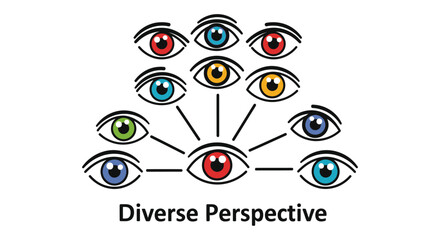
Every Person at the Table Knows the Student Differently
Recently, I was talking with a colleague after a community event about a situation that had been weighing on me. The details themselves are not important because the lesson had very little to do with the specific circumstances and everything to do with the conversation that followed.
Like many people who care deeply about their work, I can become invested in outcomes. When you spend enough time studying a problem, gathering information, listening to concerns, and trying to move something forward, it becomes easy to develop a very clear picture of what you believe should happen next. The challenge is that the more time you spend looking at a situation from your own perspective, the easier it becomes to forget that everyone else is viewing it from theirs.
During our conversation, my colleague reminded me of something that seemed simple on the surface:
Every person sitting at the table knows the student differently.
At first, I thought about it through the lens of advocacy because that is where much of my work takes place. Parents know their child in a way nobody else ever will. They see the late nights, the medical appointments, the frustrations, the victories, the anxiety, the growth, and all the moments that happen outside of school.
Teachers know the same student differently. A math teacher may describe a student as confident, engaged, and eager to participate, while an English teacher may describe that same student as overwhelmed, hesitant, and reluctant to complete written work. Neither teacher is necessarily wrong. They are observing the same student in different environments, under different expectations, and with different demands.
Service providers bring another perspective entirely. A speech-language pathologist may notice communication challenges that are not immediately visible in the classroom. A social worker may observe emotional regulation concerns that do not appear during academic instruction. An occupational therapist may recognize barriers related to sensory processing that others have never considered.
Administrators and district leaders often bring yet another perspective. Their understanding is frequently shaped by data, reports, observations, patterns, and information shared by staff who work directly with the student. Their perspective may not always be firsthand, but it is still part of the overall picture.
As I reflected on that conversation, I realized this was not simply an advocacy lesson. It was a leadership lesson.
A Leadership Lesson
One of the greatest challenges in leadership is recognizing that people often arrive at different conclusions for legitimate reasons. We tend to assume that if someone disagrees with us, they must be missing information, overlooking something important, or failing to understand the situation. Sometimes that is true. More often, however, people are making sense of the same situation based on different experiences, different responsibilities, and different access to information.
We frequently assume that because people are discussing the same issue, they are working from the same set of facts. In reality, they are often drawing conclusions from completely different observations and experiences.
The person closest to the work may notice details that never appear in a report. A supervisor may recognize patterns across multiple situations that others cannot see. An administrator may be balancing competing priorities that are invisible to those closest to the problem. Someone on the outside may ask questions that seem frustrating simply because they lack the context everyone else already possesses.
What becomes interesting is that none of those perspectives is necessarily wrong. They are simply incomplete.
Adaptive Leadership
That realization sits at the heart of adaptive leadership. Adaptive leadership requires us to move beyond the question of whether someone agrees with us and become curious about how they arrived at their conclusion in the first place. It requires cognitive flexibility—the ability to step outside our own framework long enough to consider that another person's perspective may make perfect sense based on what they know.
I think this is where many difficult conversations begin to unravel. Someone makes a statement based on what they know. Someone else disagrees based on what they know. Before long, both individuals are defending their conclusions rather than exploring the information that led them there.
Over the years, I have learned that disagreement is not always evidence of resistance, incompetence, or bad intentions. Sometimes it is simply evidence that people are standing in different places and, therefore, seeing different parts of the same picture.
That realization has changed the way I approach conflict. Instead of immediately deciding whether I agree with someone, I have become more interested in understanding how they arrived at their conclusion. What are they seeing that I am not seeing? What information do they have that I do not have? What experiences shaped the perspective they are bringing into the conversation?
Those questions have consistently taught me more than defending my own position ever has.
Understanding Should Come Before Judgment
One of the most valuable leadership lessons I have learned is that understanding should come before judgment. That does not mean every perspective is equally accurate, nor does it mean leaders should avoid making difficult decisions. It simply means that if we want to make good decisions, we first need to understand the information people are using to make theirs.
A question I find myself asking more often is:
"What are you observing that leads you to that conclusion?"
It is a simple question, but it often changes the entire conversation. People stop defending themselves and start explaining their thinking. New information emerges. Assumptions are challenged. Sometimes you discover they were seeing something you missed. Other times, they discover the same thing about you.
Either way, everyone leaves with a clearer understanding than they had before.
The best leaders I have worked with were rarely the quickest people in the room to form conclusions. They were the people who stayed curious long enough to understand how others were seeing the situation. They understood that leadership is not about getting everyone to share the same perspective. It is about bringing different perspectives together so decisions can be made with a fuller understanding of reality.
Because most of the time, the challenge is not that people are looking at different situations. The challenge is that they are looking at the same situation from different vantage points.
Join Influential Women and start making an impact. Register now.